Has Brussels Shifted from Containment Russia to a Strategy of Long-Term Attrition?

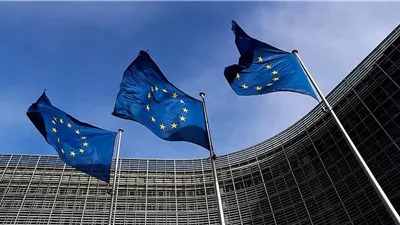
As diplomatic efforts to end the war in Ukraine continue to stall and prospects for a near-term political settlement remain elusive, the European Union appears to be entering a new phase in its approach to the conflict. The primary objective is no longer to achieve a rapid diplomatic breakthrough, but rather to increase the long-term costs of war for Russia and sustain strategic pressure on Moscow. Against this backdrop, the latest sanctions package unveiled by European Commission President Ursula von der Leyen signals a significant evolution in the philosophy of Western sanctions, both in terms of the targets selected and the political messages Brussels seeks to convey.
More than four years into the Russia–Ukraine war, European sanctions are no longer aimed solely at reducing the financial resources available to fund Russia’s military campaign. Instead, they have become part of a broader strategy designed to reshape Russia’s strategic environment and weaken its ability to translate military gains into lasting geopolitical influence.
From Punishing the State to Targeting the Entire War Ecosystem
The proposed sanctions package reveals a notable transformation in the nature of Western pressure. During the early stages of the conflict, sanctions primarily focused on Russian state institutions, banks, energy exports, and access to advanced technologies. Today, however, the European Union is seeking to target what might be described as Russia’s entire “war ecosystem,” including its human, financial, and logistical dimensions.
The proposal to ban all Russian soldiers who participated in the war from entering the Schengen Area illustrates this shift particularly well. While the measure may have limited direct military significance, its symbolic and strategic value is substantial. It sends a clear message that participation in the war will carry consequences extending beyond the battlefield, creating long-term social and political costs for those involved.
In this sense, Europe is moving beyond punishing the Russian state toward creating a sustained burden on the broader societal structures that support the war effort. This reflects a growing recognition that altering the Kremlin’s strategic calculations requires influencing the domestic environment surrounding the conflict, not merely constraining the state’s economic capabilities.
The Oil Battle: The Most Powerful Economic Weapon
Despite the wide range of measures included in the new package, oil remains the centerpiece of the economic confrontation between Russia and the West.
Oil revenues continue to represent one of Moscow’s most important sources of funding for military operations and economic resilience under sanctions. Since 2022, Western governments have attempted to strike a delicate balance: allowing Russian oil to continue flowing into global markets to prevent a worldwide energy crisis while simultaneously limiting the profits Russia earns from those exports.
Recent geopolitical developments, however, have exposed the fragility of this arrangement. Instability in the Middle East and disruptions around the Strait of Hormuz have pushed oil prices upward, creating the possibility that Russia could benefit financially despite ongoing sanctions. In response, the European Commission has proposed freezing the mechanism for reviewing the oil price cap until January 2027.
This decision reflects a growing awareness in Brussels that the economic struggle with Russia is increasingly linked to wider geopolitical dynamics. Every crisis in the Middle East or disruption in global energy markets has the potential to generate additional revenue streams for Moscow and reduce the effectiveness of Western sanctions.
The proposal therefore seeks to prevent Russia from capitalizing on external geopolitical developments that are unrelated to the war itself.
The Shadow Fleet: A Hidden War Over Sanctions Enforcement
One of the most significant elements of the new package is its focus on Russia’s so-called “shadow fleet”—a vast network of tankers, intermediaries, and companies that have enabled Moscow to circumvent Western restrictions.
Experience has demonstrated that the effectiveness of sanctions depends not only on the legal measures imposed but also on the ability to close loopholes that facilitate evasion. Consequently, Brussels is expanding its focus beyond vessels themselves to include the financial and logistical infrastructure that supports them, such as ports, refineries, shipping networks, and intermediary companies.
This shift reflects the transition from imposing sanctions to managing sanctions—a far more complex phase that requires targeting the parallel economic networks that have emerged to bypass formal restrictions.
The Limits of European Power
Despite Europe’s increasingly assertive rhetoric, ongoing debates within the European Union reveal a persistent gap between political ambition and practical implementation.
The retreat from the idea of a comprehensive maritime ban on Russian oil underscores the extent of divisions within the Western camp. Several member states, particularly Greece and Malta, fear that stricter maritime restrictions could harm their own economic interests. Others prefer to maintain close coordination with the G7 rather than pursue unilateral measures that could undermine Western unity.
This reality highlights a deeper dilemma that Europe has faced since the beginning of the war: how to maximize pressure on Russia without imposing excessive costs on European economies themselves.
As the conflict drags on, the economic burden of sanctions increasingly affects all parties involved. This helps explain Europe’s growing caution regarding measures that could trigger further disruptions in global energy markets or international trade.
Sanctions and the Diplomatic Track
The new sanctions package comes at a particularly sensitive moment, coinciding with renewed efforts to revive negotiations between Moscow and Kyiv.
From this perspective, sanctions are not merely an economic instrument; they are also a political tool intended to improve Ukraine’s bargaining position and strengthen the leverage of its Western partners. Brussels hopes that sustained economic pressure will gradually narrow Moscow’s strategic options and encourage greater flexibility in future negotiations.
Yet this strategy is not without risks. Historical experience suggests that states engaged in what they perceive as existential conflicts often demonstrate a greater capacity to absorb economic hardship than outside observers anticipate. Moreover, Russia has spent the past several years redirecting significant portions of its trade toward Asia and the Middle East, partially mitigating the impact of Western restrictions.
As a result, the effectiveness of the new sanctions will depend not only on their scope but also on the West’s ability to maintain political cohesion and prevent the emergence of alternative channels through which Russia can circumvent restrictions.
Europe and the Logic of Long-Term Attrition
The twenty-first EU sanctions package suggests that Brussels no longer views the war in Ukraine as a temporary crisis that can be resolved within months. Instead, it increasingly sees the conflict as a prolonged geopolitical confrontation that may continue for years.
Accordingly, the European Union appears to be transitioning from a strategy of containment toward one of attrition—seeking to gradually erode Russia’s capacity to sustain the war through the cumulative impact of economic, financial, technological, and political pressure over time.
The success of this strategy will depend on three key factors. First, Europe must preserve internal unity despite diverging national interests among member states. Second, it must sustain close coordination with the United States and the G7. Third, the resilience and adaptability of the Russian economy will play a decisive role in determining whether sanctions can achieve their intended objectives.
Ultimately, the latest sanctions package is more than just another round of pressure on Moscow. It reflects the emergence of a new phase in the Ukraine conflict, one in which economic warfare has become as strategically important as military operations on the battlefield. In this context, the central question is no longer whether sanctions can inflict pain on Russia, but whether they can alter the Kremlin’s strategic calculus before the balance of power on the ground shifts in ways that render economic pressure insufficient.
Most read

Read also