Between Russia’s Attrition and Ukraine’s Limits of Power: Why the War Remains Far from Decided

A growing current of opinion in the West presents an increasingly optimistic assessment of the trajectory of the Russia–Ukraine war. This view rests on a central premise: Ukraine is no longer fighting merely to survive a defensive war. Instead, it has adopted a systematic strategy of attrition aimed at eroding Russia’s military and economic capabilities, leveraging its technological innovation—particularly in unmanned aerial systems—while continuing to benefit from sustained Western support.
From Defensive Warfare to a Strategy of Attrition
When the war erupted in February 2022, the prevailing assumption was that Russia possessed every structural advantage for a prolonged conflict: a larger population, greater economic resources, and a higher capacity to absorb human losses. Over time, however, this equation has begun to shift.
Rather than concentrating on large-scale ground offensives to recapture occupied territory, Ukraine has increasingly focused on raising the cost of war for Moscow. This approach draws on historical precedents in which conflicts were ultimately decided through the gradual exhaustion of an adversary, rather than by achieving a swift and decisive battlefield victory.
Technology as an Economic Weapon
Ukraine’s defense industry has undoubtedly made remarkable progress, particularly in the production of low-cost, highly effective drones capable of striking deep inside Russian territory. These systems have continuously evolved to counter Russia’s electronic warfare capabilities and jamming technologies.
Military analysts argue that this technological edge has become the defining turning point of the war. By relying on innovation rather than conventional force, Ukraine has been able to offset Russia’s overwhelming numerical superiority. Indeed, many observers now describe Ukraine’s military ecosystem as a global laboratory for the development of modern warfare, potentially positioning Kyiv as a strategic defense partner for Western nations long after the conflict ends.
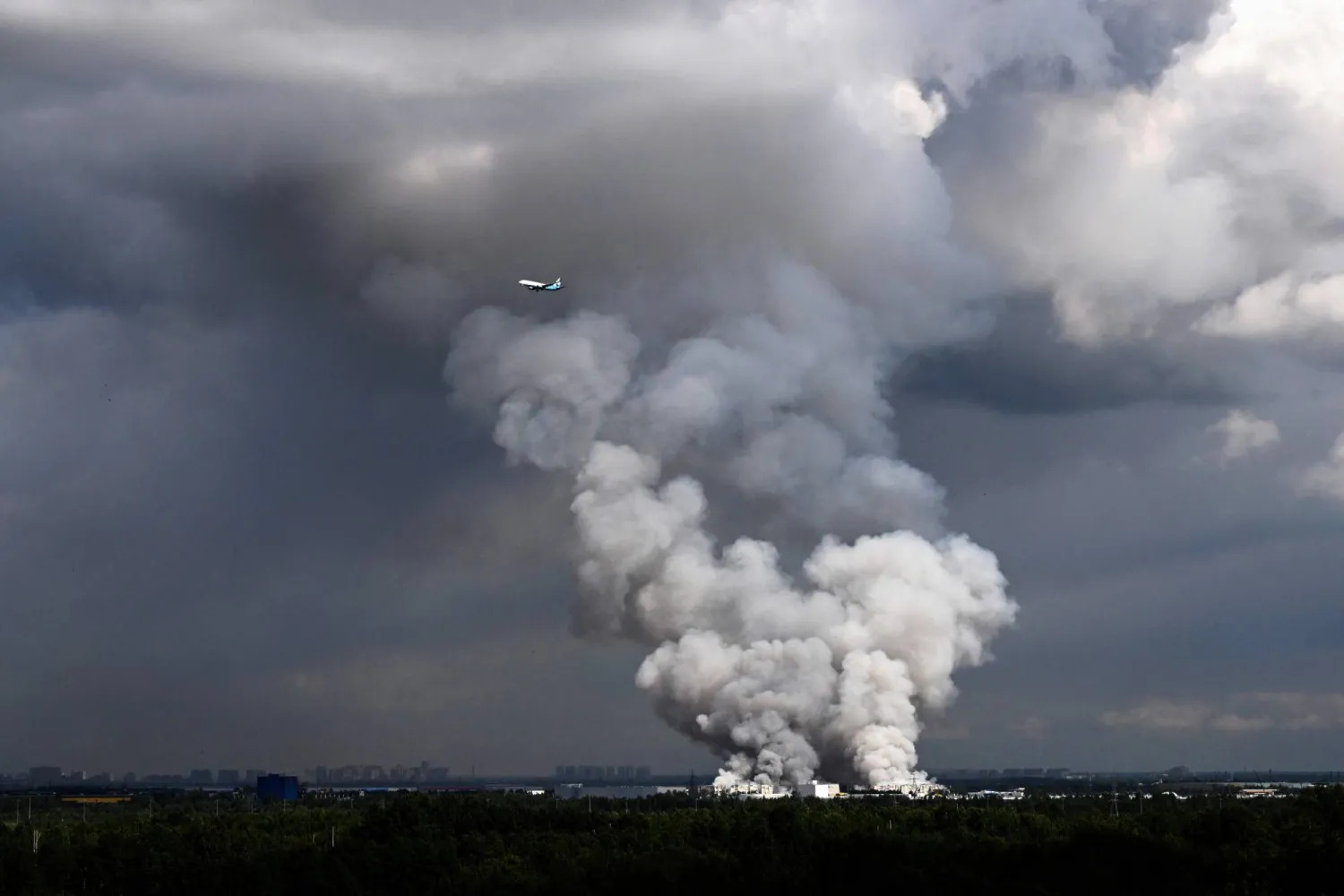
Analysts further contend that Ukraine’s strategy has succeeded by targeting the foundations of Russia’s wartime economy. Attacks on oil refineries, supply networks, logistics hubs, and commercial distribution centers have sought to undermine Moscow’s ability to finance its military campaign.
According to Western estimates, these strikes have reduced Russia’s oil refining capacity by more than 40 percent, inflicted losses amounting to billions of dollars, and contributed to severe fuel shortages affecting millions of people.
Ukraine has also targeted distribution facilities belonging to Russia’s largest online retailer, Wildberries, in an effort to extend the economic consequences of the war deep into the Russian domestic sphere.
A report by the Center for European Policy Analysis (CEPA) in Washington argues:
"The Kremlin is depleting its manpower at a rate its recruitment system cannot sustain. It has lost control of the Black Sea and was unable to guarantee the security of its own Victory Day military parade in May. Meanwhile, Kyiv is striking deep inside Russian territory, disrupting oil refineries, crippling military infrastructure—including airfields and ammunition depots—and reaching the outskirts of Moscow and St. Petersburg. Across Western policy circles, the dominant narrative is gradually shifting—from asking how Ukraine can survive to recognizing that it may be beginning to achieve decisive gains in the war."
The Critical Role of Western Support
There is broad consensus that Ukraine’s military effort remains heavily dependent on continued American and European assistance, particularly in intelligence sharing and the provision of advanced air-defense systems led by the Patriot missile platform.
The current shortage of Patriot batteries has left Ukraine increasingly vulnerable to Russia’s sustained use of ballistic missiles against urban centers.
Although U.S. President Donald Trump has approved the local production of Patriot systems in Ukraine, Kyiv is still years away from establishing operational manufacturing capacity. Until then, European allies will have to bridge this critical defensive gap.
A New Phase—and a Ukrainian Warning
The war remains unresolved. What Russian President Vladimir Putin initially described as a "special military operation" has evolved into a prolonged war of attrition—one that Donald Trump has been unable to end "within a week," as he pledged at the beginning of his second presidential term.
Ukraine’s recent successes should therefore not be interpreted as evidence that the conflict is approaching its conclusion. Rather, they suggest that the war has entered a more complex phase, one characterized by the long-term erosion of the adversary’s economic and military capabilities.
In this context, General Valerii Zaluzhnyi, Ukraine’s ambassador to the United Kingdom and former commander-in-chief of the Ukrainian Armed Forces, cautions against premature conclusions.
Writing in The Telegraph, he observes:
"A growing number of Western analysts now argue that Russia has effectively lost the war. They point to Ukraine’s successful attacks on supply lines, strikes against critical infrastructure, and the gradual deterioration of Russia’s military position as evidence that the conflict is nearing its end. This is a mistaken—and dangerous—reading of the war. It reflects a tendency to interpret developments through the lens of tactical battlefield successes rather than the broader strategic picture."
Zaluzhnyi continues:
"Every tactical gain now comes at an extraordinary cost. Positions may be captured, but holding them, reinforcing them, and evacuating the wounded have all become significantly more difficult under the constant surveillance of drones. Success on the battlefield is now measured in meters rather than miles, and its price often far exceeds its actual strategic value."
He further notes that:
"Russia still retains the capacity to launch counterstrikes with equal or even greater force. Consequently, neither side can rely on this type of warfare to produce a decisive strategic outcome. The battlefield has therefore reached something approaching equilibrium. Russia lacks sufficient military power to subjugate Ukraine by force, while Ukraine currently lacks the means to liberate all occupied territories through military force alone. The military balance is now defined less by decisive victories than by each side’s ability to deny the other its strategic objectives."
Zaluzhnyi also acknowledges that Ukraine remains heavily dependent on Western financial assistance, military equipment, and technological support, even as it faces mounting domestic pressures.
Moscow is fully aware of this reality. As a result, its strategy has increasingly shifted away from pursuing rapid territorial gains toward wearing Ukraine down economically, militarily, and psychologically. Russia continues to enjoy larger reserves of manpower and greater industrial capacity in several critical sectors, including ballistic missile production—a superiority that air-defense systems alone cannot entirely offset.
He concludes:
"The decisive question is no longer who will seize the next village or destroy the next ammunition depot. The real question is which society can better withstand the economic, military, and psychological burdens of a prolonged war while preserving the international support necessary to sustain it."
A Diplomatic Endgame
It is becoming increasingly evident that a war entering its fifth year cannot be brought to a military conclusion alone.
Ultimately, Russian President Vladimir Putin and Ukrainian President Volodymyr Zelenskyy—along with Kyiv’s Western partners—will have to acknowledge that the conflict can only be resolved through diplomacy. Any durable settlement will need to address not only immediate security concerns, but also historical grievances, disputes over borders and sovereignty, and the broader architecture of European security.
Such a settlement, however, can only emerge through direct engagement between the parties to the conflict themselves.
Originally published in Asharq Al-Awsat
Most read

Read also