Can Al-Iraq Redefine the Balance? (Part I)

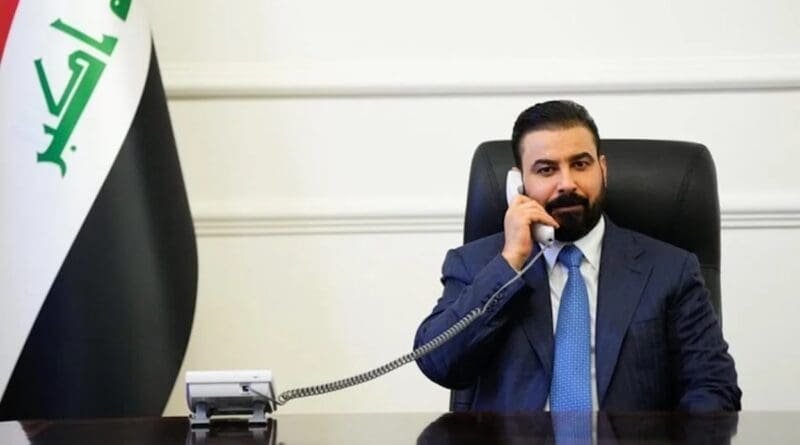
The two back-to-back visits made by Iraq's new Prime Minister, Ali Faleh Al-Zaidi, to Washington on July 13, 2026, and to Tehran just ten days later, were far more than routine diplomatic engagements. They represented an early test of Iraq's future strategic orientation at one of the most critical moments in its post-2003 history.
Iraq today stands at the intersection of three transformative developments. The first is the scheduled completion of the withdrawal of the U.S. military presence in its traditional form by September 2026, to be replaced by a broader framework of strategic cooperation encompassing security, economic, and political dimensions. The second is the growing uncertainty surrounding the fragile U.S.-Iran memorandum of understanding signed on June 18, 2026, which halted direct hostilities between the two countries but now appears increasingly vulnerable amid renewed tensions over the Strait of Hormuz. The third is Baghdad's attempt to restore the authority of the Iraqi state after years in which armed factions exercised significant influence over security and political decision-making.
Against this backdrop, the timing of Al-Zaidi's visits was anything but coincidental. Together, they reflected Baghdad's effort to redefine Iraq's place within an evolving regional order. The new government appears convinced that Iraq can no longer afford to function either as an arena for U.S.-Iranian rivalry or as a state aligned exclusively with one regional camp.
Washington: The Beginning of a New Strategic Partnership
Al-Zaidi's visit to Washington came at the invitation of President Donald Trump himself, a gesture carrying political significance beyond diplomatic protocol. The invitation suggested that Iraq continues to occupy an important position within Washington's regional strategy despite the approaching end of the American military mission.
For the Trump administration, the challenge is no longer how to maintain troops in Iraq, but rather how to preserve American influence after the military withdrawal. The answer appears to lie in transforming the bilateral relationship into a comprehensive strategic partnership built upon security cooperation, energy investment, economic development, and political coordination.
From this perspective, Al-Zaidi's visit produced several important outcomes.
Perhaps the most significant was what might be described as clear American political acceptance of Iraq's new prime minister. The fact that President Trump personally invited him to Washington signaled a willingness to invest politically in his government at a time when Baghdad faces mounting internal and external pressures.
Washington increasingly views Al-Zaidi not merely as Iraq's new head of government but as a potential partner in reshaping the country's political and security landscape. Central to this vision is his repeated commitment to restoring the state's monopoly over the use of force.
Since assuming office, Al-Zaidi has consistently emphasized that all weapons must ultimately come under the authority of Iraq's official security institutions. Such a position inevitably raises questions about the future of the armed factions affiliated with what is commonly known as the "Islamic Resistance in Iraq," as well as the broader role of the Popular Mobilization Forces (PMF) within Iraq's political and security architecture.
Although the government has not announced any immediate confrontation with these groups, its broader reform agenda aligns, at least in part, with proposals promoted by U.S. presidential envoy Tom Barrack, who has advocated restructuring Iraq's security environment through the gradual dismantling or reintegration of armed factions into state institutions.
Equally significant is Al-Zaidi's insistence that Iraq will no longer require independent "resistance factions" after September 2026, when the American military mission formally concludes. Such statements are intended to reinforce the principle that decisions concerning war and peace should rest exclusively with the Iraqi state.
Security and Investment: Two Sides of the Same Strategy
Security reform constitutes only one pillar of the emerging U.S.-Iraqi relationship.
The second is economic cooperation, particularly in the energy sector.
Washington appears eager to encourage greater participation by American energy companies in Iraq's oil and gas industries. This reflects a broader strategic formula frequently associated with Tom Barrack's regional approach—linking security with economic development.
The underlying logic is straightforward. Long-term investment requires political stability, while political stability depends upon strengthening state institutions and reducing the influence of non-state armed actors.
For Baghdad, attracting American investment offers more than financial benefits. It also provides access to advanced technologies, diversified partnerships, and opportunities to modernize Iraq's energy infrastructure at a time when the country continues to struggle with chronic electricity shortages and broader structural weaknesses within its economy.
Another notable aspect of Al-Zaidi's domestic agenda has been his decision to reopen major corruption investigations involving political figures and parties widely viewed as close to Iran.
These anti-corruption measures serve multiple purposes. Domestically, they reinforce the government's reformist credentials. Internationally, they send an important signal to Western investors that Iraq seeks to improve governance and establish a more transparent business environment.
Taken together, these initiatives suggest that Al-Zaidi hopes to convince Washington that his administration possesses the political will—and perhaps the institutional capacity—to restore Iraq to a genuine position of strategic equilibrium, reducing its dependence on any single external actor while strengthening the authority of the Iraqi state.
A New American Regional Vision
The broader significance of Al-Zaidi's visit extends beyond Iraq itself.
The Trump administration appears to be integrating Iraq into a wider regional strategy that has emerged following the U.S.-Israeli military campaign against Iran earlier in 2026. From Washington's perspective, that confrontation weakened Tehran's regional position and created an opportunity to reshape political alignments across the Middle East.
Within this framework, Iraq is expected to play a more active regional role.
This includes developing closer relations with Syria's new political leadership, facilitating improved cooperation with Turkey, Jordan, and Lebanon under American diplomatic sponsorship, and becoming an increasingly influential participant in the emerging political architecture of the Arab Mashreq.
Such objectives reveal a broader American ambition: not merely to maintain influence in Iraq after the military withdrawal but to reposition Baghdad as a strategic partner capable of contributing to a new regional balance that serves long-term U.S. geopolitical interests.
At the same time, this approach aligns with Al-Zaidi's own effort to establish Iraq as a credible strategic partner rather than merely a security challenge requiring external management.
The Real Challenge Lies Inside Iraq
Ultimately, the success or failure of Prime Minister Ali Al-Zaidi's balancing strategy will not be determined solely by his diplomatic engagements in Washington or Tehran. Rather, it will depend on whether his government can fundamentally reshape Iraq's domestic political and security landscape.
This represents the most difficult aspect of the challenge.
For more than two decades, Iraq's political system has been shaped by competing centers of power in which state institutions have often coexisted with armed groups possessing varying degrees of political, military, and economic influence. Restoring the state's exclusive authority over the use of force has therefore become not merely a security objective but the cornerstone of Iraq's broader effort to regain full sovereignty.
Al-Zaidi appears fully aware of this reality.
His repeated calls for limiting weapons to the state's official institutions, his determination to combat corruption, and his efforts to improve the investment climate all point toward a broader state-building agenda. These initiatives are interconnected: meaningful economic reform cannot occur without political stability, and lasting stability remains difficult to achieve without strengthening state authority.
Should Baghdad succeed in creating a more secure domestic environment, Iraq could become significantly more attractive to international investors, particularly in the energy sector, where enormous untapped opportunities continue to exist.
A Fragile Regional Environment
Yet Iraq's domestic reforms cannot be separated from the regional environment surrounding them.
The future of Baghdad's foreign policy remains closely linked to the trajectory of U.S.-Iranian relations.
Although the June 2026 memorandum of understanding succeeded in halting direct military confrontation between Washington and Tehran, the agreement remains fragile. Recurrent tensions in the Strait of Hormuz, combined with continued regional proxy competition, underscore the possibility that the ceasefire could unravel.
Should direct confrontation resume, Iraq would almost certainly find itself among the first countries to experience its consequences.
The risks extend well beyond security.
Any renewed conflict affecting the Gulf would threaten global energy markets, disrupt Iraqi oil exports, complicate electricity production through interruptions in gas supplies, discourage foreign investment, and place enormous pressure on Iraq's already fragile economy.
Equally important, renewed hostilities could reactivate armed groups aligned with Iran, once again transforming Iraqi territory into a theater of indirect confrontation between regional and international powers.
Can Iraq Become a Mediator?
One of the most intriguing aspects of Al-Zaidi's recent diplomacy has been Baghdad's apparent ambition to reposition itself as a regional mediator rather than merely a regional battleground.
Historically, Iraq has often been viewed as an arena in which external powers competed for influence.
Today, however, the government appears eager to project a different image—one in which Iraq facilitates dialogue rather than hosts conflict.
Whether Baghdad possesses sufficient diplomatic leverage to mediate between Washington and Tehran remains uncertain.
Successful mediation requires more than geographic proximity. It demands political credibility, strategic trust from both parties, and sufficient domestic stability to sustain an independent diplomatic role.
At present, Iraq has made progress toward rebuilding that credibility but has not yet fully secured it.
Nevertheless, the effort itself reflects a notable transformation in Iraqi strategic thinking.
Rather than accepting permanent dependency on external powers, Baghdad is attempting to leverage its unique relationships with both Washington and Tehran to enhance its own regional relevance.
Neither Alignment Nor Neutrality
Perhaps the most important conclusion emerging from Al-Zaidi's diplomacy is that Iraq is no longer seeking absolute alignment with any single regional or international power.
Neither is it pursuing traditional neutrality.
Instead, Baghdad appears to be adopting what might best be described as strategic balancing—maintaining constructive relations with competing powers while preserving sufficient flexibility to protect its own national interests.
This approach reflects both necessity and opportunity.
Geography makes a complete break with Iran unrealistic.
Strategic considerations make distancing Iraq from the United States equally impractical.
Consequently, diversification—not dependence—has become the defining principle of Iraq's emerging foreign policy.
This does not eliminate external pressures.
Both Washington and Tehran will continue seeking to shape Iraqi decision-making according to their respective strategic priorities.
The difference is that Baghdad now appears increasingly determined to expand its own room for maneuver instead of allowing either relationship to dictate the entirety of its foreign policy.
A Defining Moment for Iraq
The coming months are likely to prove decisive.
The scheduled conclusion of the U.S. military mission in September 2026 will mark the end of one phase in Iraqi-American relations and the beginning of another centered on strategic cooperation rather than military deployment.
At the same time, uncertainty surrounding the future of U.S.-Iran relations will continue to test Iraq's ability to maintain its carefully calibrated balance.
Should regional tensions escalate further, Baghdad's diplomacy will face unprecedented pressure.
Should de-escalation prevail, Iraq could emerge as one of the principal beneficiaries of a more stable regional order.
In either scenario, the defining variable will remain internal rather than external.
A sovereign state with effective institutions can balance competing international relationships from a position of confidence.
A fragmented state cannot.
Conclusion
Al-Zaidi's successive visits to Washington and Tehran reveal more than a routine diplomatic itinerary; they symbolize Iraq's attempt to redefine its strategic identity after years of geopolitical turbulence.
The objective is neither to replace Iran with the United States nor to preserve Iranian influence at Washington's expense.
Instead, Baghdad seeks to construct a more autonomous foreign policy founded on diversified partnerships, stronger state institutions, and greater strategic flexibility.
Whether this ambitious project succeeds will ultimately depend on two interrelated conditions: the Iraqi government's ability to consolidate state authority at home, and its capacity to prevent the U.S.-Iran rivalry from once again unfolding on Iraqi soil.
If those conditions can be met, Iraq may finally begin its transition from being an arena of regional competition to becoming an independent regional actor capable of shaping, rather than merely absorbing, the geopolitical transformations unfolding across the Middle East.
Only then will Iraq's long-sought strategic balance become more than an aspiration—it will become a defining feature of its foreign policy in a rapidly changing regional order.
Most read