
From Shaping Public Consciousness to the Digital Margins
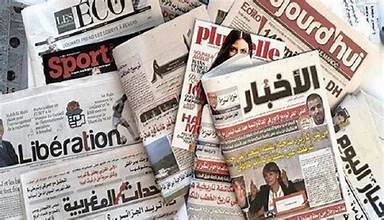
Over recent decades, Arab cultural journalism has undergone profound transformations that have stripped it of much of its historical standing as a space for shaping public consciousness, fostering intellectual debate, and influencing political and social life. Once regarded as a laboratory for major ideas and a platform for intellectual and literary elites, the cultural page has gradually retreated to the margins of the media landscape amid the dominance of political, sports, and entertainment media, shrinking freedoms, and the weakness of official cultural policies.
This decline cannot be separated from the broader political and social upheavals that swept across the Arab world during the second half of the twentieth century. Political instability, coups, and internal conflicts deeply affected the cultural sphere itself, leading to reduced cultural budgets, the weakening of intellectual institutions, and a diminished capacity for cultural journalism to fulfill its critical and enlightening role. As culture retreated step by step, cultural journalism inevitably paid the price because of the organic relationship between the two fields.
The report revolves around a central question: how did cultural journalism move from being an influential actor in public life to becoming little more than a marginal news section? After once engaging with issues such as colonialism, freedom, justice, and identity—and actively contributing to shaping public opinion—cultural journalism in many Arab newspapers has become limited to covering book releases, exhibitions, festivals, and literary events, often without producing genuine intellectual debate or critical commentary.
To illustrate the historical significance of cultural journalism, the report revisits major international examples showing that cultural journalism was never merely a secondary intellectual activity or cultural luxury, but rather an integral component of political and social struggle. French philosopher Jean-Paul Sartre used the magazine Les Temps Modernes to challenge French colonialism in Algeria, exposing himself to campaigns of vilification and direct threats. Likewise, the journalistic investigations of Albert Camus into the harsh conditions of Algeria’s Kabyle region created political and moral shockwaves in French public opinion. Meanwhile, Émile Zola played a decisive role in the Dreyfus Affair through his famous article “J’Accuse,” proving that a cultural article could alter the course of justice and politics alike.
These historical references are not merely anecdotal. Rather, they demonstrate the role cultural journalism can play when granted freedom, independence, and the capacity to influence public discourse. The report argues that the real crisis today is not the absence of culture itself, but the loss of cultural journalism’s critical function and its transformation into a “domesticated” form of journalism operating only within the boundaries of what is deemed “politically acceptable.”
Censorship, political pressure, imprisonment, exile, and restrictions on public space across many Arab countries have created a cautious media environment that tends to avoid controversial or sensitive topics. As a result, opinion and critical reflection gradually disappeared from cultural pages, replaced by fleeting news items such as: “a new book was published,” “an exhibition opened,” or “a seminar was held.” In this way, cultural journalism lost one of its most important historical functions: generating public debate.
The report also highlights another dimension of decline: the diminishing role of cultural journalism in discovering and nurturing literary and intellectual talent. Many of the Arab world’s most influential writers began their careers in cultural publications, most notably Naguib Mahfouz, whose early works appeared in literary magazines before he became the first Arab recipient of the Nobel Prize in Literature. The same applies to figures such as Mahmoud Darwish and Emile Habibi, among many others. Today, however, the space devoted to literary publication has shrunk dramatically, and serialized novels and newly published poetry in newspapers have nearly disappeared.
The rise of digital media and social media platforms has further complicated the crisis. On the one hand, digital platforms have provided broader spaces for publication and expression. On the other, they have contributed to the simplification and commodification of cultural discourse, transforming it into rapidly consumable content governed by algorithms, trends, and instant engagement metrics. As a result, the intellectual or cultural journalist is no longer a central figure in shaping public taste but must instead compete within an overwhelming digital environment dominated by entertainment and sensationalism.
Despite the report’s generally pessimistic tone, it acknowledges that some newspapers and cultural institutions still strive to preserve the critical and professional mission of cultural journalism. Yet these efforts remain limited and increasingly difficult within fragile political and cultural environments.
Ultimately, the report demonstrates that the crisis of Arab cultural journalism is not merely a professional or technological problem. Rather, it reflects a deeper crisis concerning the relationship between culture and authority, the condition of the Arab public sphere, and society’s ability to sustain free intellectual debate. When culture is reduced to folklore or entertainment and detached from its social and political contexts, cultural journalism inevitably loses its historical role as a space for awareness, critique, and the articulation of major questions.
Accordingly, restoring the role of cultural journalism cannot be achieved simply by increasing the number of cultural pages or television programs. It requires restoring the value of culture itself as a fundamental pillar of modern societies and a cornerstone of freedom and critical thought—not merely a marginal activity that can easily be replaced by advertising pages or entertainment programs.
Most read