A Ceasefire Without Stability: Why Is Escalation Returning to Southern Lebanon Despite Repeated Truces?

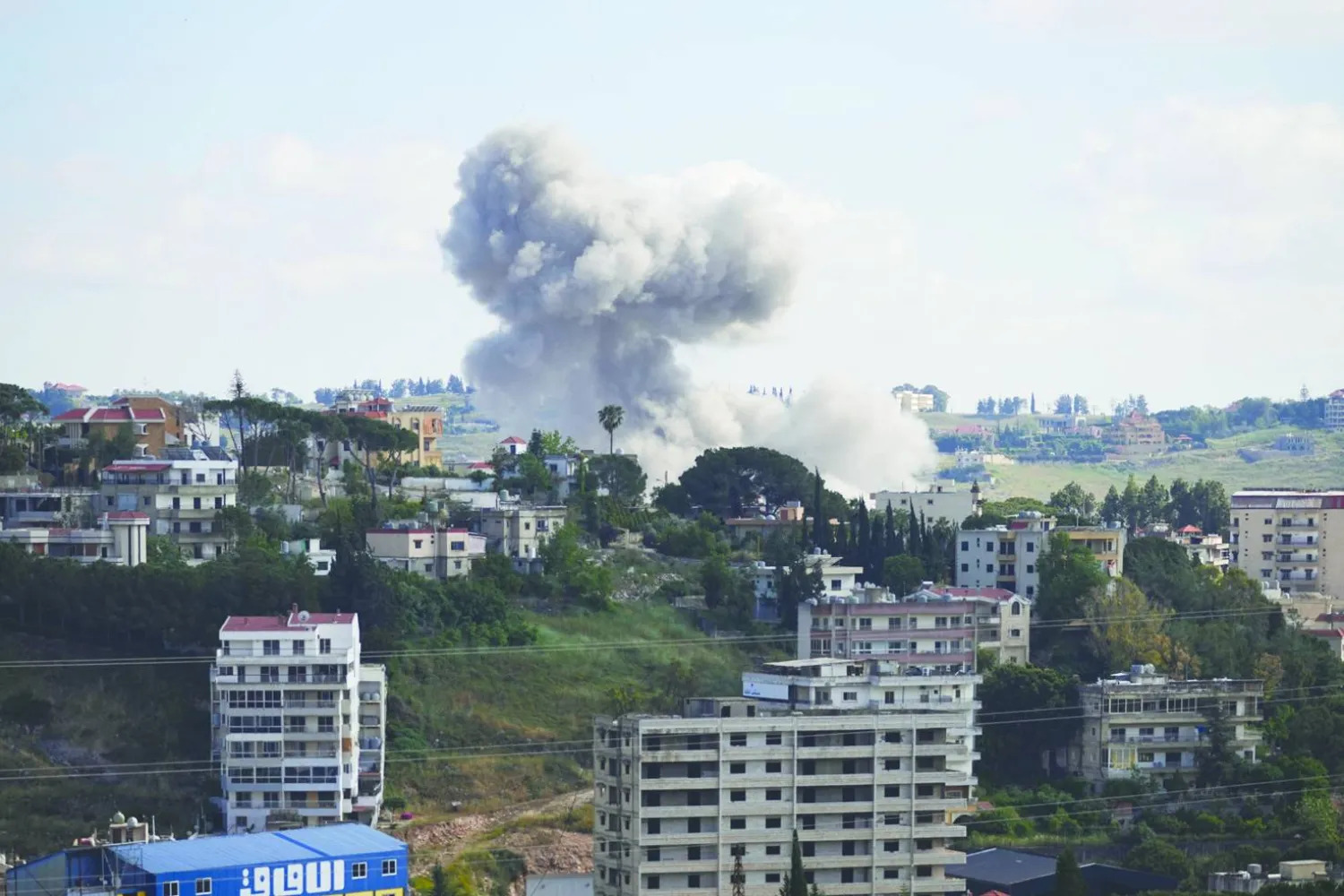
The recent clash between Israeli forces and an armed militant in southern Lebanon, which left four Israeli soldiers wounded, alongside Israeli airstrikes targeting the outskirts of Nabatieh al-Fawqa, underscores a fundamental reality: the security situation along the Israeli-Lebanese border remains far from stable despite a series of ceasefire agreements announced in recent months. Rather than signaling the end of hostilities, the current truce appears to represent a mechanism for managing the conflict rather than resolving it. Sporadic clashes and recurring airstrikes demonstrate that the strategic environment has not fundamentally changed; instead, the confrontation has evolved from full-scale warfare into a low-intensity conflict capable of escalating at any moment.
Ground Clashes: A Sign of Persistent Tactical Fragility
The wounding of four Israeli soldiers, including two officers, carries significance that extends well beyond the immediate casualties. It highlights that Israeli forces deployed in parts of southern Lebanon continue to face direct threats from armed fighters capable of launching close-range attacks despite Israel’s overwhelming military and intelligence superiority.
This development illustrates that territorial control does not necessarily translate into comprehensive security dominance, particularly in the complex operational environment of southern Lebanon. Armed groups possess decades of experience in guerrilla warfare, effectively exploiting rugged terrain and local support networks. Consequently, any prolonged Israeli ground deployment remains vulnerable to intermittent attritional attacks, even in the absence of large-scale military engagements.
The incident also suggests that Israel has yet to achieve one of its principal military objectives: preventing hostile armed activity near its northern border. As long as such operations remain possible, Israeli forces will continue to operate under heightened alert, increasing both the operational and political costs of maintaining a sustained military presence inside Lebanese territory.
Airpower as a Tool of Continuous Deterrence
The Israeli airstrikes on the outskirts of Nabatieh al-Fawqa reaffirm Israel’s continued reliance on a strategy of deterrence through sustained military pressure. This approach involves conducting preemptive or retaliatory strikes immediately after perceived security threats emerge, with the objective of preventing armed groups from rebuilding their capabilities or establishing new operational positions.
However, the continuation of these strikes despite multiple ceasefire announcements reflects a broader shift in Israeli military doctrine. Rather than treating a ceasefire as an absolute suspension of hostilities, Israel increasingly appears to embrace the concept of a "conditional ceasefire," maintaining that it reserves the right to conduct military operations whenever it identifies either an immediate or a potential threat to its national security.
Through this strategy, Israel seeks to establish a new security equation that preserves its freedom of aerial and intelligence operations inside Lebanon while denying its adversaries the opportunity to restore their military infrastructure. The inevitable consequence, however, is the persistence of an unstable security environment in which ceasefires remain inherently fragile.
Why Do Ceasefires Continue to Collapse?
Recent developments demonstrate that successive ceasefire agreements have addressed the symptoms of the conflict without resolving its underlying causes. Instead of creating a sustainable political and security settlement, these agreements have merely frozen large-scale military operations. Consequently, even relatively minor security incidents can rapidly trigger renewed military action.
Several structural factors explain the fragility of these ceasefires. First, there is an absence of effective monitoring and enforcement mechanisms capable of ensuring full compliance by all parties. Second, military operations continue to serve broader political objectives, with each side using limited engagements to strengthen its negotiating position or reinforce deterrence. Third, Lebanon's fragmented security landscape—characterized by the presence of multiple armed actors—makes comprehensive control over military activities extremely difficult.
As a result, the current ceasefire resembles a temporary suspension of major combat operations rather than a durable security arrangement, explaining why it repeatedly unravels after only brief periods of relative calm.
Israel's Strategic Dilemma: Attrition or Decisive Control
Despite its military superiority, recurring ground engagements raise fundamental questions about the long-term viability of maintaining Israeli forces inside southern Lebanon. Historical experience—from Israel's occupation of southern Lebanon prior to 2000 to subsequent confrontations—demonstrates that prolonged ground deployments often evolve into wars of attrition, providing armed groups with repeated opportunities to conduct relatively small-scale attacks whose psychological and political impact far exceeds their military significance.
At the same time, Israeli decision-makers recognize that a complete withdrawal could be portrayed by their adversaries as a strategic victory, undermining the political objectives of the military campaign. Israel therefore finds itself caught between two competing imperatives: maintaining sufficient military pressure to deter hostile actors while avoiding a prolonged and costly war of attrition.
Lebanon Between Security Pressures and Political Constraints
From Lebanon's perspective, these developments impose growing challenges on an already fragile state. Continued Israeli airstrikes deepen the humanitarian and economic damage inflicted upon southern Lebanon at a time when the country is still struggling with an unprecedented financial and political crisis.
Moreover, ongoing military operations further constrain the Lebanese government's ability to exercise full sovereignty over its southern border regions, leaving national security increasingly shaped by broader regional dynamics rather than purely domestic decision-making.
The persistence of hostilities also threatens reconstruction efforts and delays the return of displaced civilians, effectively trapping southern Lebanon in a condition that is neither peace nor war—a volatile environment that continually increases the likelihood of renewed escalation.
The Regional Dimension: A Front That Remains Open
The escalation in southern Lebanon cannot be viewed in isolation from the wider regional strategic landscape. The Lebanese front continues to serve as one of the principal arenas through which Israel and the so-called Axis of Resistance exert pressure on one another. Consequently, developments along the border remain closely linked to events unfolding elsewhere, including the conflict in Gaza, Israeli-Iranian tensions, and broader U.S. strategic engagement in the Middle East.
This interdependence means that escalation in any one of these theaters can rapidly reverberate across the Lebanese front, making lasting stability contingent upon regional rather than purely bilateral dynamics.
The Future of the Ceasefire: Conflict Management Rather Than Conflict Resolution
Current indicators suggest that southern Lebanon is entering a new phase characterized by sustained low-intensity conflict, in which limited clashes, targeted airstrikes, and localized military operations continue without escalating into full-scale war or producing lasting peace.
Israel appears determined to maintain continuous military pressure to prevent its adversaries from rebuilding their combat capabilities, while armed groups remain equally committed to demonstrating their ability to impose ongoing security and political costs on Israeli forces operating near the border.
Under these conditions, ceasefire agreements alone are unlikely to produce genuine stability unless they evolve into broader political and security arrangements supported by effective monitoring mechanisms, credible international guarantees, and meaningful efforts to address the structural drivers of conflict. Until such conditions emerge, ceasefires will continue to function primarily as instruments for managing confrontation rather than resolving one of the Middle East's most volatile and enduring security flashpoints.
Most read