
“Zero Tariffs” and Expanding Influence: How China Is Redrawing the Geopolitical Map of Africa

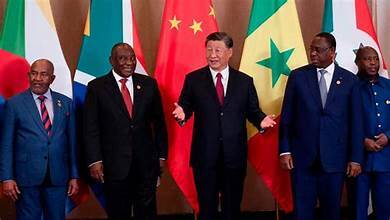
At a time when major economies are moving toward greater protectionism and economic confrontation, China has chosen to send a different message to Africa. Chinese President Xi Jinping’s announcement that Beijing will eliminate tariffs on imports from all African countries with which it maintains diplomatic relations appears, on the surface, to be a trade facilitation measure. In reality, however, it signals a new phase in China’s long-term strategy toward the continent.
While the policy ostensibly aims to increase African exports to the Chinese market, its broader significance lies in how Beijing is using trade, investment, and economic integration as instruments to deepen its political and geopolitical influence across a continent that has become one of the most important arenas of global competition in the twenty-first century.
Africa at the Heart of China’s Global Strategy
Since the beginning of the century, Africa has evolved from being merely a source of raw materials for China into a central pillar of Beijing’s global economic and geopolitical vision.
Over the past two decades, China has become Africa’s largest trading partner, surpassing traditional European powers and the United States. Through massive investments in infrastructure, energy, transportation networks, ports, railways, and industrial projects, Beijing has established a presence that extends far beyond commercial engagement.
The launch of the Belt and Road Initiative (BRI) in 2013 further accelerated this trend, positioning Africa as a critical component of China’s vision for a more interconnected global economy.
Today, amid intensifying strategic competition with the United States and growing Western efforts to reduce dependence on Chinese supply chains, Africa represents much more than a market or a source of natural resources. For Beijing, it is a strategic space that provides economic depth, diplomatic support, and long-term opportunities for growth in an increasingly fragmented international system.
Viewed from this perspective, the tariff exemption initiative is not merely a trade policy. It is part of a broader effort to bind African economies more closely to the Chinese market and strengthen China’s influence across the continent for decades to come.
From Development Assistance to Economic Integration
China has long faced Western criticism for using loans and infrastructure financing to expand its political leverage in Africa. In recent years, however, Beijing has sought to reshape this narrative by shifting from a model centered primarily on financing and construction to one focused on deeper economic integration.
Rather than simply building roads, railways, and ports, China is increasingly attempting to ensure that these projects become part of a larger economic ecosystem linked directly to Chinese markets.
Chinese policymakers understand that sustainable influence cannot be built solely through loans and infrastructure. It requires the creation of mutually beneficial economic relationships that generate long-term interdependence.
The removal of tariffs should therefore be viewed less as a concession and more as a strategic investment designed to reinforce China’s economic presence and political influence throughout Africa.
An Indirect Challenge to Washington
It is difficult to separate China’s decision from the broader context of strategic rivalry with the United States.
Since the outbreak of the U.S.-China trade war, Beijing has actively pursued market diversification and sought to reduce its dependence on Western economies. As protectionist measures, tariffs, and technological restrictions have become increasingly common, emerging markets have acquired greater importance in China’s economic calculations.
Africa is particularly attractive in this regard. Home to more than 1.4 billion people, the continent has the world’s fastest-growing population and possesses enormous reserves of strategic resources essential for the industries of the future. These include copper, cobalt, lithium, rare earth elements, and other critical minerals necessary for artificial intelligence, renewable energy technologies, batteries, and advanced manufacturing.
Consequently, Beijing is not merely offering trade preferences to African nations. It is also seeking to cultivate a broad economic and political constituency that can support China’s interests in international institutions and global markets while providing access to critical resources.
Africa’s Minerals: The Real Strategic Prize
Although Chinese officials frequently emphasize themes such as “mutual development” and “South-South cooperation,” economic interests remain at the core of Beijing’s African strategy.
China is the world’s largest consumer of many industrial commodities and requires reliable access to vast quantities of raw materials to sustain its manufacturing sector and technological ambitions.
Trade data reveal that minerals account for a significant share of African exports to China. These include copper from Zambia and the Democratic Republic of the Congo, iron ore and manganese from South Africa, bauxite from Guinea, as well as oil and gas from numerous African producers.
From this perspective, facilitating African exports serves a dual purpose. It provides African economies with greater access to the Chinese market while simultaneously helping Beijing secure the resources necessary to support its long-term industrial and technological development amid mounting geopolitical uncertainty.
Can Africa Truly Benefit?
Despite widespread enthusiasm across the continent, the most important question remains whether African economies possess the capacity to fully capitalize on this opportunity.
The central challenge is not tariffs themselves but the structure of African exports.
Most African economies remain heavily dependent on exporting raw materials and primary commodities, while their manufacturing sectors remain relatively underdeveloped. As a result, removing tariffs may increase export volumes without necessarily generating the structural economic transformation that many African countries seek.
The European Union’s “Everything But Arms” initiative offers an instructive comparison. Although the program granted duty-free access to European markets for many of the world’s least-developed countries, the results were often constrained by limited industrial capacity and weak manufacturing sectors.
A similar dynamic could emerge in China-Africa trade relations. Without significant industrial upgrading, many African countries may find themselves exporting larger quantities of raw materials while remaining unable to move up global value chains and capture greater economic value.
China’s Economic Soft Power
Beyond trade statistics, the tariff initiative reflects a broader strategy of economic statecraft and soft power.
Whereas Western aid and investment are frequently accompanied by conditions related to governance, democracy, transparency, or human rights, China presents itself as a partner that does not interfere in domestic political affairs and does not attach ideological conditions to economic cooperation.
This approach resonates with many African governments, some of which view Western conditionality with skepticism and prefer Beijing’s pragmatic model of engagement.
By combining infrastructure investment, trade expansion, industrial cooperation, technology transfer, and market access, China is constructing a multifaceted network of influence that extends from ports and mining sites to commercial hubs and political decision-making circles.
A New Phase in the Global Competition for Africa
China’s “zero-tariff” initiative demonstrates that competition for influence in Africa has entered a new phase—one that extends beyond traditional aid programs and diplomatic engagement.
A continent once viewed as peripheral to the global economy has become a central arena in the struggle over resources, markets, supply chains, and geopolitical influence.
Beijing recognizes that much of the world’s future economic growth will be concentrated in Asia and Africa. Consequently, it is moving aggressively to consolidate its position before competing powers can regain lost ground.
In this context, tariff elimination is far more than a commercial policy. It is a calculated component of a long-term strategy aimed at converting economic influence into political leverage, transforming trade relationships into strategic partnerships, and increasingly linking Africa’s development trajectory to China’s economic rise.
While African nations gain expanded access to the world’s second-largest economy, China secures something equally valuable: a stronger foothold in one of the most strategically significant regions shaping the future balance of global power.
Most read