Niger and the Reshaping of Security Partnerships: New Regional Balances Between Algeria and Eastern Libya

Niger’s simultaneous moves to strengthen cooperation with Algeria and the authorities in eastern Libya appear to be more than separate diplomatic initiatives. Rather, they reflect an emerging effort to reshape the country’s network of regional and security partnerships amid an increasingly complex geopolitical environment across the Sahel and Sahara. While Algeria is seeking to expand its security and military presence in Niger to protect its strategic interests and energy infrastructure, Niamey is opening a new channel of cooperation with the authorities based in Benghazi and led by Khalifa Haftar. This raises questions about the nature of the regional balance Niger is seeking to establish within its wider neighbourhood.
The development is particularly significant in light of the signing of a memorandum of understanding on strategic cooperation between Niger and the authorities in eastern Libya on 1 November 2026. The agreement was signed during a visit to Benghazi by Nigerien Prime Minister Ali Mahaman Lamine Zeine, who met Saddam Haftar, Deputy Commander-in-Chief of the Libyan armed forces in the east, in the presence of Libyan Prime Minister Osama Hammad. Although the announcement pointed to an expansion of cooperation and stronger coordination between the two sides, the absence of publicly available details about the memorandum and its associated commitments makes it too early to determine its full security and political implications.
Niger and the Policy of Diversifying Partnerships
Niger’s rapprochement with eastern Libya can be understood within the broader context of its efforts to diversify its regional options rather than concentrate its security relationships around a single partner. This is particularly relevant at a time when the country faces multiple challenges involving border security, armed groups, smuggling networks, and the protection of trade and energy routes. Given its geographical position, Niger serves as a link between the Sahel and North Africa, while its border with Libya forms part of strategic corridors where security, economic interests, and the movement of people and goods intersect.
From this perspective, opening up to the authorities in eastern Libya could provide Niamey with an additional channel for coordination on border security and the fight against illicit activities, while also strengthening economic and commercial relations. Maintaining contact with forces that exercise de facto control over extensive areas of southern and eastern Libya also gives Nigerien authorities greater scope to address the realities on the ground along their northern border, regardless of the complexities of Libya’s political division.
This approach does not necessarily indicate that Niger is shifting towards a new regional axis or distancing itself from Algeria. It can instead be interpreted as an attempt to broaden its room for manoeuvre and build multiple relationships that allow it to engage with different actors according to the nature of its interests and the issues at stake.
Algeria: From Security Cooperation to Protecting Strategic Interests
Algeria’s military move inside Niger represents an important development in the role Algiers is seeking to play in the Sahel. The Algerian Parliament approved the deployment of units from the People’s National Army to Niger, in a move presented by the authorities as aimed at protecting economic and energy interests, particularly infrastructure linked to Algerian investments. The decision is especially significant because it marks a notable shift in Algeria’s traditional policy regarding the deployment of military forces beyond its borders.
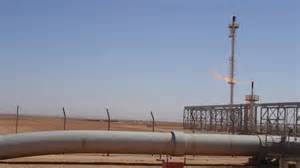
This step is closely linked to Algeria’s economic interests in Niger, particularly energy projects and cooperation related to the Trans-Saharan Gas Pipeline, which is intended to connect Nigeria to Algeria through Niger, as well as Sonatrach’s exploration and production activities in the country. The military presence therefore carries implications beyond security alone; it is also connected to protecting investments and infrastructure that form part of Algeria’s broader strategy to strengthen its position in African and international energy markets.
In this context, the energy assistance reported by Algerian media—including the supply of approximately 1.6 million litres of petrol to Niger and the allocation of part of Algeria’s electricity output to the Nigerien authorities—carries significance beyond immediate economic support. It reflects the use of energy resources as an instrument for strengthening bilateral relations and building long-term strategic ties, thereby extending Algeria’s presence beyond military and security cooperation into the economic and service sectors. Press reports have referred to these supplies, although sufficient independently verified details have not been made available to establish their precise timeframe and implementation arrangements.
Overlapping Interests and Diverging Regional Calculations
The sensitivity of Niger’s rapprochement with eastern Libya stems from the strained relationship between Algeria and Khalifa Haftar, as well as from differences in their approaches to several regional issues. Algeria views Libya’s stability and unity as essential components of its strategic security and has consistently supported a political process that preserves the unity of Libyan institutions and limits foreign interference. The authorities in eastern Libya, meanwhile, maintain a range of regional relationships and operate within a network of political and military understandings that do not necessarily align with Algeria’s priorities and strategic outlook.
Consequently, the signing of the cooperation memorandum between Niger and eastern Libya places Niamey before a delicate equation: how can it benefit from cooperation with Algeria in security and energy while expanding its relations with the authorities in eastern Libya, without allowing these relationships to become a source of tension with either side?
Nevertheless, assuming that the two tracks are inherently incompatible may be premature. Niger’s cooperation with Algeria does not, in principle, prevent it from maintaining relations with the authorities in eastern Libya. Likewise, the memorandum signed in Benghazi does not, by itself, demonstrate that the agreement is directed against Algerian interests or represents an alignment against Algiers. Determining the nature of this rapprochement will depend on the agreement’s actual provisions and whether it develops into practical security or military arrangements.
This highlights the importance of distinguishing between diversifying partnerships and joining competing regional blocs. The former gives Niger greater diplomatic flexibility, while the latter could place it at the centre of regional rivalries, increasing the political and security costs of its choices.
Libya and the Sahel: The Overlap Between Security and Politics
These developments cannot be separated from the broader transformation of relations between North Africa and the Sahel. Libya’s southern borders and Niger’s northern frontiers have increasingly become part of an interconnected security environment shaped by armed groups, smuggling networks, irregular migration, and competition over trade routes and energy corridors.
Against the backdrop of Libya’s political division, the relationships that Sahelian countries establish with forces exercising control on the ground have acquired practical importance, but they also carry political complexities. Cooperation with the authorities in eastern Libya may help address certain border-related issues, but it does not eliminate the need to take Libya’s institutional division into account, nor does it guarantee that bilateral understandings can be implemented along the entire Libyan border or at the national level.
Expanding security cooperation between Niamey and Benghazi could also open the way for new arrangements involving border control, information-sharing and field coordination. However, these possibilities remain dependent on the memorandum’s specific implementation mechanisms and clearly defined areas of responsibility. In the absence of such details, the agreement should be viewed as an indication of a political direction towards closer relations, rather than evidence of a fully established military alliance.
Between Multiple Partnerships and the Risks of Regional Polarisation
Niger faces a challenge that goes beyond choosing its partners. It must manage its external relations in a way that meets its security and economic needs without allowing its territory to become an arena for competition among regional powers. Cooperation with Algeria offers important support in energy and security, while engagement with eastern Libya could provide additional opportunities for border coordination and economic relations. However, the simultaneous development of these two tracks requires Niamey to maintain a degree of balance in its relations with the different parties.
For Algeria, the calculations extend beyond protecting its facilities and investments inside Niger. They are also linked to preserving its position as a major regional actor in Sahel and Sahara affairs. Any expansion of the influence of other powers near its southern and eastern borders could therefore attract greater scrutiny from Algiers, particularly if accompanied by security or military arrangements with wider regional implications.
Nevertheless, portraying these developments as a direct confrontation between Algeria and Haftar’s camp is not currently supported by sufficient evidence. Regional competition does not necessarily mean that every rapprochement between two parties is directed against a third, and states may share interests on specific issues despite differences on others.
The Prospects of Rapprochement and the Limits of Strategic Change
The current developments leave room for several possible trajectories. Cooperation between Niger and eastern Libya could evolve into a practical framework focused on border coordination, combating smuggling and exchanging information. Such an arrangement would represent an extension of Niger’s partnership-diversification policy without fundamentally changing its relations with Algeria. Alternatively, the agreement could expand to include more sensitive security and military fields, raising further questions about its implications for the existing balance of power in the Sahel.
Another possible trajectory would involve Niger successfully managing its multiple relationships in a balanced manner, benefiting from Algerian cooperation to protect its energy interests while engaging with the authorities in eastern Libya to address border-related issues, all while avoiding regional polarisation that does not serve its domestic priorities.
Achieving such a balance, however, will depend not only on Niamey’s calculations but also on the positions of Algeria and the authorities in eastern Libya, as well as on the willingness of the parties concerned to separate bilateral cooperation from broader political competition.
Niger and the Test of Strategic Autonomy
Ultimately, Niger’s recent moves reflect an attempt to reshape its network of security and political relationships within a regional environment where geography, resources and energy corridors are becoming increasingly important. Its rapprochement with eastern Libya, alongside the expansion of Algeria’s presence, points to an effort to broaden Niamey’s available options. At the same time, it places the country before the challenge of managing regional balances without becoming entangled in the calculations of competing geopolitical blocs.
The significance of these developments lies not simply in the signing of a new memorandum of understanding or the approval of an Algerian military deployment. It lies in what they may reveal about future changes in security arrangements across the Sahel and Sahara. The extent to which the agreement affects Algerian-Nigerien relations and the position of the authorities in eastern Libya within the regional security landscape will depend on the substance of the actual commitments and the mechanisms through which they are implemented.
Caught between its need for security support and energy investment, and its desire to preserve greater autonomy in its foreign-policy decisions, Niger faces a delicate equation: diversifying partnerships without turning them into rigid alignments, and strengthening its security without importing regional rivalries into its national calculations.
Most read




Read also