Gulf Capital in the Era of US-China Competition: From Investment Power to Geoeconomic Influence

Competition between the United States and China is no longer confined to trade wars, tariffs, and military balances. It has increasingly expanded into advanced technologies, particularly artificial intelligence (AI), semiconductors, energy, digital infrastructure, and control over the supply chains and technologies that will shape the global economy in the decades ahead. In this evolving landscape, technology has ceased to be merely a promising economic sector. It has become a central component of national power and an increasingly important source of strategic advantage and international influence.
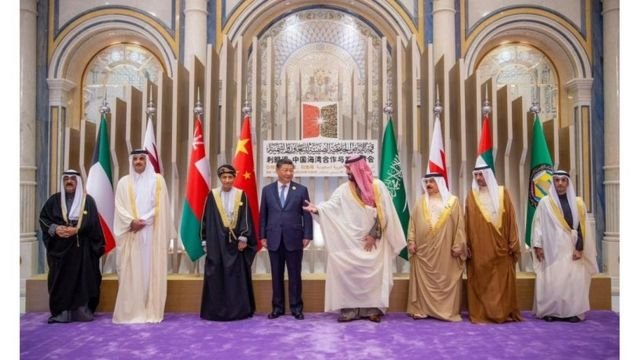
Amid this competition, the Gulf countries possess a strategic resource that offers them an exceptional opportunity to participate in shaping the emerging global order: financial power. Through their substantial sovereign wealth funds (SWFs), Saudi Arabia, the United Arab Emirates, Qatar, and other regional states can channel billions of dollars into strategic sectors and diverse markets, giving them an increasingly significant role in influencing global investment trends and participating in the development of the industries and technologies that will shape future economic power balances.
Yet the significance of this financial strength lies not simply in the scale of assets or investment returns, but in how effectively it can be deployed and transformed into sustainable productive and technological capabilities. This presents Gulf countries with a new strategic equation: how can they maintain their position as global investors seeking attractive financial returns while simultaneously becoming geoeconomic powers capable of influencing the direction of the global economy, without becoming subordinate to either of the competing technological blocs?
When Capital Becomes a Source of Power and Influence
For decades, oil and gas revenues have provided the principal foundation for wealth accumulation in Gulf countries, generating substantial financial surpluses that enabled them to expand overseas investments and develop their domestic economies. However, global economic transformations, together with challenges associated with the future of energy and the digital transition, have prompted these countries to reconsider how their wealth is deployed. They are gradually moving away from dependence on hydrocarbon revenues towards more diversified investment portfolios targeting high-value-added sectors.
Financial indicators reveal the growing scale of this investment power. According to a Global SWF report, sovereign wealth funds in the Middle East and North Africa (MENA) managed approximately US$6.1 trillion in assets as of September 2026, while total assets managed by sovereign wealth funds worldwide had exceeded US$15 trillion at the beginning of the same year. Within the Gulf Cooperation Council (GCC), a 2025 International Monetary Fund study reported that 13 sovereign wealth funds collectively managed more than US$4 trillion in assets.
It is important to distinguish between assets under management and cash readily available for expenditure. These figures include a wide range of investments in equities, bonds, companies, real estate, infrastructure, and other financial and productive assets. Nevertheless, they demonstrate the scale of the investment capacity that the region has accumulated and the extent of its growing presence in international markets.
These indicators become even more significant when examined alongside actual investment trends. Between January and September 2026, investment deployments by regional sovereign wealth funds reached approximately US$102 billion. The technology sector, including artificial intelligence, accounted for nearly 30 percent of this amount, equivalent to approximately US$30.6 billion. Infrastructure, financial services, and real estate were also major investment destinations.
This trend suggests that Gulf sovereign wealth funds are moving beyond traditional investments in financial and real estate assets towards sectors expected to shape the future of the global economy, particularly artificial intelligence, digital technologies, and the infrastructure underpinning them.
Saudi Arabia offers a particularly relevant example of how sovereign wealth funds can support economic transformation. The Saudi Public Investment Fund (PIF) recorded cumulative domestic investments exceeding US$199 billion between 2021 and 2025. According to its annual report, it also contributed more than US$342 billion to the Kingdom's real non-oil GDP during the same period.
The distinction between these two figures is important: the first represents cumulative domestic investments, while the second refers to the Fund's contribution to non-oil GDP, rather than additional direct investment. Nevertheless, these indicators illustrate the role sovereign wealth funds can play in stimulating economic activity, expanding the productive base, and supporting sectors beyond traditional dependence on oil.
In this context, Saudi Arabia's Public Investment Fund and Abu Dhabi's Mubadala Investment Company stand out as examples of investment institutions whose objectives extend beyond financial returns to include the development of strategic sectors, support for domestic economic transformation, and the creation of cross-border investment partnerships.
A World Moving Towards Technological Fragmentation
The growing strategic importance of Gulf investments cannot be understood independently of the transformations taking place in US-China competition. Technological superiority has become one of the most important determinants of international power. Control over advanced technologies is no longer simply a commercial or industrial matter; it is increasingly linked directly to national security, military capabilities, and strategic autonomy.
Developments within the US defense establishment offer an indication of this transformation. The US Department of Defense announced the appointment of Elon Musk, alongside Anduril founder Palmer Luckey and former US House Speaker Newt Gingrich, to help lead Project Meridian, which focuses on studying future battlefields and the technologies expected to shape military operations. The original report also referred to the establishment of a new Autonomous Warfare Command, focused on autonomous systems, robotics, drones, and artificial intelligence.
These developments illustrate the growing convergence of technology, defense industries, the economy, and foreign policy. Artificial intelligence, semiconductors, satellites, robotics, and data are no longer merely tools for improving economic efficiency. They have become essential components of military power and national competitiveness.
Consequently, the world is moving towards the emergence of two increasingly competing technological ecosystems: one centered on the United States and its allies, and another developing around China and its economic and technological networks. This does not necessarily imply a complete or irreversible division into two separate blocs. Rather, it reflects a growing tendency to reorganize supply chains, restrict access to sensitive technologies, strengthen technological autonomy, and align investment and industrial policies with security and strategic considerations.
The early signs of this fragmentation emerged with the escalation of the US-China trade war in 2018. Since then, however, the competition has extended well beyond tariffs to encompass semiconductors, artificial intelligence, telecommunications, energy, digital infrastructure, and other sectors that have become central arenas of strategic rivalry between the two powers.
For Gulf countries, this transformation presents a challenge that goes beyond choosing whether to invest in American or Chinese companies. The more fundamental question is how to maintain diversified economic and technological relationships in an international environment where political and regulatory pressures increasingly encourage countries and corporations to align themselves with competing technological ecosystems.
The Gulf's Two-Track Strategy: Global Investor and Geoeconomic Power
The fact that Gulf sovereign wealth funds control assets worth trillions of dollars does not, in itself, guarantee international influence or economic autonomy. The real strategic value of capital depends on its ability to generate knowledge, technology, productivity, institutions, and companies capable of competing in global markets.
For Gulf countries to combine the roles of global investor and geoeconomic power, they must therefore move beyond an investment model primarily focused on identifying opportunities and maximizing financial returns. A broader approach is needed, one that connects investment with the development of domestic capabilities and the strengthening of strategic influence.
This means that foreign investments should not be assessed solely on the basis of financial returns or asset appreciation, but also in terms of their potential to facilitate technology and knowledge transfer, develop human capital, establish research partnerships, and open new markets for domestic companies.
For example, investment in data centers should not be limited to owning and operating infrastructure. It should also contribute to developing digital skills, strengthening scientific research, and building local capabilities in software development, data analytics, and artificial intelligence applications. The benefits of such investments should also extend to healthcare, manufacturing, energy, and financial services, thereby improving economic productivity and creating new sources of growth.
Similarly, investments in advanced technology companies can provide an entry point for integrating Gulf businesses into global value chains and developing domestic industries capable of producing competitive goods and services, rather than limiting their role to that of financial investors or consumers of imported technologies.
In this sense, knowledge transfer, technology localization, and human capital development should become essential indicators for measuring the strategic value of investments, alongside conventional financial returns.
Three Risks to Turning Financial Strength into Sustainable Influence
Despite the considerable opportunities offered by Gulf sovereign wealth, deploying this capital in an increasingly polarized international environment involves several risks that require careful management.
First: Investment concentration risk. Allocating a substantial proportion of assets to particular countries, companies, or sectors may expose investment portfolios to significant losses when political, regulatory, or economic shocks occur. These risks are particularly pronounced in advanced technology sectors, where corporate and technological valuations can change rapidly and investment decisions may be affected by government restrictions and geopolitical competition.
Second: Regulatory and technological risks. Investing in strategic sectors does not necessarily guarantee access to technology or the ability to use and develop it. Foreign investments may be subject to national security reviews, restrictions on the transfer of knowledge and sensitive technologies, or changes in regulations governing cross-border trade and investment. Owning a financial stake in a technology company does not necessarily confer access to all its technologies or the right to participate in their development.
Third: Political risk. Using investments to pursue international influence can sometimes cause political considerations to overshadow commercial objectives. High-profile projects may enhance a country's international standing, but they do not necessarily generate returns commensurate with the capital committed and the risks involved. Good diplomatic relations should therefore never replace rigorous professional investment analysis, and geopolitical ambitions should not become a justification for bypassing standards of efficiency and economic viability.
These risks make it essential for Gulf sovereign wealth funds to maintain diversified international partnerships, avoid excessive dependence on any single market, technology, or partner, and uphold financial discipline, institutional governance, and transparency in investment decision-making.
Four Priorities for Strengthening Gulf Geoeconomic Power
Turning financial wealth into sustainable economic and technological influence requires an integrated strategy built around four complementary priorities.
First: Diversifying investment portfolios. Investments should be distributed across different countries, sectors, and asset classes to reduce concentration risks and strengthen resilience against geopolitical shocks and economic volatility. This also requires maintaining multiple partnerships with major technological powers, enabling Gulf countries to benefit from available opportunities without becoming dependent on a single ecosystem.
Second: Strengthening investment discipline and governance. Investment decisions should be based on objective assessments of returns and risks, clear professional standards, and governance mechanisms that ensure transparency and accountability. Maintaining a careful balance between commercial considerations and strategic objectives is essential, so that investments do not become political instruments at the expense of economic viability.
Third: Prioritizing domestic capacity-building. Foreign investment should be linked to clearly defined objectives involving technology transfer, human resource development, and stronger scientific research, as well as enabling domestic companies to participate in global supply chains. Genuine success is not achieved merely by owning technological assets abroad, but by ensuring that the domestic economy can absorb knowledge, develop it, and translate it into competitive products, services, and employment opportunities.
Fourth: Improving transparency, accountability, and impact assessment. The performance of sovereign wealth funds should not be measured exclusively by financial returns or increases in portfolio valuations. Their contribution to productivity, income diversification, domestic industrial development, job creation, and national economic competitiveness should also be taken into account.
From Financial Wealth to the Power to Shape the Future
The transformations currently underway in the global economy demonstrate that international influence is no longer the exclusive preserve of countries possessing the largest military arsenals or industrial and technological bases. Financial power, when managed within a coherent strategic vision, can become an independent source of influence and an instrument for participating in the shaping of markets, supply chains, innovation hubs, and technological development.
In this context, Gulf countries have a significant opportunity to move beyond their traditional position as investors deploying financial surpluses in global markets and become partners in determining the direction of investment, technology, and production. Achieving this transformation, however, requires moving beyond a purely quantitative understanding of wealth and assessing its value in terms of the knowledge and productive capabilities it generates, as well as the economic autonomy it helps build.
US-China competition should not be viewed as an equation forcing Gulf countries to make an inevitable choice between the two powers. The strategic interest of the Gulf lies in maintaining diversified and balanced relationships, capitalizing on the opportunities generated by competition between the two countries, and avoiding technological or economic dependence on either side.
The real challenge facing Gulf sovereign wealth funds is not how much money they can invest, but how effectively they can transform that money into technology, knowledge, productivity, and a more diversified and resilient economic foundation. Financial power gives Gulf countries an opportunity to enter the centers of influence in the global economy. Yet their ability to convert capital into sustainable domestic value will ultimately determine whether they remain major global investors or emerge as influential geoeconomic powers shaping the contours of the next international order.
Most read


Read also