Lebanon and Israel: From Managing Confrontation to Testing the Limits of Deterrence

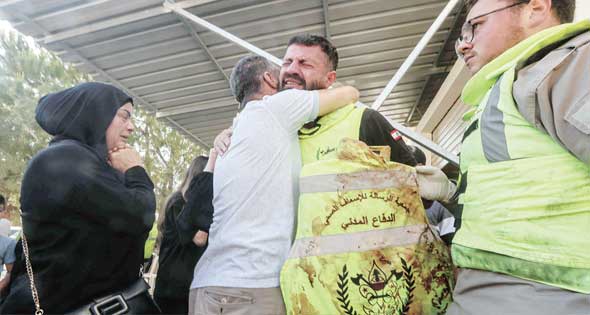
The latest escalation along the Lebanese-Israeli border should not be viewed as an isolated security incident or merely another round of reciprocal military exchanges. Rather, it represents a new chapter in a broader struggle over the rules of engagement and the balance of deterrence between the two sides amid profound regional transformations. The Israeli strike on Beirut’s southern suburb carries implications that extend far beyond its immediate military dimension, signaling Israel’s determination to demonstrate that ceasefire arrangements do not restrict its freedom of military action whenever it perceives threats to its national security.
Since the end of the 2006 Lebanon War, the security equation has largely rested on an unwritten understanding aimed at avoiding direct attacks on Lebanon’s strategic depth while limiting cross-border operations. Recent developments, however, suggest that this framework is increasingly under strain. Israel appears intent on establishing a new security reality that grants it greater latitude to conduct preemptive operations inside Lebanese territory under the banner of preventing future threats. This helps explain the expansion of Israeli military activities in recent months beyond the traditional zones of confrontation along the border.
The Crisis of Mutual Deterrence
The current confrontation highlights an important strategic paradox. Although both Israel and Hezbollah possess the capability to inflict significant damage on one another, neither appears willing to slide into a full-scale war. Israel recognizes that any major conflict with Hezbollah would entail military, economic, and human costs far greater than those experienced in previous wars, particularly given the substantial qualitative improvements in Hezbollah’s missile and drone capabilities over the past two decades.
At the same time, Hezbollah is acutely aware that Lebanon, already burdened by a severe economic and financial crisis, lacks the capacity to absorb the consequences of a prolonged military confrontation that could devastate infrastructure and further undermine internal stability.
This reality has produced what may be described as a condition of “unstable mutual deterrence,” in which both parties possess the means to escalate but lack confidence in their ability to control the consequences once a certain threshold is crossed. As a result, limited rounds of confrontation continue to recur without evolving into all-out war, even though each escalation increases the risk of miscalculation and unintended escalation.
The Erosion of UN Resolution 1701
The repeated violations along the border constitute a clear indication of the declining effectiveness of United Nations Security Council Resolution 1701 as the principal framework governing security arrangements in southern Lebanon. Nearly two decades after its adoption, the gap between legal commitments and realities on the ground has become increasingly evident.
Although the United Nations Interim Force in Lebanon (UNIFIL) and the Lebanese Armed Forces maintain a presence in the south, their role has increasingly resembled that of monitoring and documenting violations rather than preventing them. This reflects a broader dilemma in regional security architecture, where stability is sustained more by balances of power than by international guarantees or legal mechanisms. As diplomatic deterrence weakens, military tools become increasingly attractive for actors seeking to preserve or reshape strategic equations.
The Regional Dimension of Escalation
The escalation in southern Lebanon cannot be separated from the wider regional landscape. Since the outbreak of the Gaza war, the Lebanese front has become part of an interconnected network of tensions stretching across Palestine, Syria, Iraq, and the Red Sea. Consequently, developments on the Lebanese border carry significance beyond the local arena and have become part of an ongoing strategic contest between Israel and the so-called Axis of Resistance regarding the acceptable limits of escalation.
Within this context, Israel seeks to prevent its northern front from becoming a source of prolonged attrition, while Hezbollah attempts to maintain a calibrated level of military pressure that demonstrates solidarity with its regional allies and preserves its deterrence posture without crossing the threshold into full-scale conflict. However, this approach steadily increases the risk of unintended confrontation, particularly as both sides rely more heavily on drones, precision strikes, and advanced military technologies that reduce reaction times and narrow the margin for error.
Lebanon’s Internal Challenge
Domestically, the escalation places Lebanon before an exceptionally difficult equation. The country continues to grapple with one of the most severe economic crises in modern history, while state institutions struggle with limited resources and declining operational capacity. Under such circumstances, any large-scale military confrontation would pose a direct threat not only to national security but also to what remains of Lebanon’s economic and social resilience.
Persistent instability undermines prospects for investment, tourism, and economic recovery while increasing the risks of internal displacement and renewed migration. Consequently, the strategic costs of war today extend far beyond the battlefield, encompassing broader political, economic, and societal consequences.
Where Is the Crisis Heading?
Current indicators suggest that all parties still prefer managing escalation rather than engaging in a full-scale war. However, this should not be mistaken for a guarantee of stability. As the frequency of reciprocal strikes increases and the scope of targeted areas expands, so too does the likelihood of a major incident or miscalculation triggering a cycle of escalation that neither side originally intended.
The most significant lesson from recent developments is not the scale of military operations themselves, but rather the reality that the Lebanese-Israeli front now exists in a gray zone between war and peace. In this environment, traditional rules of engagement are gradually eroding, international guarantees are losing effectiveness, and the possibility of a broader confrontation remains ever-present.
Ultimately, the central challenge is not merely ending the current round of hostilities, but creating a more sustainable political and security framework capable of addressing the structural causes of tension. Without such a framework, the Lebanese-Israeli border will remain one of the Middle East’s most volatile flashpoints, where periods of calm may prove temporary and where the risk of renewed conflict continues to loom over the region.
Most read