Iran Between Doha Diplomacy and Military Escalation: Can Tehran Turn Pressure Into Political and Economic Gains?

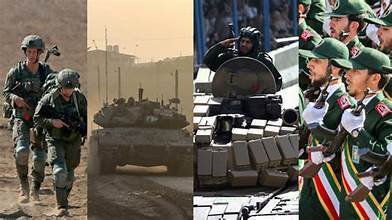
Iran is navigating a complex period in which military and diplomatic calculations intersect with mounting economic and social pressures. Tehran is attempting to expand its room for maneuver in its confrontation with the United States and Israel without sliding into another military conflict or making premature concessions at the negotiating table.
Developments at the beginning of November 2026 reveal an Iranian strategy centered on keeping diplomatic channels open while reinforcing military deterrence, using the Strait of Hormuz as an instrument of economic pressure, and raising questions about the future of the country's nuclear doctrine.
Yet this strategy contains a fundamental contradiction. While Tehran seeks to increase the cost of escalation for its adversaries, the economic and social burdens on Iranian citizens are growing, driven by soaring inflation, declining purchasing power, and an expanding gap between household incomes and housing prices.
Iran's dilemma, therefore, is not simply a choice between war and diplomacy. It is whether the leadership can convert its external pressure mechanisms into tangible results before their domestic costs exceed the political gains they might generate.
Doha Diplomacy: Active Contacts Without a Political Breakthrough
Statements by Iranian officials indicate that indirect contacts over the crisis with the United States are continuing, although they have not yet developed into direct negotiations or a comprehensive agreement outlining the future of regional tensions.
Iranian Foreign Minister Abbas Araghchi confirmed that Tehran currently sees no need for a direct meeting with American officials. Nevertheless, he described efforts to establish the foundations for a broader understanding as a positive development.
Araghchi explained that an Iranian representative was present in Doha and that Qatar and Pakistan continued their mediation efforts, indicating that the diplomatic track remains active despite military escalation and increasingly confrontational rhetoric.
These contacts are particularly important because of their connection to the Strait of Hormuz. Araghchi stated that the proposed timetable for reopening the waterway had been shortened from seven days to two.
However, this development does not indicate that an agreement has been reached.
Tehran has linked further progress to recognition of a new shipping route coordinated with Oman, the release of Iranian assets, and the restoration of exemptions related to oil exports.
These remain Iranian demands, with no demonstrated evidence that Washington has accepted them. Nevertheless, they reflect Tehran's attempt to present itself as willing to reach a settlement, provided that the outcome delivers clear political and economic benefits.
In a related development, Mohsen Rezaei announced that he had reviewed a letter from U.S. Vice President J.D. Vance but had not yet responded, noting that its wording differed from previous American approaches.
Together, these developments illustrate the nature of the current diplomatic process, which appears closer to testing the conditions for a settlement and the limits of mutual concessions than to comprehensive formal negotiations.
Iran wants to preserve its image as a party capable of imposing conditions while avoiding the closure of diplomatic channels that could eventually reduce the pressure it faces.
Military Deterrence: Expanding Threats and Raising the Cost of Confrontation
Alongside diplomatic contacts, Iran's military and security institutions have intensified their messages concerning readiness for a potential confrontation with the United States or Israel.
One of the most significant messages came through a directive issued by the Supreme Leader's office, calling for preparations for an immediate and effective response to any threat without geographical restrictions.
The directive also called for updating the list of potential targets to include both tangible and intangible American and Israeli assets.
This language carries implications beyond a conventional promise of retaliation.
It suggests an attempt to expand the geographical and operational scope of deterrence while preserving uncertainty regarding the targets and methods that could be involved in a future confrontation.
However, the announcement does not establish Iran's operational ability to implement every element of the directive. Instead, it primarily reflects the political and military message Tehran seeks to convey to its adversaries.
Chief of Staff Ali Abdollahi further intensified this rhetoric by suggesting that Iran might not wait for an enemy attack to begin if it detects preliminary signs of preparations for such an operation.
At the rhetorical level, this represents a shift from emphasizing retaliation toward raising the possibility of preemptive action, increasing uncertainty among opposing parties.
Nevertheless, the definition of an imminent threat, or the indicators that might justify preemptive action, remains unclear.
As a result, these statements function as instruments of psychological and political deterrence as much as expressions of possible military readiness.
Meanwhile, Iranian media reports concerning communications between U.S. President Donald Trump and Israeli Prime Minister Benjamin Netanyahu, together with Trump's statements about progress in talks with Iran, have reinforced the impression that military options remain under consideration despite continuing diplomatic contacts.
These reports do not establish that a decision to launch another attack has been made.
They do, however, illustrate the political environment in which Tehran is operating, where negotiations and military threats are being used simultaneously to shape the calculations of opposing parties.
The Strait of Hormuz: Global Leverage With Domestic Costs
The Strait of Hormuz represents one of Iran's most significant sources of strategic leverage because of its importance to international energy flows and global trade.
Turkish Foreign Minister Hakan Fidan has described the Hormuz crisis as a factor multiplying global economic pressures, reinforcing Tehran's argument that the consequences of confrontation extend far beyond the Gulf region.
From Iran's perspective, the ability to influence maritime traffic provides a means of increasing the cost of a prolonged crisis for international powers, potentially encouraging them to pursue agreements more quickly.
However, employing this leverage carries substantial risks.
The longer maritime disruptions continue, the greater their economic consequences for regional countries and international markets, including Iran's own economy, which depends on trade flows, imports, and energy revenues.
This creates an important strategic paradox: an instrument designed to pressure adversaries can simultaneously become an additional source of pressure on the country using it.
Consequently, the real value of the Hormuz card cannot be measured solely by its ability to disrupt markets.
It must also be assessed by whether it can be converted into an agreement that produces benefits without prolonging economic losses.
Nuclear Doctrine: Deliberate Ambiguity Raises Escalation Risks
In the nuclear arena, a clear distinction has emerged between Iran's official position and changes in its domestic political and media discourse.
Mohsen Rezaei has stated that no decision has been made to alter Iran's nuclear doctrine, while Abbas Araghchi continues to emphasize Tehran's formal commitment to the Nuclear Non-Proliferation Treaty.
Nevertheless, the fact that prominent figures are publicly discussing possible changes to nuclear doctrine, and connecting them to deterrence and the prevention of another war, suggests that the boundaries of public debate are shifting.
The danger of this development lies in the contradictory effects of nuclear ambiguity.
On the one hand, uncertainty can increase concern among adversaries and potentially strengthen Iran's negotiating position.
On the other hand, it may encourage some external actors to believe that a decision to pursue nuclear weapons is becoming more likely, even without any official announcement.
The reformist newspaper Ham-Mihan reflected these concerns by criticizing attempts to portray a change in nuclear doctrine as a popular demand without opinion polls, a referendum, or meaningful public debate allowing opposing perspectives to be heard.
The newspaper also warned that merely declaring an intention to pursue nuclear weapons before acquiring an operational capability could increase the incentive for an attack rather than prevent one.
From another perspective, commentator Ahmad Zeidabadi raised questions about the lack of transparency concerning ongoing contacts and potential war scenarios.
He criticized the fact that the public was receiving much of its information through figures who did not carry direct formal responsibility.
These positions reveal a broader disagreement within Iranian political discourse between those who consider ambiguity essential to deterrence and those who fear that uncertainty itself could increase the likelihood of miscalculation and escalation.
Ultimately, the available information provides no evidence of a formal change in Iran's nuclear doctrine.
It does, however, indicate a noticeable shift in the boundaries of what can be publicly discussed.
Inflation Squeezes Iranian Households and Narrows Tehran's Options
While Tehran attempts to strengthen its external position through military and diplomatic leverage, economic indicators reveal a worsening crisis that threatens its ability to sustain prolonged tensions.
Data published for October 2026 showed Iran's annual inflation rate reaching 76.8%, while prices had increased by 88.7% compared with the same month of the previous year.
The figures also reveal significant disparities in the distribution of economic burdens.
The year-on-year price increase reached 107% in rural areas, compared with 85.5% in urban areas.
Annual inflation for the second income decile stood at 85.8%, compared with approximately 74.8% for the highest income decile.
These figures indicate that inflation does not affect all segments of society equally.
Instead, it places a disproportionate burden on lower-income households and residents of peripheral regions, who spend a greater share of their resources on essential needs.
The situation becomes more serious when wage pressures are taken into account.
According to a statement by the chairman of the Iranian parliament's Budget Committee, approximately 75% of government employees earn less than 30 to 35 million tomans per month, an income level he described as inconsistent with current living costs.
Although this estimate does not constitute a comprehensive salary database, it reflects the scale of financial pressure facing large sections of the public workforce.
The crisis also extends beyond everyday goods and services into the housing market.
According to an estimate published at the beginning of November, the bottom 40% of Iranian society would need between 70 and 80 years of savings to purchase a 70-square-meter apartment.
This estimate depends on assumptions about wages, savings rates, and property prices. Nevertheless, it illustrates the widening gap between household purchasing power and the cost of homeownership.
Inflation is therefore evolving from an economic problem into a long-term social challenge affecting living standards and opportunities for mobility between generations.
Government Revenue Crisis: Available Assets, Missing Returns
Iran's economic difficulties are not limited to rising prices and inadequate wages. They also involve the government's inability to convert public assets into usable financial resources.
Mohammad Reza Aref acknowledged that revenues generated from the disposal of state assets had reached only 4.3% of the amount projected in the budget.
He attributed this shortfall to bureaucracy, managers' concerns about regulatory oversight, and the legacy of previous privatization experiences.
This situation exposes an implementation problem that goes beyond a simple shortage of resources.
The state may possess assets and financial plans, yet institutional obstacles prevent those assets from being converted into revenue at the required pace.
Within the banking sector, calls are growing for higher interest rates to reduce liquidity and address financial imbalances.
However, such measures could negatively affect production, investment, and employment, particularly in an economy already experiencing severe inflationary pressures.
The government therefore faces difficult choices.
Maintaining low interest rates amid exceptionally high inflation undermines real returns on savings, while raising rates could increase financing costs and deepen economic stagnation.
This dilemma highlights the limits of isolated policy measures and the need to address monetary, fiscal, and administrative imbalances simultaneously.
Professional Protests Reveal the Limits of Government Responsiveness
At the social level, several developments suggest that Iranian authorities may respond to specific professional grievances, provided they remain narrowly focused and do not evolve into broader political confrontations.
At Fayyazbakhsh Hospital, a local report indicated that the cases of five out of seven nurses who faced administrative and legal proceedings following a professional protest had largely been resolved.
Part of their withheld wages had also been repaid, while two cases remained under review.
This incident does not represent a comprehensive transformation in the relationship between the state and labor or professional movements.
However, it demonstrates the possibility of limited concessions intended to contain tensions within specific sectors.
From a crisis-management perspective, such responses may represent efforts to address localized grievances before dissatisfaction spreads elsewhere, without fundamentally changing the broader approach to protest activity.
By contrast, the government's posture appears less accommodating in strategic sectors, particularly energy infrastructure.
The Oil Ministry has called for updated emergency, recovery, and operational continuity plans at energy facilities while emphasizing that fuel supplies were not interrupted during the war.
Taken together, these statements reveal an effort to project national resilience while implicitly acknowledging that threats to critical infrastructure remain significant and require continued preparation.
Can Iran Turn Escalation Into a Negotiated Settlement?
Recent developments reveal an Iranian strategy that combines instruments appearing contradictory on the surface but serving a common objective: improving negotiating conditions and reducing the risk of an unfavorable settlement.
The diplomatic channel in Doha provides an opportunity to test possible understandings.
The Strait of Hormuz serves as an instrument of economic pressure, while military deterrence statements seek to broaden the range of risks that adversaries must consider.
The debate surrounding nuclear doctrine adds another layer of uncertainty without yet producing an official policy change.
However, these instruments place Iran in a highly sensitive strategic position.
Every increase in external pressure may simultaneously raise the costs borne domestically.
Nuclear ambiguity may strengthen deterrence but increase the danger of miscalculation.
Maritime disruptions may pressure foreign economies while damaging Iranian trade.
Military escalation may provide Tehran with additional bargaining tools without addressing inflation or the housing crisis.
The fundamental challenge is that the success of a pressure-based strategy cannot be measured by the intensity of threats alone.
It must be judged by the political and economic outcomes it produces and whether those outcomes can be sustained.
The Future of the Crisis: Three Possible Scenarios
Current developments point toward three main possible scenarios for the coming period.
The first involves successful mediation through Doha, resulting in gradual understandings concerning the Strait of Hormuz and selected economic issues.
Such an outcome could reduce tensions and produce limited gains that might serve as a foundation for broader agreements.
The second scenario involves the continuation of the existing situation, with diplomatic contacts remaining open but no decisive agreement emerging, while military threats and mutual economic pressures persist.
Although this scenario could provide the parties with additional time to maneuver, it would impose growing costs on Iran's economy, particularly amid persistent inflation and declining real incomes.
The third scenario involves an increased risk of confrontation caused by miscalculation or the interpretation of military movements as preparations for an imminent attack.
This risk becomes particularly significant as rhetoric concerning preemptive action and nuclear ambiguity expands.
The available information does not support a definitive prediction about which scenario is most likely.
What is clear, however, is that Tehran's ability to sustain its current approach will depend increasingly on the economy's resilience and society's capacity to absorb its costs.
Conclusion: Iran's Real Test Begins at Home
Iran is facing a test that extends beyond its ability to threaten adversaries.
The deeper challenge is whether it can use its regional influence and military capabilities to achieve stability that produces tangible benefits for ordinary citizens.
Keeping the Strait of Hormuz as a pressure instrument, expanding military deterrence, and preserving ambiguity surrounding nuclear policy may all provide Tehran with additional room for maneuver.
Yet none of these instruments constitutes a political objective in itself.
The central challenge is converting them into outcomes that reduce the likelihood of war, create conditions for economic stability, improve purchasing power, and address structural social inequalities.
With inflation remaining extremely high, wages losing value, and housing becoming increasingly unaffordable, time is becoming a decisive factor.
Every delay in reaching a settlement affects not only Iran's international relations but also the ability of Iranian households to meet their basic needs.
Tehran may therefore succeed in expanding its bargaining space internationally while simultaneously narrowing the space for stability at home.
The ultimate measure of its strategy will be its ability to transform pressure into gains, threats into understandings, and diplomatic leverage into measurable improvements in the lives of Iranian citizens.
Most read



Read also