Ghosts of Motherhood: Emotion and Crime

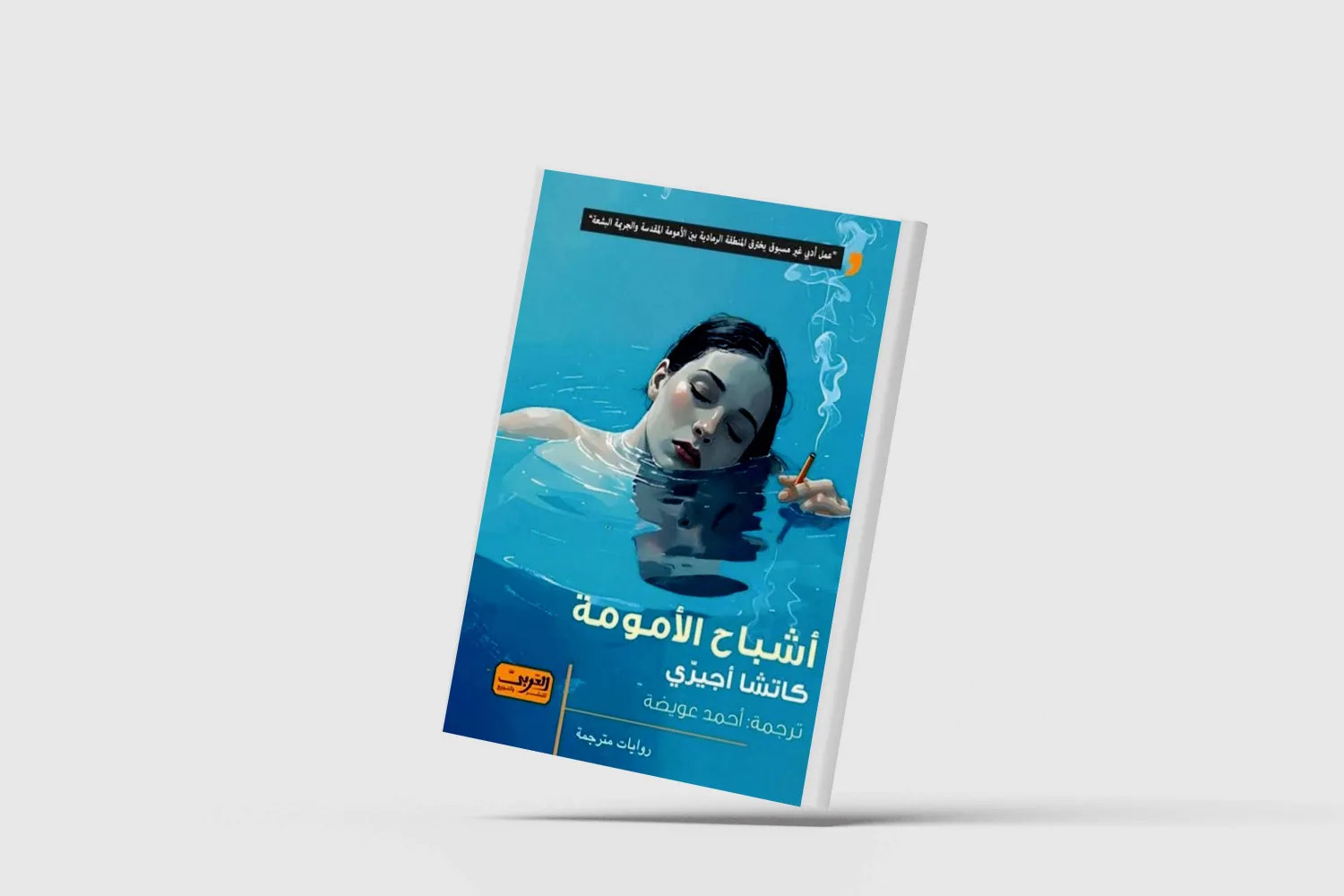
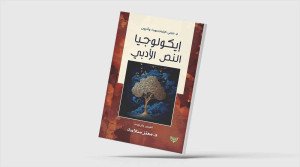
Spanish author Kattxa Agirre’s novel Ghosts of Motherhood is one of those unconventional works that stand out both for their subject matter and for the boldness of the ideas they explore. The novel deconstructs the concept of motherhood, moving away from idealized representations and revealing a space filled with anxiety, tension, and at times anger and rejection in a mother’s relationship with both the world and her newborn child.
In the novel, recently published in Arabic by Dar Al-Arabi in Cairo and translated by Ahmed Oweida, the experience of motherhood intertwines with the act of creative writing. The protagonist, a novelist in her ninth month of pregnancy and on the verge of giving birth, learns of a horrifying crime that shocks public opinion: a woman named Alice has drowned her infant twin sons in a bathtub.
The shock deepens when the protagonist discovers that she had personally known the murderous mother in the past, despite having lost contact with her for many years. Rather than using her upcoming maternity leave to care for her newborn and devote herself to motherhood, she decides to use that period as both a cover and an opportunity to investigate the case and write about it.
The protagonist embarks on a journey of literary and criminal investigation in an attempt to uncover the dark truth and the psychological and social motives that could drive a mother to take the lives of her own children. This quest places her in direct confrontation with her own internal questions about what it means to be both a mother and a creative artist at the same time.
Motherhood and Creativity
The novel’s plot combines the classical structure of suspense and thriller fiction with elements of journalistic investigation and true crime, while also engaging with philosophical ideas and intellectual reflections. At its core lies the dismantling of one of society’s most deeply rooted taboos: the widespread belief that motherhood is always characterized by unconditional love and flawless self-sacrifice.
Agirre skillfully balances two forms of “creation”: the biological creation of a child through birth and the artistic creation of a literary work. To do so, she draws inspiration from the lives and experiences of women writers and poets who faced the same dilemma and grappled with the ghosts of motherhood, depression, and the impact these experiences had on their creative careers. Among them are the American poet Sylvia Plath and the British novelist Doris Lessing.
Two Contradictory Worlds
The overall atmosphere of the novel is charged with tension, anticipation, and intense self-scrutiny. The protagonist inhabits a gray zone between two contradictory worlds: the world of motherhood, with its physical and psychological demands and the isolation of caring for an infant, and the world of writing, which requires distance, concentration, and research.
Through this atmosphere, the novel confronts readers with questions that are rarely asked and offers no easy answers. Can motherhood sometimes become a prison cell? How should society and the legal system balance the protection of children with an understanding of mothers’ psychological disorders? Can maternal instinct be separated from femininity? Where is the boundary between creation and destruction? And why is motherhood so often regarded as a biological destiny rather than a matter of personal choice?
Kattxa Agirre, a writer and filmmaker from the Basque Country, is one of the most compelling and controversial literary voices in contemporary Spanish culture. Her academic and professional career has been marked by remarkable creative diversity, combining specialized research in cinematic narratives with bold literary experimentation.
She began her professional life as a screenwriter before turning to fiction, a transition that endowed her narrative style with a distinctive visual dimension.
Agirre gained widespread recognition through this novel, originally published under the title Mothers Don’t. The book sparked considerable debate because of its fearless critique of motherhood and its exploration of the relationship between creativity and violence.
Her works have been translated into several languages and have received significant recognition, including the Basque Language Academy Award. Today, she is regarded as one of Europe’s most important feminist literary voices, offering a unique perspective that combines literary sensitivity with a critical deconstruction of social norms.
From the Novel
“Literature is alchemy—a form of knowledge that precedes scientific knowledge. It is barbaric and rational, emotional and utopian, political and cold, burning and mad, beautiful and terrible, rhythmic and exhausting, ugly and refreshing.
Literature is a mystery that requires no answers here and now because it asks me no questions. I write, and everything finally returns to its place: every letter, every breath, every whisper.
Every morning, as Erik is strapped into his car seat, my mother says, ‘Say goodbye to Mommy.’ The little boy replies, ‘Bye-bye, bye-bye,’ waving his tiny hand. He seemed happy with this grandmother he had only just met, and my mother seemed happy too. Nicolas was surely happy as well, with his skateboard and his eagerness to surf—so eager, in fact, that he did not even stop to kiss me goodbye.
And above all, I am happy too—happy to be alone in my mother’s house.
I retreat behind closed doors. Everything is perfect: the temperature, the scent, the sound of the ocean, and the frantic, seductive rhythm of the keyboard keys. Everyone will return in two or three hours. Erik will come back asleep and exhausted after playing among the volcanic rocks, and my mother will return enchanted, like someone peering for the first time inside the shell of a young bivalve. Nicolas will return with peeling skin on his nose and that wild smell of the sea, blonder than ever before.
This perfection will end in six days. In six days, the real world will return. My mother will tell us goodbye, relieved to reclaim her solitude. She will feel proud of the gift she has given us and will remind herself not to repeat the experience for a long time.
I will go back to monitoring my bank account and preparing once more for the burden of office work. Above all, I will have to read all those pages I left behind.
A violent and unpleasant encounter awaits me there: the dead and the living, Alice and the twins, the ghost of Sylvia Plath, and the ghost of her son who took his own life.”
Most read