
From Border Defense to the Pursuit of Threats Beyond National Frontiers: Is Nigeria Reshaping the Concept of Security and Sovereignty in West Africa?

Introduction
Political borders in West Africa are no longer sufficient, in themselves, to contain security threats that extend beyond the boundaries of the nation-state. Armed groups have become increasingly capable of exploiting geographical expanses and fragile border regions, while capitalizing on political differences among governments to secure their routes of movement and supply and reorganize their ranks. In this environment, the success of military operations is no longer determined solely by the ability of regular armed forces to exercise control over their own territories. Rather, it is increasingly contingent upon their capacity to prevent armed groups from turning neighboring countries' territories into extensions of their operational theatres or safe havens in which to rebuild their capabilities.
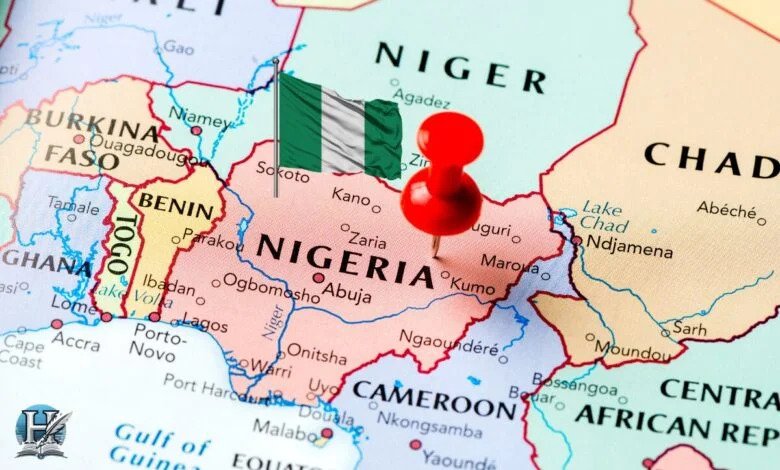
Against this backdrop, the agreement announced by Nigeria with Cameroon, Niger, and Chad, allowing the pursuit of armed groups for up to five kilometers across national borders, assumes significance that goes beyond conventional military cooperation. It introduces an approach aimed at narrowing the gap between the geographical scope of a threat and the operational reach of the response, shifting the debate from protecting borders as dividing lines to managing them as a shared security space. Nigeria's Minister of Defence, Christopher Musa, announced this arrangement on November 16, 2026, although its full implementation details and the rules of engagement governing it have yet to be publicly disclosed.
However, interpreting this development merely as an expansion of the geographical scope of pursuit may obscure its more significant implications. At its core, the initiative represents an attempt to address one of the structural shortcomings of the regional security architecture in the Lake Chad Basin: the gap between the transnational nature of the threat and the fragmentation of political and military decision-making among the states concerned. It also raises questions about Nigeria's ability to establish security understandings with countries that differ in their political orientations and regional relationships, particularly Niger. Accordingly, the strategic question is not simply whether the agreement will permit the pursuit of militants across borders, but whether Nigeria is moving towards a new framework for regional security based on the shared responsibility of confronting cross-border threats, or whether this is merely a limited military arrangement designed to address a security vulnerability exposed by developments over recent years.
First: The Agreement as a Response to a Crisis That Transcends National Borders
The roots of Nigeria's initiative lie in the nature of the threats confronting the country, particularly in its northeastern regions, where the confrontation with Boko Haram and the Islamic State West Africa Province (ISWAP) has continued, alongside the expansion of armed groups, bandit networks, and kidnapping activities in the northwest. Years of confrontation have demonstrated that military operations, regardless of their intensity, cannot guarantee the elimination of these threats as long as armed groups retain the ability to withdraw into border areas beyond the reach of pursuing forces and subsequently return to resume their activities. Recent reports indicate that attacks on military positions have continued and that armed groups rely on forests and poorly controlled border areas to evade regular forces. (Bala-Gbogba)
These groups benefit from the geographical interconnectedness of Nigeria, Niger, Chad, and Cameroon, as well as the difficulty of monitoring vast desert areas, forests, and territories surrounding Lake Chad. The problem is not limited to the movement of armed elements between countries; it also encompasses the flow of weapons, financing, and supplies, alongside the use of smuggling networks and local connections to secure logistical support. The operational dilemma lies in the fact that international borders may become barriers to regular forces while remaining relatively open corridors for armed groups. Nigerian forces may succeed in forcing an armed group to withdraw from a particular area, but once that group crosses into a neighboring country's territory, the pursuit may be halted or delayed pending political and military coordination, thereby providing militants with valuable time to redeploy.
The agreement therefore seeks to address the gap between the speed at which threats move and the slower pace of institutional responses. Allowing pursuit operations to extend five kilometers across national borders represents an attempt to reduce the time between identifying a threat and responding to it. Nevertheless, this does not grant participating forces unrestricted freedom to operate within the territories of other states, nor does it eliminate the need for clearly defined rules governing authorization, coordination, command, and control.
More importantly, Nigeria's initiative reflects a growing recognition that the security challenge is no longer confined to a state's ability to exercise control over its own territory. It is increasingly connected to the extent of its ability to influence the surrounding security environment. This constitutes a fundamental development in strategic thinking, since national security in fragile border environments cannot be separated from the level of stability prevailing in neighboring countries.
Second: Nigeria and the Redefinition of the Security Space
Nigeria occupies a central position in the West African security equation, not only because of its demographic, economic, and military weight, but also because of its extensive borders and the interconnectedness of its interests with the Sahelian states and the Lake Chad Basin. Consequently, any shift in its security policy towards border regions carries implications that extend beyond its domestic confrontation with armed groups.
The prolonged conflict with Boko Haram and the Islamic State West Africa Province has demonstrated that the numerical and military superiority of regular forces is insufficient, on its own, to determine the outcome of a conflict when adversaries are capable of avoiding direct confrontation, moving across vast geographical areas, and exploiting security gaps between neighboring states' institutions. Within this context, the agreement represents an attempt to move from a strategy of containing threats within national borders towards a strategy of exerting pressure on their routes of movement, thereby reducing the ability of armed groups to exploit geographical mobility to undermine military operations.
However, this shift does not necessarily mean that Nigeria has adopted a fully developed new military doctrine. Establishing such a conclusion would require access to information concerning the rules of engagement, the nature of joint command arrangements, the scope of authorization, and the extent of intelligence-sharing among the participating states.
A more precise interpretation is that the agreement constitutes an indication of an evolution in Nigerian security thinking towards linking the protection of national security with operational cooperation beyond national borders.
The significance of this approach is further reinforced by statements made by Nigeria's Minister of Defence regarding the armed forces' access to American intelligence support, satellite imagery, and training, all of which enhance surveillance, monitoring, and targeting capabilities. The combination of expanded cross-border coordination and improved intelligence and surveillance capabilities points towards an emerging model that relies more heavily on information and precision operations rather than conventional military deployment alone. (Ibid)
Nevertheless, this approach remains constrained by the state's ability to translate operational gains into sustainable stability. Weakening armed-group leadership or destroying certain supply facilities does not necessarily prevent the emergence of alternative formations if local conditions continue to facilitate recruitment, financial replenishment, and the provision of safe havens.
Third: The Contradiction Between the Unity of the Threat and the Fragmentation of the Regional Political Environment
Niger's position represents one of the most important factors likely to shape the future of the agreement. The four countries share overlapping security threats, yet they operate within a politically fragmented environment. Transformations that have taken place across the Sahel since 2023 have reshaped regional alliances and generated divergent positions regarding the nature of security partnerships and sources of external support.
Furthermore, the formal withdrawal of Niger, Burkina Faso, and Mali from the Economic Community of West African States (ECOWAS) on January 29, 2025, reflected the widening political divisions within the region, although it did not necessarily eliminate opportunities for cooperation on security issues involving shared interests. (United Nation Security Counsil)
The paradox is that Niger represents an essential geographical and security partner for Nigeria in confronting cross-border threats, while its participation in the Multinational Joint Task Force (MNJTF) in the Lake Chad Basin has been temporarily suspended.
In May 2026, the African Union Peace and Security Council expressed concern over the security gaps resulting from this suspension and called on Niger to resume its full participation, including the redeployment of its staff officers to the Force Headquarters in N'Djamena. (African Union)
In this context, the new understandings acquire political significance that extends beyond their military content. They indicate the possibility of restoring a degree of cooperation between Nigeria and Niger on an issue where security interests intersect despite political disagreements. States may differ over their membership in regional blocs and the nature of their relations with international powers, yet they often find themselves compelled to cooperate when faced with direct threats to their domestic security.
Nevertheless, the significance of this rapprochement should not be overstated or regarded as an automatic indication that disagreements between Abuja and Niamey have been overcome. Sector-specific security cooperation can continue despite political estrangement, but it remains vulnerable to diplomatic crises or shifts in domestic political calculations.
Cameroon and Chad, moreover, should not be viewed merely as supplementary parties to the arrangement. Each has its own security and political considerations. Cameroon faces security threats in its Far North Region, while Chad bears substantial security burdens because of its geographical position and direct connection to the Lake Chad Basin.
Accordingly, the continuation of the agreement requires a balanced distribution of responsibilities, ensuring that no single country bears a disproportionate share of the operational burdens or associated costs.
Fourth: Does the Agreement Represent a Transformation in the Concept of Sovereignty?
Cross-border pursuit arrangements raise fundamental questions concerning the relationship between national sovereignty and the requirements of collective security.
Sovereignty is not merely the exercise of physical control over territory; it also encompasses a state's right to regulate the use of force within its borders, determine which entities are authorized to exercise that force, and hold them accountable for the consequences of military operations.
In its statement concerning the Multinational Joint Task Force, the African Union Peace and Security Council reaffirmed its commitment to respecting the independence, sovereignty, and territorial integrity of the Lake Chad Basin countries, while simultaneously calling for enhanced cooperation to confront armed groups.
From this perspective, permitting the forces of another state to pursue armed elements within national territory, even over a limited distance, constitutes an exceptional arrangement based on political and legal consent among the parties. It should not be interpreted as a retreat from sovereignty or as a general authorization to use force beyond national borders.
The real challenge, however, emerges at the implementation stage.
If a Nigerian force crosses the border in pursuit of an armed group, who possesses the authority to issue the final operational order? Does entry require prior notification or field-level authorization from the concerned state? Does operational command remain with the state providing the forces, or does it transfer to the state within whose territory the operation is being conducted? What procedures apply if forces overlap or conflicting intelligence emerges? And who bears legal and political responsibility in the event of civilian casualties?
A lack of clarity regarding these issues could transform the agreement from an instrument of coordination into a source of friction. Furthermore, the absence of oversight, investigation, and accountability mechanisms could undermine local communities' trust in the participating forces, creating opportunities for armed groups to expand their influence.
Therefore, the most significant development does not lie in crossing physical borders as such, but in establishing an institutional framework that allows the coordinated use of force without eliminating national jurisdiction.
In this context, sovereignty is not exercised through isolation, but through structured cooperation in which each state retains its rights of oversight, authorization, and accountability.
Fifth: The Limits of Military Force and the Problem of Reproducing Threats
Despite the agreement's operational significance, treating armed groups solely as a problem of movement and cross-border mobility constitutes an oversimplification of the nature of the threat. These groups do not survive merely because they can cross borders; rather, their continued existence results from the interaction of a range of security, political, economic, and social factors.
In parts of northern Nigeria and the Lake Chad Basin, extremist organizations' activities intersect with organized criminal networks, smuggling, and kidnapping. Certain groups also benefit from inadequate government services, fragile state institutions, declining economic opportunities, and local disputes over resources and land.
The African Union has explicitly called for a balance between military and non-military approaches, alongside efforts to address the structural causes and underlying factors contributing to the persistence of insecurity in the region.(African Union)
The danger of this interconnectedness is particularly evident in northwestern Nigeria, where the Minister of Defence has warned of attempts by the Islamic State in the Sahel to recruit certain bandit networks and criminal groups.
If these efforts succeed, the threat could evolve from financially motivated criminal activity into a more organized form of violence with ideological and operational dimensions, potentially creating linkages between theatres of violence in the Sahel and northwestern Nigeria. (African Union)
This highlights the limitations of the cross-border pursuit agreement. Although it may reduce militants' ability to withdraw and redeploy, it does not address recruitment and financing networks, dismantle the connections that provide them with intelligence and supplies, or eliminate the underlying causes of weak government control in remote areas.
Moreover, intensive military pressure, if not accompanied by effective civilian protection measures, may produce counterproductive outcomes, particularly when operations result in civilian casualties, property damage, or population displacement.
Local communities are not merely geographical spaces in which military operations take place; they constitute an influential factor in the broader equation of intelligence, legitimacy, and the ability to isolate armed groups.
Consequently, the success of the agreement should not be measured by the number of pursuit operations conducted or the distance that forces can advance into neighboring countries' territories. Rather, it should be assessed in terms of the extent to which armed groups' ability to rebuild their networks declines, attacks decrease, and state institutions re-establish their presence in areas that previously provided favorable conditions for militant activity.
Sixth: The Future of the Agreement and Strategic Scenarios
The future of the new security arrangement will depend on the relationship between political will, military capabilities, and legal safeguards.
Three principal trajectories can be envisaged for its development. These should not be understood as inevitable predictions, but rather as conditional possibilities shaped by observable indicators.
The first trajectory involves the transformation of the agreement into a sustainable regional security cooperation mechanism. This could occur if the four countries succeed in translating the announcement into clear operational rules, establishing permanent communication channels, ensuring regular intelligence-sharing, and defining responsibilities and jurisdictions during military operations.
Under such circumstances, the agreement could represent a step towards restoring security coordination in the Lake Chad Basin and reducing the vulnerabilities previously exploited by armed groups.
The second trajectory involves the continuation of cooperation through limited operational arrangements, whereby the participating states coordinate certain operations and cross-border pursuits without progressing towards the establishment of a joint security institution or the formulation of a unified regional policy.
This approach could allow each state to preserve its autonomy in security decision-making while cooperating on issues where their immediate interests converge. However, it would primarily generate tactical gains without guaranteeing the continuity of cooperation in the event of political crises or changes in government priorities.
The third trajectory involves the deterioration or failure of the agreement as a result of disagreements over pursuit procedures, command and control arrangements, or responsibility for civilian casualties, or because of declining political trust among the participating states.
Such developments could lead to the suspension or reduction of joint operations, once again allowing armed groups to exploit differences between neighboring countries.
Early warning indicators that should be monitored include the publication of the agreement's implementing rules; clarification of whether the right of pursuit is reciprocal; the restoration of Niger's full coordination with security cooperation frameworks in the Lake Chad Basin; the continuation of communication between military commanders; the establishment of a publicly announced mechanism for investigating violations; and changes in the level of attacks in border areas and the movement patterns of armed groups.
Seventh: Requirements for Transitioning from Military Pursuit to Regional Security
Transforming the agreement into an effective instrument within the regional security equation requires addressing the gap between political declarations and operational implementation.
The process should begin by establishing the legal basis for cross-border pursuit, specifying the nature of the required authorizations, defining the geographical and temporal scope of the mandate, determining the applicable rules of engagement, and clarifying responsibility for the consequences of military operations.
Clarity on these issues is essential to ensuring the legitimacy of cooperation and preventing it from becoming a new source of disagreement.
An intelligence and field coordination mechanism should also be established to facilitate the exchange of information concerning the movements of armed groups, supply routes, and financing networks, while ensuring direct communication between military commanders operating in border regions.
It is equally important to develop surveillance and reconnaissance systems and make effective use of satellite intelligence and modern technologies, without allowing technological capabilities to become a substitute for field knowledge of local communities and border geography.
The agreement must also be integrated with the Multinational Joint Task Force, which represents an existing framework for cooperation among the Lake Chad Basin countries.
The establishment of a new arrangement should not result in duplication of command structures or overlapping jurisdictions. Instead, it should help address the gaps that emerged following Niger's temporary suspension of participation, while tackling the operational and financial shortcomings highlighted by the African Union Peace and Security Council. (African Union)
At a broader level, military operations must be linked to programmes aimed at restoring state presence in border regions, providing essential public services, improving employment opportunities, combating illicit economic activities, and reintegrating individuals who renounce armed activity through appropriate legal and oversight frameworks.
Security operations cannot produce sustainable outcomes if armed groups continue to exploit local grievances and institutional vacuums to reproduce their influence.
Conclusion: From Border Security to Regional Security
The security agreement between Nigeria, Cameroon, Niger, and Chad reveals an attempt to redefine the relationship between national and regional security in a context where unilateral approaches have proved insufficient to contain armed groups that have become increasingly capable of exploiting political and geographical borders to prolong conflicts.
A state that can secure its own territory but cannot prevent threats from reorganizing themselves beyond its borders remains vulnerable to continued security and military attrition.
Nevertheless, this transformation remains contingent upon the four countries' ability to overcome political differences, develop clear legal and operational frameworks, and achieve integration between military action, intelligence cooperation, and development-oriented approaches.
Borders do not lose their significance as expressions of national sovereignty. Rather, the nature of their management evolves when the threats crossing them become greater than the capacity of any single state to contain.
The true strategic value of the agreement, therefore, does not lie in permitting military forces to pursue militants five kilometers beyond their national borders. Its significance lies in the possibility of transforming this arrangement into an entry point for building a broader conception of regional security, based on the understanding that a state's responsibility for protecting its security does not end at its geographical boundaries, but requires structured cooperation with neighboring countries.
Accordingly, the real test facing Nigeria and its neighbors is not simply their ability to pursue armed groups beyond national borders, but their capacity to prevent shared borders from becoming spaces in which threats can be reproduced, without allowing security cooperation itself to become a source of encroachment upon sovereignty or of deepening regional divisions.
References
First: International Reports and Documents
-
African Union, Peace and Security Council. “Communiqué of the 1347th Meeting of the PSC Held on 18 May 2026 on an Update on the Stabilization Activities of the Multinational Joint Task Force (MNJTF) against Boko Haram in the Lake Chad Basin.” PSC/PR/COMM.1347.1 (2026). May 18, 2026.
-
United Nations Security Council. “Activities of the United Nations Office for West Africa and the Sahel: Report of the Secretary-General.” S/2025/187. March 26, 2025.
https://digitallibrary.un.org/record/4079680/files/S_2025_187-EN.pdf.
Second: Press Sources
-
Bala-Gbogbo, Elisha. “Nigeria Says US Intelligence Support Helping Target Militants, Secure 2027 Election.” Reuters, November 16, 2026.
Most read




Read also