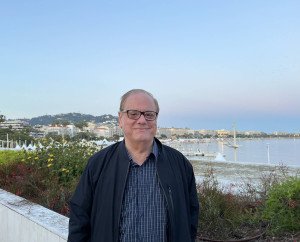

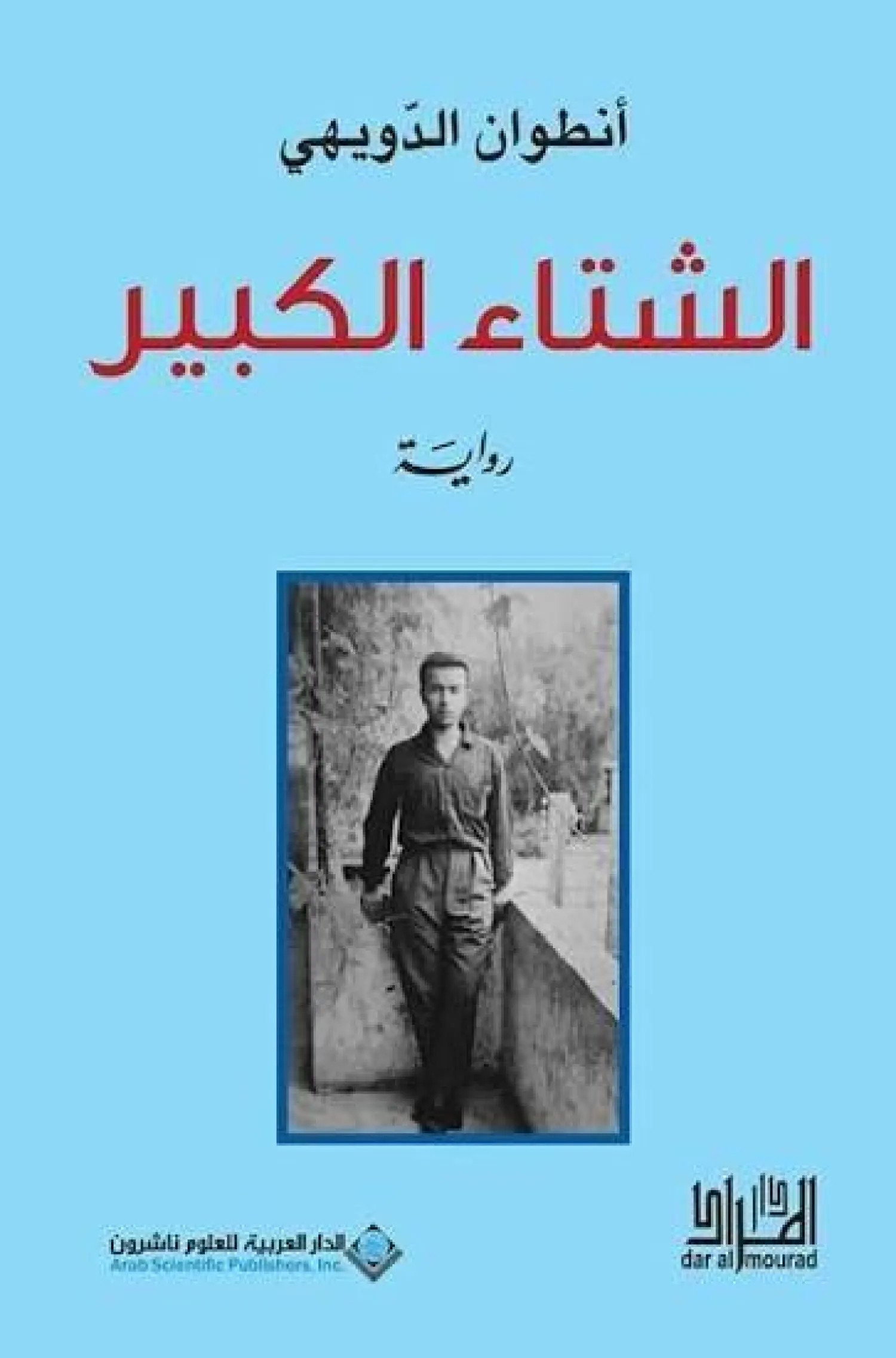
Following his receipt in 2015 of the Award for Best Lebanese Novel for his book Drowned in Lake Morat, presented by the Lebanese Ministry of Culture, the Sharjah Book Authority has announced that it is awarding the prize for Best Arabic Novel to the poet, novelist, researcher, and colleague Antoine Douaihy for his latest masterpiece, The Great Winter, about which Asharq Al-Awsat recently published an interview with the author.
The award comes as a surprise, given Douaihy's distance from the public spotlight and his ascetic approach to literary activity. He has always remained deeply immersed in his inner world, having lived in seclusion for many years at his retreat overlooking the Qadisha Valley, high in Mount Lebanon.
Douaihy's literary, poetic, and narrative works are rooted in the inner world of the self. They are drawn entirely from what he calls the "diaries of inner life," which he has continued to write since the age of fourteen. His writing has no other source, whether research-based or documentary. This explains the profound unity and coherence of his literary universe, as well as the consistency of his language, preoccupations, emotions, and aesthetic vision throughout the works he has produced over the past three decades, from The Book of the State of Being in 1993 to his recently published The Great Winter.
One of the most important consequences of this award is that it draws Arab readers' attention to a distinctive writer whose literary world occupies a highly individual place in Arabic literature. His work delves into the depths of the human psyche and merges with the spirit of places, landscapes, and human conditions, where the self of the individual intersects with the identity of the land and the collective self of a community.
In this regard, the poet Ansi Al-Hajj once wrote of him: "What has he written? He has written the self of an individual, the self of a land, and the self of a people." He also observed: "Antoine Douaihy is read as one would separate individual pearls." Similarly, the writer and journalist Samir Atallah wrote: "Since I began reading Douaihy, I have grown accustomed to being drawn, with a sense of delight, into that captivating and cherished state of reverie. Nothing brings me greater pleasure than a writer whose experience reaches such depths of the self and whose commitment to purity is so steadfast."
This award also challenges a prevailing trend among many Arab novelists, as well as their counterparts in the West, which can be summarized as "theme-driven literature." Under this approach, novelists move from one subject to another with each new work, assembling extensive research and documentary material for every project. Increasingly, artificial intelligence is also playing a role in the production of such works.
This tendency represents a departure from the writers' own inner worlds and a shift away from "the literature of writers" toward "the literature of readers," driven by market logic and the commercial dynamics of supply and demand.
By contrast, Douaihy's literature, grounded in the continuity, uniqueness, subjectivity, distinctiveness, and depth of inner life across time, represents a reaffirmation of great literature. It stands as a powerful counterpoint to a literary world increasingly lost in the labyrinth of social media and the influences of artificial intelligence, forces that, in the author's view, are leading literature toward its demise.
In The Great Winter, Douaihy recounts the torments of his seventeenth year, evoking memory and place through language that is profound, philosophical, and finely crafted. The novel blends contemplation, descriptions of nature, and an exploration of the impact of violence and memory on the human condition.
The reader encounters a symbolic and philosophical novel that examines human behavior and the individual's relationship with the self. Its narrative is built around the narrator's introspection and his relationship with life, death, violence, and war. The other characters appear more as shadows surrounding him; their function is primarily to propel the narrative forward rather than to occupy a central position in the structure of the text.
Through his profound reflections, Douaihy explores manifestations of violence, vengeance, and the shedding of blood with impunity, linking them to individual and collective behavior. He raises questions about the concept of collective responsibility and its influence on inherited patterns of family revenge.
Most read