
From the erasure of Palestinian identity to its instrumentalization in the examination of Israeli conscience: How does cinema reproduce the conflict from the perspective of the more powerful party?
The struggle over narratives between Palestinians and Israelis is not confined to the arenas of politics, media, and diplomacy. It extends into the worlds of art, literature, and cinema, where perceptions are shaped, collective memory is reconstructed, and the moral positions of the parties to the conflict are defined. In this context, examining the image of the Palestinian in Israeli cinema carries significance that goes beyond conventional film criticism and touches upon a fundamental question: How does Israeli society perceive the Palestinian? Does cinema give Palestinians the space to appear as independent human beings with their own identity, history, and rights, or does it turn them into mere elements within an Israeli narrative concerned primarily with its own identity, crises, and contradictions?
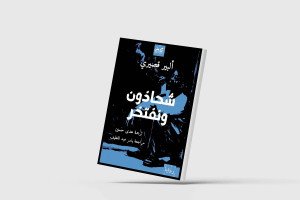
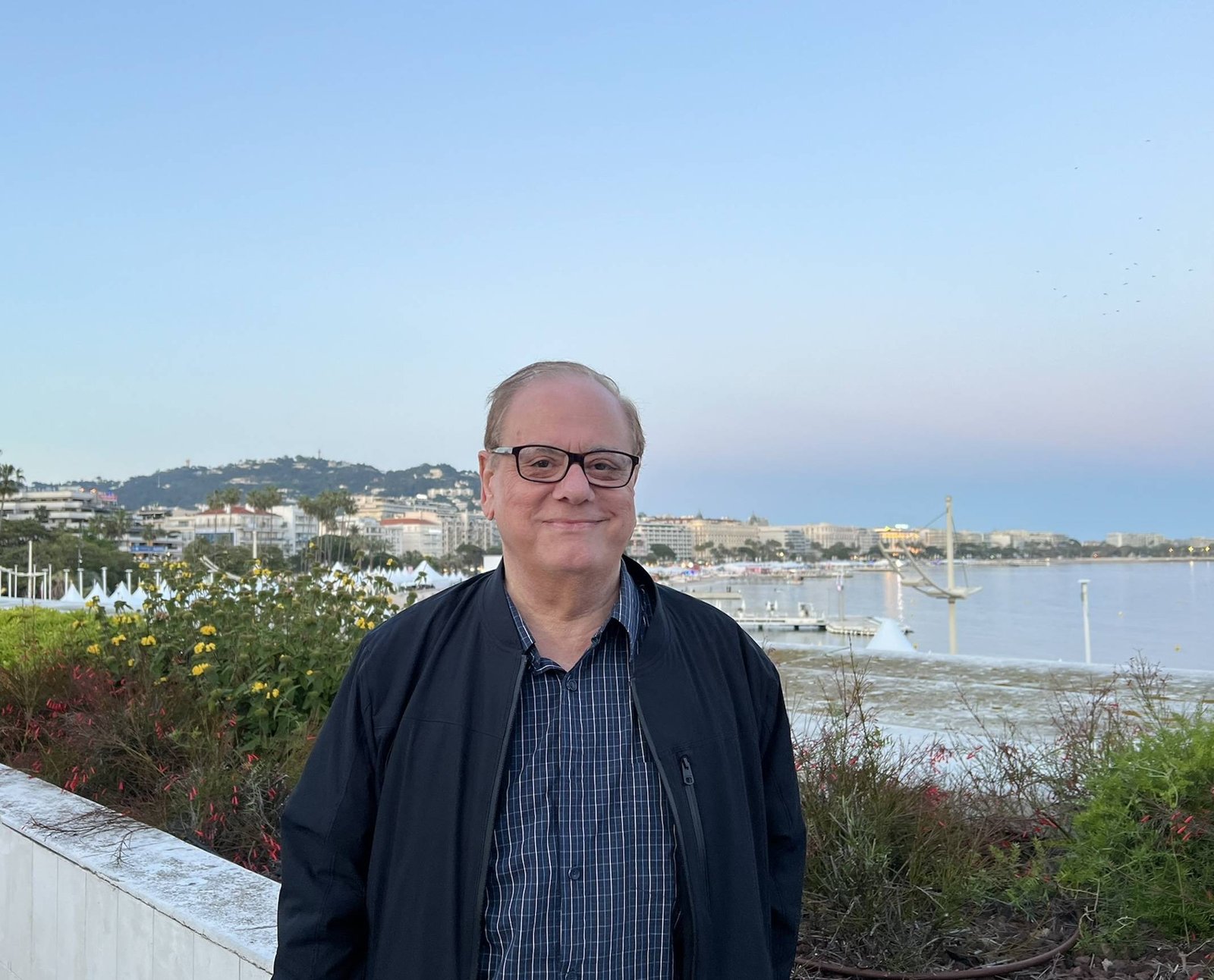
The book The Image of the Palestinian in Israeli Cinema, by film critic Amir Al-Omari, opens an important window onto this question. Through critical readings of Israeli films that address Palestinians, whether through their direct presence or through the erasure of their voices and identities, Al-Omari explores the ways in which cinema represents the Palestinian experience. The book's significance lies in its refusal to treat cinema as a neutral reflection of reality. Instead, it approaches it as a cultural and political discourse with its own tools for shaping consciousness, directing sympathy, and rearranging moral responsibility.
A Palestinian character's presence in a film does not necessarily mean that the film is genuinely concerned with the Palestinian experience. A film may address Palestine, occupation, or the wars that have engulfed the region without allowing Palestinians to become the subjects of their own stories. Their suffering may appear on screen while their voices remain absent, their experiences filtered through the perspective of the other. This is one of the central paradoxes raised by Al-Omari's book: some films that appear, at first glance, to expose the Palestinian tragedy ultimately construct narratives centered more on Israel's internal dilemmas than on the Palestinian victims themselves.
From Condemning a Massacre to Exonerating the Self: The Dilemma of Waltz with Bashir
A compelling example of this dilemma is Ari Folman's Waltz with Bashir (2008). Although the film revisits the 1982 Sabra and Shatila massacres and appears, at first glance, to expose and condemn the atrocity, Al-Omari's reading suggests that its real center of gravity is not the suffering of the Palestinians but the psychological and moral crisis experienced by Israeli soldiers who were part of the military and political context that led to the massacre.
According to this interpretation, the film shifts the focus from the victims and what they endured to the Israeli soldiers and their psychological suffering. The question of accountability gives way to an exploration of guilt, and the Israeli soldier emerges as a troubled figure deserving of understanding and sympathy.
The problem here is not that the film explores the soldiers' psychological trauma or examines memory and guilt. These are legitimate artistic and human subjects. Rather, the concern is that such an exploration may redistribute moral responsibility: the perpetrator becomes the central figure in the tragedy, while the victim recedes into the background, with Palestinian suffering serving as a backdrop for the other side's emotional and psychological struggles.
There is a fundamental difference between a film that condemns a crime committed against Palestinians and one that uses that crime as a point of departure for examining the crisis of the Israeli conscience. In the former, the victim occupies the center of the narrative. In the latter, the perpetrator becomes the principal character, revisiting his memories and attempting to come to terms with himself. This shift can lead to a symbolic mitigation of responsibility, even when the film appears critical or anti-war in its approach.
Manufacturing Stereotypes: The Palestinian as a Civilizational Opposite
The problem takes a more direct form in the film The World Cup Final, which Al-Omari discusses as an example of fabricated scenes and details designed to construct a stereotypical image of Palestinian fighters. He draws attention to a scene in which a group of armed Palestinians, accompanied by their Israeli captive Cohen, storm the mansion of a wealthy Lebanese man. There, the fighters are portrayed as dazzled by the luxurious possessions around them, behaving recklessly around food and alcohol, and watching pornographic videos.
By contrast, the Israeli captive is portrayed as more composed and civilized, behaving with dignity and restraint while helping the Palestinians operate electronic devices and watch the World Cup. This juxtaposition goes beyond the ordinary dramatic construction of contrasting characters. It becomes a symbolic arrangement that places the Israeli in a position of cultural and moral superiority, while relegating the Palestinian to a position associated with disorder and primitiveness.
This approach reveals one of the mechanisms through which political cinema manufactures stereotypes. Rather than presenting characters within their complex social and historical contexts, it reduces them to a set of opposing traits that serve a predetermined judgment. The purpose of such a scene is no longer simply to advance the plot; it is to reinforce the viewer's perception of different communities and identities, determining who deserves respect and who is portrayed as culturally and behaviorally inferior.
This mechanism becomes particularly consequential when repeated across different works, transforming an individual artistic choice into a representational pattern that helps shape collective consciousness. Cinema does not always need an explicit political message to perform an ideological function. It can convey its assumptions through the details of everyday life: the way characters eat, interact with objects, speak, behave, and even the roles assigned to them within the narrative.
The Limits of Israeli Liberalism: Recognizing the Palestinian Without Recognizing His Narrative
Yet the Palestinian image in Israeli cinema is not uniform, nor can it be reduced to a single model of direct propaganda. Some Israeli filmmakers address the occupation, criticize military policies and state institutions, and give Palestinian characters a more complex human presence. However, according to Al-Omari's reading, such criticism does not necessarily mean moving beyond the intellectual framework within which Israeli liberalism operates.
The work of filmmaker Amos Gitai is particularly relevant here. His relationship with the Palestinian subject is characterized by complexity, ambivalence, and multiple layers. In films such as Ana Arabia (2013), the Palestinian is neither presented as an absolute enemy nor reduced to an object of accusation. Yet this does not necessarily mean that Palestinians become the central subjects of the narrative or independent historical actors in their own right.
This raises an important distinction between three approaches to representing Palestinians in cinema. The first is an antagonistic approach that reproduces stereotypes and justifies Israeli policies. The second is a liberal approach that criticizes the occupation and certain state practices but remains constrained by the fundamental assumptions of the Israeli narrative. The third is a radical solidarity-based approach that seeks to dismantle structures of power and domination while giving Palestinians the space to articulate their own experiences, history, and rights.
The distance between these approaches is considerable. Not every criticism of the occupation amounts to a critique of the system that produced it, just as acknowledging the humanity of Palestinians does not necessarily mean recognizing their right to narrate their history from their own perspective. Israeli liberalism may allow Palestinians to appear as victims deserving of sympathy, yet stop short of recognizing them as the bearers of a political and historical cause that requires confronting the structures responsible for their suffering.
This is where Al-Omari's critical observation becomes particularly significant: in Gitai's cinema, the Palestinian is present as a mirror reflecting an Israeli crisis, rather than as an independent subject. The Palestinian illuminates Israel's internal divisions and exposes the moral and political crisis of Israeli society and the state, yet remains outside the center of the story.
The paradox deserves closer attention: cinema may grant Palestinians a human presence while simultaneously denying them narrative autonomy. It may criticize war and occupation without proceeding to dismantle the ideological and political foundations that make the continued domination of Palestinians possible.
Cinema as an Arena for the Struggle Over Memory
The significance of these readings extends beyond the evaluation of individual films. They reveal the role cinema plays in the struggle over historical memory and competing narratives. Cinema is not merely a medium for documenting events; it is also a means of reconstructing the past, interpreting it, and determining who appears in the frame, who speaks, and who has the authority to define the crime, the victim, and responsibility.
In the Palestinian-Israeli conflict, this question assumes particular importance because the competition is not simply over facts, but also over the meanings attached to them. A massacre can be narrated as a crime committed against a people, or it can be transformed into a psychological tragedy experienced by soldiers who were close to the events. Occupation can be presented as a system of domination and the denial of rights, or reduced to a moral dilemma confronting individuals within Israeli society.
This does not mean that every Israeli film addressing Palestinians necessarily belongs to a unified propaganda project, or that Israeli cinema is a homogeneous field devoid of internal differences. There are significant artistic, intellectual, and political distinctions among filmmakers, and critical works may create spaces for questioning that should not be overlooked. Nevertheless, these differences do not eliminate the need to examine the Palestinian's position within each film's narrative structure, and whether Palestinians are granted the ability to express their own experience rather than merely serving the story of the other side.
From Film Criticism to the Crisis of Arab Film Culture
Al-Omari's book does not stop at analyzing cinematic representation. It also opens a broader discussion about the state of Arab film criticism and the market for specialized books. This issue is indirectly connected to the ability of Arab culture to develop an independent and coherent critical discourse in response to competing narratives.
Al-Omari points to the gradual decline of the market for film books across the Arab world, attributing it to several factors. Among them is the growing reliance on informal, spoken film criticism across social media platforms, where quick impressions and passing judgments are consumed at the expense of in-depth research and specialized cinematic knowledge. The widespread availability of pirated books online also inflicts significant losses on publishers, discouraging them from taking the financial risk of printing sufficient quantities of specialized publications.
A deeper problem lies in the way some official cultural institutions perceive cinema. Certain government publishing houses continue to regard it primarily as a form of entertainment rather than as an artistic and intellectual field deserving investment in criticism, research, and documentation, much like literature, novels, and short stories.
In this context, Al-Omari draws attention to the Saudi Film Commission's efforts over recent years to support and publish specialized books on cinema. He regards this as an initiative worthy of recognition, while emphasizing the importance of distributing these publications beyond the Kingdom so that readers throughout the Arab world can benefit from them.
This issue extends beyond publishing to raise a broader question about the ability to develop the tools needed to interpret and analyze images. Societies that fail to invest in film criticism and academic research leave considerable space for ready-made representations and dominant narratives, particularly on issues where politics, history, and identity intersect.
Reclaiming the Palestinian as a Subject, Not an Object
The central value of the discussion raised by Amir Al-Omari lies in shifting the question from whether Palestinians are present or absent in Israeli cinema to examining the nature and function of that presence. The issue is not simply how often Palestinians appear on screen, but how they are represented, who is allowed to speak on their behalf, and whether they are portrayed as independent human beings with their own memories, interests, and aspirations—or merely as instruments for interpreting an Israeli crisis, justifying a political position, or reproducing stereotypes about the other.
Genuine recognition of the other cannot be achieved simply by including them in an artistic work. It requires granting them human and narrative autonomy, and acknowledging their right to be the authors of their own story rather than mere characters in a story written by their adversary. This is the challenge facing Israeli cinema when it addresses Palestinians: can it move beyond viewing them as an Israeli problem and recognize them instead as a people with their own history, rights, and independent experience?
Ultimately, an examination of the Palestinian image in Israeli cinema reveals that the struggle over narrative is no less significant than the struggle over land. A cinematic image can conceal as much as it reveals. It can generate sympathy while obscuring responsibility, and acknowledge the humanity of the victim without recognizing the victim's rights. Between the Palestinian who appears on screen and the Palestinian who possesses the authority to tell his own story lies a distance that reveals much about the limits of criticism, liberalism, and recognition within Israeli culture.
Most read