How Can Arab Media Counter the “Distortion of Facts” About Palestine?

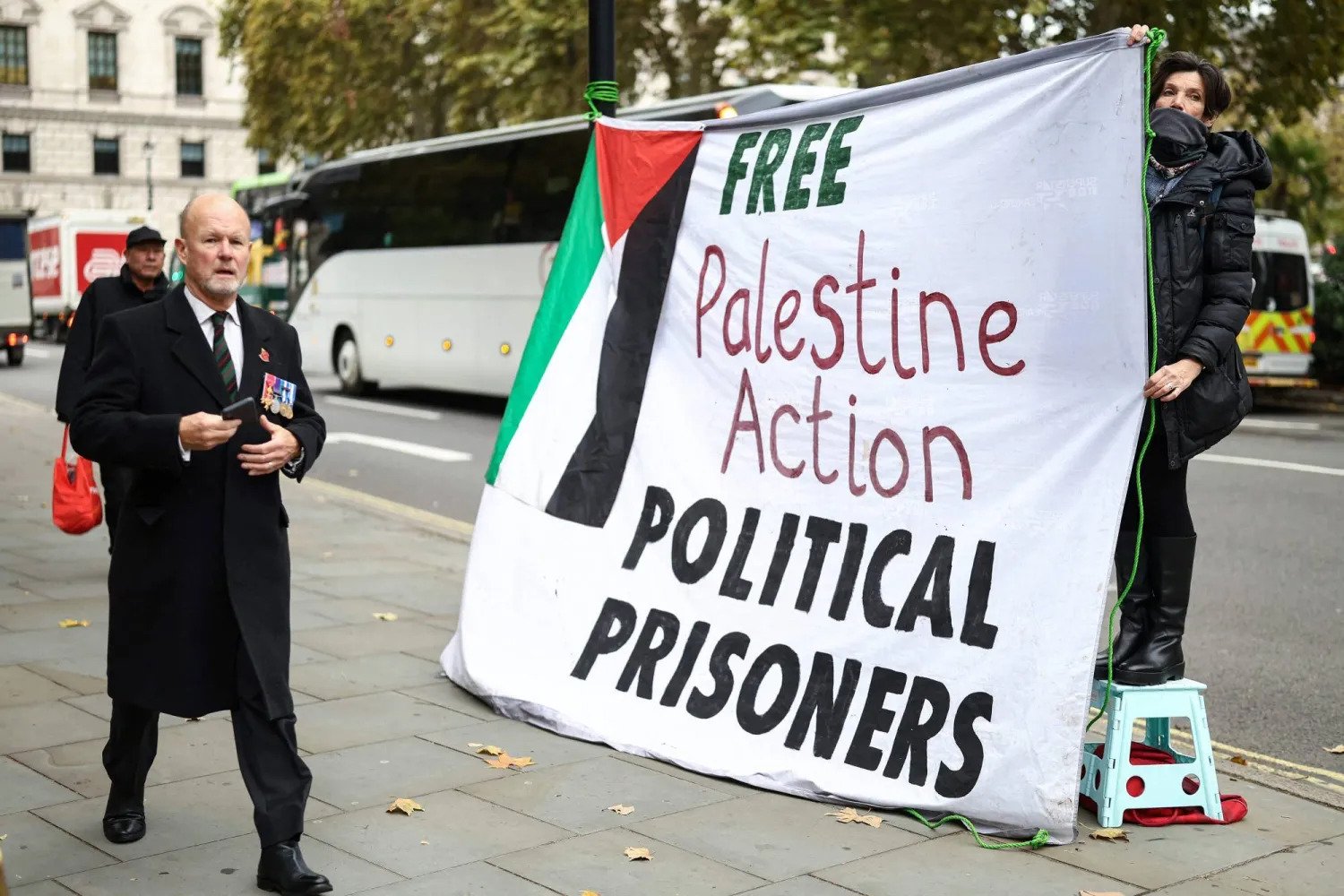
As Israeli attacks on Palestinians in the West Bank and Gaza Strip continue to escalate, the role of the media in disseminating the historical Palestinian narrative and countering attempts to erase it has become increasingly important. This is particularly true amid growing efforts to use traditional media and social media platforms to distort facts. Experts interviewed by Asharq Al-Awsat believe that the “battle over historical narratives” has become increasingly difficult, especially during periods of conflict.
At the conclusion of its 56th session, held in Cairo in November, the Council of Arab Information Ministers called for coordinated Arab media action, stronger international visibility for the Palestinian narrative, and efforts to counter attempts to distort Palestinian history and historical accounts. It also called for the development of a credible, professional media discourse that engages international public opinion.
The importance of confronting disinformation has grown amid increasing concerns about the spread of misleading information. According to the Digital News Report 2026, published by the Reuters Institute for the Study of Journalism, approximately 62 percent of respondents expressed concern about the spread of “fake news” online.
From Reporting the News to Producing Knowledge
Dr. Abdul Hakim Al-Qaraleh, a Jordanian political writer and analyst, believes that “countering the distortion of facts about Palestine requires verifying information before publication through specialized institutions and tools,” particularly in the digital media age.
In an interview with Asharq Al-Awsat, he stressed the need for international coverage to expose the double standards applied by the international community in its approach to the Palestinian question.
Al-Qaraleh called for a transition “from media that merely transmits information to media that produces knowledge,” capable of presenting documents, testimonies, and analysis that help audiences understand complex issues and describe events accurately.
He also highlighted the importance of investing in digital media to ensure that the Palestinian voice reaches international platforms, while safeguarding professional standards and editorial independence.
He further emphasized the need to retell the Palestinian narrative in a way that conveys the full picture to global audiences. “We do not want to remain merely in a reactive position. There must be initiatives that actively communicate the Palestinian narrative to the world, supported by documents, evidence, and verifiable facts.”
The Need for a Forward-Looking Strategy
Al-Qaraleh argued that “falsehood cannot be confronted with falsehood,” stressing that the Palestinian voice must be grounded in a higher degree of credibility if it is to reach international capitals and decision-making circles effectively.
He therefore called for a forward-looking strategy to protect the Palestinian narrative and historical record, making use of digital platforms and technological tools to communicate the Palestinian perspective in response to what he described as an Israeli narrative based on distortion, misleading news, and fabricated information.
At the same time, Al-Qaraleh acknowledged that achieving this objective “is no easy task.” It requires institutionalizing media efforts and building networks linking media organizations with research centers, legal institutions, human rights organizations, and international bodies. It also requires addressing the Palestinian question as an integrated issue rather than presenting it in fragmented terms.
In this context, he pointed to the role played by Arab media in covering the war in Gaza, describing its contribution as significant while emphasizing the need for continuity to achieve lasting results.
He added that confronting the distortion surrounding Palestine requires an integrated Arab media system equipped with the tools of the present and the future, including digital, technical, and technological capabilities.
He also stressed the importance of focusing on the broader narrative of the Palestinian question rather than limiting coverage to individual developments and breaking news. This means highlighting the historical, political, legal, and humanitarian dimensions that strengthen the Palestinian narrative, documenting it for future generations, and presenting its human dimension in ways that can help mobilize support for the justice of the Palestinian cause.
The United Nations Dimension
In a related context, experts argue that the media plays a central role in shaping historical narratives, particularly during wars and conflicts.
A United Nations discussion held toward the end of 2024 to examine the challenges of covering the war in Gaza highlighted how media framing often portrayed Israel as the protagonist of the narrative, with Israel cast as “the good side,” while Palestine and Hamas were presented as “the bad side.” Similar problems, the discussion noted, had also emerged in media coverage of the war in Ukraine.
Palestinian journalist Tahseen Yaqeen, speaking to Asharq Al-Awsat, argued that media efforts to counter the distortion of reality in Palestine must be understood within the context of a historical process of distortion that began even before the 1917 Balfour Declaration.
He explained that “the idea of establishing the State of Israel relied on promoting an alternative narrative to actual history, just as much as it relied on the support of major powers.” He added that the power of the occupying state has found acceptance for distorted accounts through alliances built around the pursuit of interests and control over resources.
According to Yaqeen, confronting this distortion begins with understanding history and examining Israel's alliances with Western powers.
He noted that the expansion of social media platforms has created greater opportunities to challenge misleading narratives, as people around the world have become direct witnesses to the actions of the Israeli occupation, particularly during the war in Gaza.
This, he argued, makes it necessary to identify the different forms of historical distortion and invite historians and specialists to respond through rigorous, objective research.
Yaqeen added that presenting facts, historical records, and evidence of violations by the occupying forces – particularly at a time when public sympathy for Palestinians is evident in many societies – creates opportunities for an effective information-based response to disinformation.
However, he emphasized that such efforts require cooperation between Arab media and academic institutions, particularly research centers, to raise awareness of the Palestinian question and the justice of its cause.
The Importance of Verifying Images and Figures
A report published by the Center for Strategic and International Studies (CSIS) toward the end of 2023 noted that inflammatory language in US media coverage of the Israeli-Palestinian conflict can shape how different communities perceive one another and may contribute to acts of hatred.
Against this background, Dr. Talee' Hamdan, a Lebanese university professor and researcher specializing in contemporary history, argued that countering the distortion of Palestinian realities requires examining facts, language, and context together.
In an interview with Asharq Al-Awsat, he explained that disinformation is not limited to fabricating news. It also involves presenting images selectively, concealing responsibility for actions, and separating current events from their historical context.
“Arab media needs to verify images, figures, and testimonies; choose terminology that accurately describes what happened; connect news reports to their historical context; and establish responsibility on the basis of evidence,” he said.
He noted, for example, that the term “clashes” can obscure the nature of an incident in which civilians have been subjected to gunfire.
Hamdan added that journalists serve as “historians of the present moment,” drawing on the methods of oral history to record the testimonies of victims, survivors, and witnesses. They also have a responsibility to collect visual material documenting the details of suffering, resilience, and everyday acts of courage.
This task, he stressed, requires documenting the dates, locations, and sources of testimonies and images, comparing them with other evidence, and preserving original materials, while respecting the dignity, consent, and safety of those involved.
Hamdan also maintained that Arab media can effectively counter distortion if it can transform the Palestinian experience of injustice into a documented narrative that resonates with audiences from different linguistic and cultural backgrounds.
“The Palestinian narrative is not something that needs to be invented. It already exists in documents, testimonies, and everyday experiences. What it needs is wider access and deeper treatment,” he said.
He argued that current news must be connected to the history that explains it, and that Palestinians should be portrayed as people with rights, agency, and social and cultural lives, rather than solely as victims of violence. They are also victims, he added, of the failure of the international community to uphold its responsibilities toward them and toward international security, peace, and justice.
Hamdan stressed that the Palestinian narrative must reflect reality in all its diversity and contradictions. Doing justice to that narrative requires acknowledging the plurality of Palestinian voices and the diversity of Palestinian experiences.
Arab media, he argued, can expand its positive impact by producing investigative reports, documentaries, and digital content in multiple languages.
“Media can mobilize support for the Palestinian cause when it transforms images of suffering into reports that explain their causes and establish responsibility,” he said. “We must recognize that media needs convincing evidence if it is to reach audiences effectively.”
Although media cannot change political policies on its own, Hamdan concluded, it can provide people with the knowledge they need to take action and demand accountability, making the continued disregard for Palestinian rights increasingly difficult to defend in public debate.
Most read