
The Future of Warfare: Why Military Power Is No Longer Defined by Weapons Alone

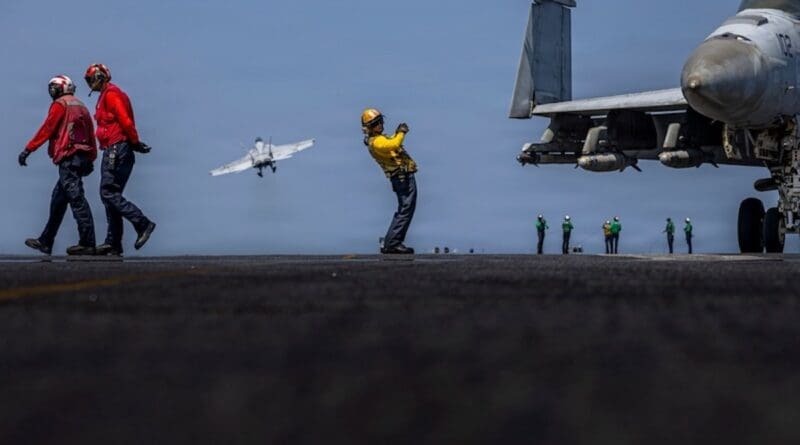
Contemporary warfare is undergoing a profound structural transformation that is reshaping traditional understandings of military power and strategic superiority. The defining feature of modern conflict is no longer the possession of advanced platforms alone, but the ability of states to integrate military, technological, informational, and organizational capabilities into coherent operational systems capable of functioning effectively under conditions of extreme pressure and disruption.
From the war in Ukraine to the conflicts unfolding across the Middle East and the Red Sea, recent military confrontations have demonstrated that superiority in twenty-first-century warfare increasingly depends on integration rather than hardware alone. Tanks, aircraft, missile systems, drones, and naval assets are no longer decisive in isolation. Their effectiveness is determined by the degree to which they are connected through real-time intelligence, resilient communications, artificial intelligence, electronic warfare, logistics, and command-and-control architectures capable of accelerating the cycle between detection, decision, and strike execution.
This shift reflects the emergence of what military strategists increasingly describe as network-centric warfare: a battlespace in which operational success depends on the ability to synchronize sensors, shooters, communications systems, cyber capabilities, and decision-making processes into a unified and adaptive military ecosystem. In this environment, the central strategic advantage belongs not necessarily to the actor with the largest arsenal, but to the one capable of transforming information into operational action faster and more efficiently than its adversary.
The Russia–Ukraine war offers one of the clearest illustrations of this transformation. Despite Russia’s overwhelming conventional military inventory, the conflict exposed major weaknesses in operational integration, including deficiencies in air-ground coordination, logistics management, communications resilience, and real-time battlefield adaptation. Ukraine, meanwhile, benefited extensively from Western-enabled intelligence-sharing networks, satellite communications, precision targeting support, and the widespread use of low-cost drone systems.
Yet the war also demonstrated the limitations of Western assumptions regarding technological superiority. Russian military systems did not collapse despite significant battlefield losses. Instead, Moscow adapted progressively to the evolving operational environment, imposed high attritional costs on Western precision-guided munitions, and demonstrated the strategic value of resilience and sustainment in prolonged conflict. The broader lesson is therefore not that conventional military superiority has become irrelevant, but that the effectiveness of military power increasingly depends on institutional adaptability and systemic integration rather than on platform quality alone.
A similar dynamic emerged during Iran’s large-scale missile and drone attack against Israel in April 2024. Israel possesses one of the most advanced integrated air and missile defense architectures in the world, supported by extensive American assistance, layered interception systems, early-warning networks, and regional intelligence coordination. Nevertheless, some Iranian projectiles successfully penetrated Israeli defenses and struck targets inside Israeli territory.
The significance of the attack did not primarily lie in the number of missiles intercepted or those that reached their targets, but rather in Iran’s demonstrated capacity to conduct a synchronized, multi-domain assault combining drones, cruise missiles, and ballistic missiles within a single operational framework. The objective was not necessarily to overwhelm Israel militarily, but to compress defensive response timelines, complicate interception processes, and generate operational saturation across multiple defensive layers simultaneously.
This development highlights a critical transformation in modern warfare: military effectiveness is increasingly measured by the ability to generate operational complexity rather than simply deliver kinetic force. The challenge is no longer confined to destroying enemy assets directly, but to disrupting the adversary’s decision-making cycle, exhausting defensive capacities, and imposing continuous operational strain.
The confrontations in the Red Sea further reinforced this trend. The use of low-cost drones and anti-ship missiles by non-state or semi-state actors demonstrated that relatively inexpensive systems can impose disproportionate strategic and economic costs on major military powers. In several cases, the cost of intercepting incoming threats significantly exceeded the cost of the attacking systems themselves, revealing an emerging asymmetry in the economics of warfare.
This shift carries profound strategic implications. Military competition is no longer defined solely by force projection or platform sophistication, but increasingly by sustainability, operational efficiency, and the capacity to impose long-term economic and logistical burdens on an adversary. In this sense, modern deterrence is becoming as much about cost imposition and system exhaustion as it is about conventional military dominance.
At the same time, artificial intelligence is rapidly becoming one of the most consequential variables shaping the future battlespace. Major powers are investing heavily in AI-enabled targeting systems, automated battlefield management, predictive analytics, and machine-assisted operational decision-making. The integration of artificial intelligence into military command architectures has the potential to dramatically compress decision cycles, accelerate operational tempo, and redefine the relationship between information and combat power.
This explains why strategic competition between the United States and China is increasingly centered not only on conventional military capabilities, but also on technological ecosystems related to artificial intelligence, data processing, cyber warfare, semiconductor production, and digital infrastructure. Future military superiority will likely depend less on who possesses the most advanced individual systems, and more on who can integrate emerging technologies into functioning operational networks at scale and under combat conditions.
Nevertheless, the decisive variable in this transformation remains organizational and institutional as much as technological. Modern conflicts repeatedly demonstrate that advanced weapons systems alone do not automatically produce effective military power. True operational effectiveness requires interoperable command structures, resilient communications, adaptive doctrine, logistical depth, professional training, and the institutional capacity to operate coherently in highly contested environments.
For this reason, many states possessing advanced military hardware continue to struggle in translating procurement into genuine combat effectiveness. Purchasing sophisticated aircraft or missile systems cannot compensate for fragmented command structures, weak operational integration, or inadequate institutional coordination.
The strategic lesson emerging from contemporary conflicts is therefore increasingly clear: the future of warfare belongs to integrated systems rather than isolated platforms. Military power in the twenty-first century will be determined by the ability to connect sensors, communications, artificial intelligence, logistics, cyber capabilities, and kinetic systems into coherent operational architectures capable of sensing, deciding, and acting faster than the adversary.
In this emerging environment, the divide between successful and unsuccessful militaries will not necessarily be defined by geography or alliance structures alone, but by the distinction between connected and fragmented forces. States capable of achieving integration across technological, organizational, and operational domains will possess a decisive strategic advantage. Those unable to do so may find that even the most advanced weapons are insufficient to secure victory in the wars of the future.
Most read



Read also