
America’s Golden Fleet: Ambitions of Naval Supremacy and the Contradictions of Modern Power

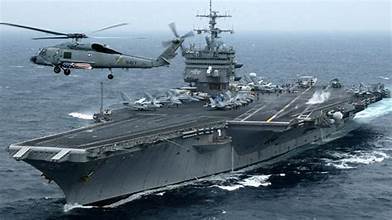
At a time of intensifying geopolitical competition among major powers, the United States has unveiled its new naval shipbuilding strategy under the ambitious banner of the “Golden Fleet.” The plan presents itself as a blueprint for restoring American maritime supremacy through the construction of a larger, deadlier, and more globally deployable navy.
Yet behind the optimistic rhetoric and strategic grandstanding lies a deeper set of questions regarding Washington’s actual ability to transform this vision into reality—especially given the long history of industrial setbacks, structural flaws in U.S. naval procurement programs, and the conceptual contradictions embedded within America’s evolving naval doctrine.
A Chronic Crisis in Naval Power Construction
The new strategy openly acknowledges the scale of the crisis facing the U.S. Navy. The current fleet consists of approximately 291 battle-force ships, despite a legal requirement for at least 355 vessels. More strikingly, shipbuilding budgets have doubled over the past two decades while the overall size of the fleet has remained largely stagnant, revealing profound structural deficiencies within the American naval-industrial complex.
The roots of this crisis are multifaceted: constantly expanding operational requirements during construction, systematically optimistic cost projections, and deeply entrenched bureaucratic complexities within the U.S. defense acquisition system. As a result, the plan is not merely about purchasing additional warships; it seeks to portray itself as a comprehensive effort to restructure the entire philosophy of American naval production.
In this context, the Navy proposes a series of institutional reforms, including streamlining bureaucratic layers, expanding the authority of acquisition executives, and implementing advanced digital systems to manage production and maintenance. However, the central question remains: can administrative reforms alone solve a crisis decades in the making?
“Distributed Lethality”: The New Doctrine of Naval Warfare
The intellectual core of the strategy lies in what the Navy describes as a “hedge strategy” centered on the concept of distributed lethality. This vision seeks to combine traditional large combat platforms with lower-cost systems, including unmanned vessels, autonomous systems, and networked combat assets.
The doctrine reflects a growing realization within the U.S. military establishment that modern naval warfare can no longer rely exclusively on massive, high-cost platforms. Instead, future conflicts are increasingly shaped by operational flexibility, dispersed force structures, and the ability to overwhelm adversaries through quantity, connectivity, and rapid adaptation.
This strategic shift also mirrors broader technological transformations driven by artificial intelligence, unmanned systems, hypersonic weapons, and electronic warfare. According to this logic, victory at sea will not necessarily belong to the navy with the largest ships, but to the force capable of operating integrated, distributed combat networks.
Consequently, the American strategy represents an attempt to adapt to a rapidly changing strategic environment—particularly in light of China’s expanding naval capabilities, which combine industrial scale with numerical growth.
The Return of Battleships: Strategic Revival or Nostalgia for the Past?
The most controversial contradiction within the plan emerges precisely when the Navy speaks of “distributed lethality” while simultaneously reviving the idea of massive nuclear-powered guided-missile battleships.
The proposed battleship is envisioned as a multi-role platform capable of delivering long-range strikes, carrying hypersonic weapons, supporting directed-energy systems, and serving as a maritime command center. In essence, it represents a return to the philosophy of the giant capital ship that dominated twentieth-century naval warfare.
Here, the core contradiction of the American vision becomes evident: how can a strategy built upon dispersion, flexibility, and attritable systems coexist with an investment in enormous, high-value warships that symbolize centralized military power?
The issue extends beyond financial cost or technological complexity. It concerns the very nature of modern warfare itself. Contemporary naval battlefields have become increasingly dangerous for large surface platforms due to the proliferation of precision-guided missiles, drones, and advanced anti-ship systems. As a result, investing heavily in giant warships risks recreating the same vulnerabilities the Navy claims it is attempting to overcome.
The Industrial Challenge: America’s Greatest Constraint
Beyond strategic debates, the United States faces an even more difficult challenge: industrial capacity. America no longer possesses the shipbuilding dominance it enjoyed during the Cold War era, while China continues to expand its naval and commercial shipbuilding sectors at an unprecedented pace.
Perhaps the most revealing aspect of the new strategy is its implicit admission that American industry alone cannot sustain the scale and speed of construction envisioned for the “Golden Fleet.” The plan openly discusses the possibility of relying on allied foreign shipyards to manufacture components for future U.S. naval platforms.
This admission carries profound strategic implications. It highlights the erosion of America’s maritime industrial base relative to Asia’s rapidly growing manufacturing power, while simultaneously exposing the contradiction between Washington’s “America First” industrial rhetoric and the practical realities of globalized defense production.
China: The Unspoken Driver
Although China is not always explicitly positioned at the center of the strategy’s public narrative, Beijing remains the primary force shaping these transformations. China’s rapid naval expansion and extraordinary industrial growth have compelled Washington to fundamentally reassess the future of American maritime power.
China is not merely building a larger fleet; it is constructing an integrated maritime-industrial ecosystem with production capabilities that now surpass those of the United States in several critical sectors. In this sense, the American naval plan represents an effort to restore the global maritime balance before China’s industrial advantages evolve into long-term strategic superiority.
Between Ambition and Reality
Ultimately, the “Golden Fleet” strategy reflects a growing awareness within Washington that American naval supremacy can no longer be taken for granted as it was in the post-Cold War era. At the same time, the plan exposes the structural challenges confronting U.S. power—whether industrial, strategic, or conceptual.
To be sure, the strategy includes serious reform initiatives, particularly regarding unmanned systems, maintenance modernization, and industrial management. Yet it remains constrained by a fundamental contradiction between the logic of modern naval warfare—based on distribution, flexibility, and survivability—and the political temptation to revive giant capital ships as symbols of prestige and dominance.
In the end, the success or failure of the “Golden Fleet” will not be determined by political rhetoric or conceptual imagery, but by a far simpler and more practical question: can the United States build a naval force that is operationally effective, financially sustainable, and delivered on time?
That is the true test that will determine whether the “Golden Fleet” becomes a genuine project for restoring American maritime supremacy—or merely another example of strategic ambition colliding with the limits of reality.
Most read




Read also