Sudan Between Humanitarian Collapse and the Specter of Fragmentation: Is Darfur Approaching Secession?

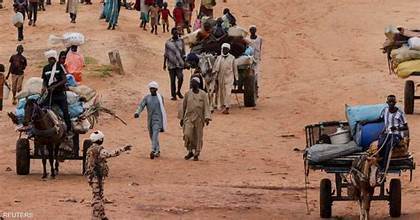
Sudan is entering an increasingly critical phase in which the consequences of prolonged conflict are converging with deepening economic collapse and institutional fragility, creating a multidimensional crisis that threatens to evolve into a protracted humanitarian catastrophe. Recent international assessments released at the end of May portray a rapidly deteriorating situation, warning that humanitarian needs are expanding faster than relief agencies can respond, amid severe funding shortages and persistent obstacles to aid delivery.
As the Sudanese conflict enters its fourth year since the outbreak of fighting in April 2023, humanitarian organizations are facing mounting challenges that exceed both their operational and financial capacities. International agencies emphasize that the war is no longer merely a direct cause of suffering; it has become a catalyst for a complex web of interconnected crises involving food insecurity, mass displacement, collapsing public services, rising poverty, and growing social vulnerability.
Food insecurity remains among the most alarming manifestations of the current crisis. International estimates indicate that millions of Sudanese are experiencing acute levels of food deprivation as a result of disrupted economic activity, damaged markets, and fractured supply chains. Current assessments suggest that nearly two-fifths of the population are struggling to meet their basic nutritional needs, while tens of thousands face catastrophic conditions associated with famine risk, particularly in parts of Darfur and South Kordofan where violence and instability remain widespread.
Concerns are further heightened by the approaching rainy season, which is expected to increase the isolation of several conflict-affected areas. Damaged transportation networks and inadequate infrastructure may significantly hinder the delivery of humanitarian assistance to vulnerable communities, widening the gap between urgent needs and available resources. Relief agencies warn that without additional financial support, the ability to sustain life-saving operations will become increasingly difficult.
The social and human dimensions of the crisis are equally severe. Women and girls continue to bear a disproportionate burden of the conflict, facing heightened risks associated with gender-based violence, exploitation, and limited access to healthcare services. The erosion of protection mechanisms and the disruption of maternal healthcare have placed many women in precarious conditions, while women and children constitute the majority of displaced populations living under extremely challenging circumstances.
The deterioration of essential services adds another layer of complexity to the humanitarian emergency. Years of conflict have significantly weakened public institutions responsible for health, water, and sanitation services. Large numbers of healthcare facilities are no longer operational, while access to clean water and adequate sanitation remains severely constrained. As a result, the likelihood of disease outbreaks—including cholera, measles, malaria, dengue fever, hepatitis, and diphtheria—continues to rise, particularly among children and pregnant women.
At the same time, displacement within Sudan and refugee flows into neighboring countries continue unabated. Thousands of families have been forced to flee their homes in search of security and basic services, often experiencing multiple displacements as frontlines shift. This ongoing movement places additional pressure on host communities both inside Sudan and across neighboring states, many of which are already struggling with economic and humanitarian challenges of their own.
International assessments consistently identify the continuing confrontation between the Sudanese Armed Forces and the Rapid Support Forces as the principal driver of the country’s worsening humanitarian conditions. Beyond causing civilian casualties and mass displacement, the conflict has disrupted humanitarian access, damaged critical infrastructure, and undermined the capacity of aid organizations to reach those most in need. Consequently, international actors continue to call for the protection of civilians and the establishment of safe, unhindered humanitarian corridors.
Beyond the humanitarian dimension, growing concerns are emerging regarding the future of Sudan’s territorial integrity and political cohesion. Recent military and political developments, particularly in parts of Darfur and Kordofan, have fueled debate over the long-term implications of the conflict for the structure of the Sudanese state. Discussions surrounding alternative governance arrangements and parallel political institutions have intensified speculation about the possibility of significant geopolitical transformations should the conflict remain unresolved.
Many observers argue that current developments extend beyond conventional military competition and increasingly reflect struggles over territorial control, demographic influence, and political authority. From this perspective, there are concerns that the continuation of the conflict could gradually create new realities on the ground that may prove difficult to reverse in the future.
Although the United Nations, the African Union, and several international partners have repeatedly reaffirmed their support for Sudan’s unity and rejected any initiatives that could lead to fragmentation, many Sudanese political voices contend that these declarations have yet to translate into effective measures capable of halting the country’s downward trajectory. Critics also argue that the international response has been insufficient to address the growing violations and divisions that threaten the country’s long-term stability.
Taken together, these developments suggest that Sudan stands at a decisive crossroads. On one hand, the humanitarian crisis continues to deepen, marked by rising hunger, displacement, and institutional collapse. On the other, concerns over national cohesion and state integrity are becoming increasingly pronounced. Navigating these dual challenges will require a comprehensive political settlement capable of ending the conflict, restoring state institutions, and addressing the mounting humanitarian needs before the country enters an even more complex and potentially irreversible phase of instability.
Most read



Read also