Mali Between State Attrition and the Limits of Military Solutions: The Transformation of Conflict in the Sahel

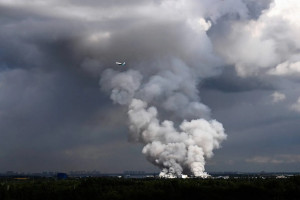
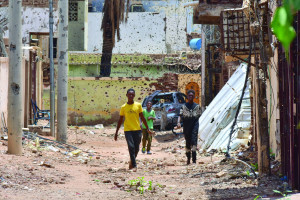
Mali is entering a particularly sensitive phase marked by an unprecedented level of security and political complexity following the coordinated attacks targeting areas surrounding Bamako as well as several cities in the country’s north and center. Although state institutions remain formally intact, recent developments have revived fundamental questions regarding the effectiveness of the military-centered strategy adopted by the transitional authorities since the military leadership assumed power in 2020. What is unfolding in Mali increasingly suggests that the crisis has moved beyond the framework of conventional counterinsurgency operations toward a protracted conflict linked to the broader restructuring of relations between the state and society in one of the world’s most fragile regional environments.
The significance of the Malian crisis extends far beyond the country’s national borders. Mali occupies a central geopolitical position within the Sahelian-Saharan space, functioning as a strategic link between West and North Africa while simultaneously intersecting with broader issues related to Mediterranean security, transnational migration, smuggling networks, and armed militant movements. As a result, instability in Mali increasingly carries implications not only for the Sahel and West Africa, but also for Europe’s southern security environment.
Developments on the ground indicate that armed groups — particularly Jama’at Nasr al-Islam wal-Muslimin (JNIM) — are no longer primarily pursuing rapid territorial control over major urban centers. Instead, they appear to have adopted a strategy centered on the gradual exhaustion of the state and the disruption of its governing capacity. This became evident during the siege-like pressure imposed on Bamako last year, as well as the systematic disruption of transportation routes and the isolation of several central regions. Such tactics reflect an important shift in the nature of conflict: from territorial conquest toward targeting the functionality and legitimacy of the state itself. Simultaneously, JNIM’s political messaging increasingly seeks to exploit economic and security crises to undermine the legitimacy of the ruling military authorities while presenting itself as a potential alternative capable of filling the governance vacuum.
This transformation in both rhetoric and operational doctrine reflects deeper structural changes within the organization itself. Following years of counterterrorism operations that eliminated many foreign jihadist leaders linked to al-Qaeda, the movement has gradually evolved into a more localized insurgency led by Malian figures whose legitimacy derives less from transnational jihadist narratives and more from local social and political grievances. This localization has strengthened the group’s ability to embed itself within vulnerable communities, particularly in central and northern Mali, where insecurity intersects with weak governance, economic deprivation, and communal tensions.
In response, Malian authorities appear increasingly compelled to reorder their security priorities. Rather than attempting to impose comprehensive territorial control across Mali’s vast and difficult geography, the state has shifted toward prioritizing the protection of major urban centers, strategic infrastructure, and key logistical corridors. From a military perspective, such a transition is understandable given resource limitations and operational realities. However, it also reflects a broader shift from a strategy of “restoring control” toward one of “risk management” — minimizing losses and securing core state structures rather than pursuing full-spectrum territorial dominance.
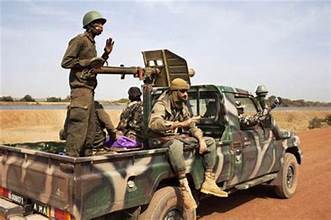
Within this evolving landscape, Russia’s role has become increasingly prominent following the restructuring of the Wagner Group’s presence under the framework commonly referred to as the “Africa Corps.” Recent Russian deployments suggest a more pragmatic operational posture characterized by tactical withdrawals from remote areas alongside reinforced deployments around airbases, supply routes, and strategic hubs. While this approach may reduce operational vulnerability, it also risks creating expanding security vacuums in rural areas that armed groups could exploit to consolidate influence beyond urban centers.
The Malian case also highlights the structural limits of relying on military force as the primary instrument for crisis management. Upon taking power, the military leadership embraced a discourse centered on decisive military victory and reoriented Mali’s foreign partnerships away from France and Western actors. Yet the subsequent years have reinforced a lesson already evident from previous international interventions in the Sahel: military force alone is insufficient to produce sustainable stability in environments shaped by intertwined security, economic, social, and governance crises. Indeed, even the French experience in the Sahel ultimately demonstrated that counterinsurgency operations cannot succeed without parallel political and developmental strategies capable of rebuilding trust between the state and local populations.
Politically, the transitional authorities led by Assimi Goïta face a challenge that extends beyond battlefield management to the broader issue of legitimacy and public trust. In northern and central Mali particularly, local communities increasingly judge the state not solely by its military presence, but by its ability to provide security, justice, basic services, and effective governance. Without addressing these structural deficits, armed groups will likely continue exploiting administrative and social vacuums to expand their influence.
Regionally, Mali’s crisis is deeply interconnected with instability in neighboring Burkina Faso and Niger. Armed groups operate across highly porous borders, benefiting from weak regional coordination and fragile state institutions. This reality limits the effectiveness of purely national security approaches and underscores the need for broader regional coordination linking security, governance, development, and border management strategies across the Sahel.
In this context, the future of stability in Mali will likely depend on the state’s ability to move beyond a paradigm of open-ended military confrontation toward a more comprehensive crisis-management approach. Military force remains necessary to prevent state collapse, but it is insufficient on its own to restore durable stability. A sustainable strategy will require strengthening defensive capabilities while simultaneously advancing political dialogue, rebuilding public trust, improving governance, and expanding service provision in fragile regions vulnerable to militant infiltration.
Ultimately, Mali stands at a critical strategic crossroads. The country can either continue along a path centered primarily on military solutions, with all the risks of prolonged attrition and instability that such an approach entails, or it can pursue a broader strategy that recognizes the limits of force and links security to governance, development, and state reconstruction. The trajectory Mali chooses will shape not only its own future, but also the broader stability of the Sahel region in the years ahead.
Most read



Read also