Israel’s Elections and the Dilemma of Power Transition: Opposition Divisions and the Risk of Netanyahu’s Political Survival

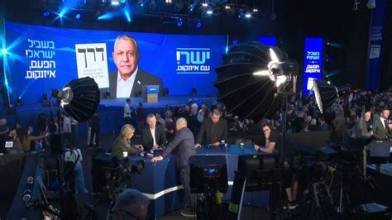
Israel’s political battle does not end with the announcement of election results. Instead, a more complex phase begins, in which competing political forces must demonstrate their ability to form a viable governing coalition. As Benjamin Netanyahu seeks to remain in power and opposition parties disagree over the acceptable composition of a potential alternative government, a gap emerges between the desire for political change and the ability to translate electoral results into a new governing arrangement. These challenges are further complicated by fears of a possible military escalation with Iran and its potential to reorder Israel’s political and security priorities.
Election Results Do Not Necessarily Mean a Transfer of Power
Developments following Israel’s elections highlight a fundamental feature of parliamentary systems: electoral success, or a decline in the governing party’s parliamentary representation, does not automatically lead to a transfer of power. Government formation depends on the ability of political parties to assemble a coalition with sufficient parliamentary support, reach agreements on leadership and policy, and overcome differences that could render the coalition fragile from the outset.
In this context, the opposition faces a challenge that extends beyond its shared opposition to Benjamin Netanyahu remaining in office. Removing the prime minister requires more than agreement on Netanyahu himself. It also requires consensus on the composition of an alternative government, the limits of cooperation among its constituent parties, and the available options for securing a parliamentary majority. The wider these disagreements become, the greater the likelihood that government formation will stall, even if the governing party has suffered electoral losses.
The dispute over the legitimacy of the results and attempts to challenge them, as described in the source material, underscore the importance of distinguishing partisan competition from the constitutional procedures governing elections. A decline in parliamentary seats does not, in itself, justify cancelling an election, while political objections should be addressed through established legal and institutional channels. Respect for electoral outcomes and procedures remains essential to political stability, regardless of which party benefits from the results.
The Opposition’s Dilemma: Agreeing on Netanyahu’s Removal but Disagreeing on the Alternative
One of the opposition’s principal weaknesses is that rejecting Netanyahu’s continued leadership does not necessarily imply agreement on the form of government that should replace him. The opposition is not a homogeneous political bloc. It comprises parties with different ideological orientations, electoral calculations, security positions, and views on relations with Arab parties.
The position of Avigdor Lieberman, leader of Yisrael Beiteinu, who has rejected participation in a government that includes Arab parties, illustrates the constraints facing efforts to build an alternative coalition. Such a position narrows the range of available parliamentary options and makes it more difficult to assemble an opposition majority if that majority depends, arithmetically or politically, on the support of Arab parties.
The significance of this issue extends beyond parliamentary arithmetic. It reflects a deeper disagreement over the meaning of political partnership and the limits of representation for Arab citizens within Israel’s parliamentary system. When political forces are excluded on the basis of their identity or position within the national divide, coalition-building becomes constrained by a contradiction between the requirements of parliamentary majority formation and the ideological restrictions some parties impose on potential partners.
The opposition therefore faces a strategic dilemma. It can broaden negotiations to include the parties needed to secure a majority, which would require political compromises, or maintain its red lines while risking prolonged negotiations and the continuation of the incumbent government. This does not mean that cooperation between Arab parties and other opposition forces is guaranteed or free of complications. Such cooperation would require clear understandings on the government’s programme, the boundaries of political partnership, and the priorities of the next phase.
Netanyahu and the Political Advantages of Opposition Divisions
Under these circumstances, Netanyahu may benefit from divisions among his opponents even if the election results indicate a decline in his party’s strength. The decisive factor is not simply how many seats the governing party has lost, but whether competing parties can turn their parliamentary representation and differing positions into a majority capable of governing.
Divisions within the opposition give Netanyahu room to manoeuvre during political consultations. He may seek to attract individual parties, rely on the inability of his opponents to reach an agreement, or benefit from the constitutional procedures governing the transition between governments. In such circumstances, his continued tenure would not necessarily reflect a direct electoral victory so much as his opponents’ failure to construct a coherent alternative.
This possibility does not mean that Netanyahu’s continued leadership is guaranteed or that the opposition is necessarily incapable of forming a government. The outcome remains dependent on the course of negotiations, the willingness of parties to adjust their positions, and each side’s ability to offer credible political assurances to potential partners. It is therefore premature to describe the situation as either a victory for Netanyahu or a definitive defeat for the opposition while government formation remains unresolved.
The Iran Factor: Security as a Variable in Coalition-Building Calculations
Fears of a military confrontation with Iran add another dimension to the government-formation crisis. A potential security escalation during coalition negotiations could redirect public attention towards national security and increase pressure on political parties to avoid appearing divided at a moment when external threats are being presented as an urgent priority.
Under such circumstances, some political forces may reconsider the balance between maintaining pressure for a transfer of power and avoiding a coalition crisis during a sensitive security period. This could give Netanyahu an opportunity to strengthen his position as the incumbent prime minister or justify the continued operation of the current government in a caretaker capacity until the political and security situation becomes clearer.
However, the impact of an external threat is not necessarily one-directional. Escalation could encourage some political actors to rally around the incumbent leadership, but it could also intensify disagreements over crisis management, the use of force, and the assessment of risks and costs. It is therefore not possible to assume that a confrontation with Iran would automatically strengthen Netanyahu. Its political consequences would depend on the nature and duration of the confrontation, its outcome, the government’s response, and public and partisan reactions.
It is also important to distinguish between fears or assessments concerning the possibility of war and an actual military confrontation. A potential security crisis may influence political behaviour before an event occurs, but that possibility alone does not establish that government formation will be disrupted or that a caretaker government will remain in office for a specific period.
A Caretaker Government: Institutional Continuity or Temporary Political Advantage?
The possibility of Netanyahu remaining at the head of a caretaker government is one scenario that warrants attention. However, it remains conditional on negotiations failing and no political bloc managing to form a new government under the applicable procedures. The significance of this scenario lies in its ability to preserve the functioning of state institutions during negotiations, while potentially prolonging political uncertainty if the transitional period becomes extended.
From an institutional perspective, the continuation of the incumbent government in a caretaker capacity does not mean that the election results have been annulled or rendered meaningless. Rather, it reflects the distinction between the electoral expression of political preferences and the parliamentary capacity to form a government. Nevertheless, a prolonged transitional period could raise questions about the ability to make long-term strategic decisions, the clarity of the government’s political mandate, and the prospects for accountability in the absence of a new and stable coalition.
Politically, this scenario could allow Netanyahu to retain his position, but it would not guarantee him a lasting advantage. A caretaker government might provide him with additional time while his opponents remain divided, yet it could also become a source of pressure if criticism of crisis management intensifies or if key domestic and security issues remain unresolved.
Potential Scenarios and Their Implications
Based on the information presented in the source material, three principal scenarios can be identified:
-
Formation of an alternative government: This remains possible if opposition parties reach agreements that overcome their disagreements over Arab parties, the distribution of responsibilities, and political priorities. Such an outcome would require a practical compromise between ideological considerations and parliamentary arithmetic.
-
Failed negotiations and continuation of a caretaker government: This scenario could emerge if the parties maintain conflicting positions that prevent the formation of a new majority. It could give Netanyahu additional time in office while leaving the political situation open to further change.
-
Security escalation that reshapes political calculations: A serious deterioration in relations with Iran could alter party priorities or delay coalition agreements. The direction of this impact would depend on the outcome of security developments, and it cannot be determined in advance whether it would benefit Netanyahu or his opponents.
These scenarios should not be treated as certain predictions. They are analytical pathways whose likelihood depends on the decisions of political actors, security developments, and the relevant constitutional procedures.
Conclusion: The Opposition’s Test Goes Beyond Replacing the Prime Minister
The crisis demonstrates that political change in Israel is determined not only by the results of the ballot box, but also by parties’ ability to construct viable coalitions and reconcile ideological differences with the practical requirements of government. An opposition united by the goal of ending Netanyahu’s tenure may still fail to achieve that objective if it cannot agree on the partners on whom it can rely and the minimum political programme that can hold the coalition together.
Netanyahu, meanwhile, may benefit from these divisions and from the security concerns surrounding the transition period. Yet this does not eliminate the challenges he faces or settle the future of his political position. If the incumbent government remains in office, that outcome would reflect specific parliamentary and procedural circumstances rather than, in itself, evidence of a renewed popular mandate.
The central question, therefore, is not simply whether the opposition can remove Netanyahu from office, but whether it can produce a stable alternative with a clear majority and an implementable programme. Without such an alternative, the election results may become the starting point for a prolonged coalition crisis rather than a decisive moment of political change, leaving the transfer of power an open political possibility rather than a settled outcome.
Most read



Read also