
China and Egypt Renew Local Currency Swap Agreement with Expanded Value

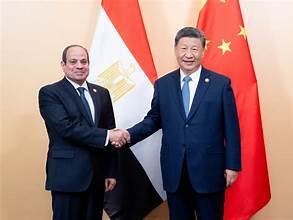
China and Egypt have renewed their bilateral local currency swap agreement while significantly increasing its financial value, a move expected to deepen economic and financial cooperation between the two countries and promote the use of the Chinese yuan and Egyptian pound in the rapidly growing trade and investment exchanges between them, according to economic experts.
Experts interviewed by Xinhua News Agency described the extension of the agreement as an important strategic step that reflects the strength of Sino-Egyptian economic relations and signals a clear commitment to building a more advanced and sustainable financial partnership.
On Wednesday, the People's Bank of China (PBOC), China's central bank, announced the renewal of its bilateral local currency swap agreement with the Central Bank of Egypt.
Under the new agreement, which will remain in effect for three years and may be extended upon mutual consent, the swap value will increase to 30 billion yuan, compared to 18 billion yuan under the previous arrangement—an increase of approximately 67 percent.
China and Egypt first signed a local currency swap agreement at the end of 2016 with a value of 18 billion yuan, equivalent at the time to approximately $2.65 billion.
On March 25, 2026, Egypt’s Minister of Foreign Affairs, Emigration and Egyptian Expatriates, Badr Abdelatty, expressed appreciation for financial cooperation between Egypt and China, including the currency swap agreement, during a telephone conversation with Chinese Foreign Minister Wang Yi. According to a statement issued earlier by the Egyptian Ministry of Foreign Affairs, Abdelatty also expressed Egypt’s desire to increase the agreement’s value.
The extension comes within a broader framework of expanding financial and investment cooperation between China and Egypt. One year earlier, Egypt announced that Chinese companies would be permitted to use the yuan in financial transactions within the country.
The agreement also coincides with celebrations marking the 70th anniversary of diplomatic relations between China and Egypt, amid steadily growing economic and trade ties.
Toward a Deeper Financial Partnership
Economic expert Abu Bakr Al-Deeb emphasized that the decision to extend the local currency swap agreement goes far beyond a routine banking arrangement. Instead, it reflects a gradual transformation in Egyptian-Chinese economic relations—from traditional trade cooperation toward a deeper and more influential monetary and financial partnership.
Al-Deeb, an advisor at the Arab Center for Research and Studies in Cairo, argued that the 67 percent increase in the agreement’s value sends a clear signal that both countries recognize the importance of building alternative and more flexible financial channels amid global economic uncertainties, volatility in international currency markets, and the challenges faced by emerging economies in securing foreign liquidity.
He noted that the renewal comes at a particularly important time for Egypt, whose economy has been seeking in recent years to diversify financing sources and reduce risks associated with heavy dependence on the U.S. dollar in foreign trade and international financing.
According to Al-Deeb, the agreement also reflects a high level of mutual trust and demonstrates that Sino-Egyptian relations are no longer based solely on short-term commercial interests but rather on a long-term vision aimed at establishing a comprehensive, multidimensional economic partnership.
He further argued that the agreement signals growing Chinese confidence in Egypt’s ability to absorb greater levels of financial and investment cooperation in the years ahead.
For his part, economist Mohamed Abu Assi described the extension as highly significant for Egypt, particularly in terms of increasing bilateral trade.
Abu Assi noted that while Egypt faces economic challenges, it also possesses ambitious development objectives that require expanded investment and infrastructure projects. One of the key obstacles remains access to U.S. dollars, making local currency arrangements with China particularly valuable in easing financial pressures.
He explained that local currency swaps represent one of the highest forms of economic cooperation between countries and demonstrate China's recognition of Egypt as a key strategic partner.
He also highlighted Egypt’s growing role as an advanced manufacturing base for Chinese companies, arguing that the agreement will further support Chinese investment expansion within the Egyptian market.
Implications of the Agreement
Al-Deeb expects the renewed agreement to generate significant positive effects on Sino-Egyptian economic relations, opening the door to a more advanced phase of financial and economic integration between the two countries.
China is one of Egypt’s largest trading partners, while Chinese companies have become among the most prominent foreign investors in several strategic sectors, particularly within the Suez Canal Economic Zone, as well as in manufacturing, energy, infrastructure, and technology.
Strengthening financial cooperation, he argued, will naturally enhance the ability of companies and institutions in both countries to conduct commercial and investment activities more efficiently and at lower costs, ultimately boosting trade volumes and foreign direct investment flows.
He added that the agreement carries strategic significance beyond bilateral relations, as it strengthens Egypt’s position within major Chinese economic initiatives, foremost among them the Belt and Road Initiative (BRI), while integrating Cairo more closely into the trade and financial networks that Beijing is expanding across the globe.
Abu Assi similarly argued that local currency swaps between China and Egypt effectively "establish a new framework of cooperation free from traditional obstacles."
He noted that China’s decision to renew the agreement follows another important measure: granting tariff exemptions on all imports from Egypt.
On May 1, 2026, China officially implemented a zero-tariff policy on imports from all 53 African countries maintaining diplomatic relations with Beijing, including Egypt.
Diversifying Sources of Foreign Liquidity
Al-Deeb stressed that one of Egypt’s most important gains from the agreement lies in its contribution to diversifying sources of foreign liquidity.
According to him, a 30-billion-yuan swap arrangement provides Egypt with an additional source of liquidity that can be utilized when needed, while granting the Central Bank of Egypt greater flexibility in managing available monetary resources without relying exclusively on traditional reserve currencies.
He added that the agreement could also reduce demand for U.S. dollars in transactions related to trade with China, thereby easing pressure on Egypt’s foreign exchange market and helping preserve foreign currency reserves used to finance imports and external obligations.
In his view, the agreement represents an additional financial instrument that expands Egypt’s policy options and reduces exposure to risks associated with fluctuations in the U.S. dollar and changes in international monetary policies.
Abu Assi echoed this assessment, arguing that the agreement will contribute significantly to diversifying Egypt’s foreign liquidity sources, particularly as both countries deepen economic cooperation through their membership in BRICS and as Egypt continues to serve as a critical hub along China’s modern Silk Road.
He noted that conducting transactions in local currencies helps Egypt diversify its currency basket, reduce dependence on dollar-denominated transactions, ease pressure on foreign reserves, and mitigate vulnerabilities arising from periods of dollar shortages.
Facilitating Trade and Investment Transactions
Al-Deeb also emphasized that the currency swap agreement will facilitate trade and investment flows between the two countries, reduce transaction costs, and increase flexibility for companies operating in both the Egyptian and Chinese markets.
He described the agreement as a strong signal to Chinese investors that Egypt is committed to building a more open and investment-friendly financial environment capable of accommodating larger volumes of foreign capital, potentially paving the way for a new wave of Chinese investment in the coming years.
Furthermore, the agreement provides a stable and transparent financial framework that allows Chinese investors to manage their financial obligations within Egypt more effectively, thereby enhancing the attractiveness of the Egyptian business environment and encouraging long-term investment decisions.
Al-Deeb pointed out that the agreement complements a broader series of measures undertaken by Egypt to facilitate Chinese investment, including allowing Chinese companies to use the yuan in domestic financial transactions—an important development in the financial infrastructure supporting Chinese investment activities.
Abu Assi agreed, emphasizing that local currency swaps will significantly facilitate commercial and investment transactions between China and Egypt.
He noted that the agreement is likely to stimulate additional Chinese investment in Egypt, particularly given Egypt’s growing importance as a manufacturing partner for Chinese companies, while simultaneously contributing to an increase in bilateral trade volumes.
China is currently one of Egypt’s most important development partners, ranking tenth among foreign investors in the Egyptian market. According to statements by Egyptian officials in mid-2025, the Egyptian government aims to elevate China into the ranks of the country's top five foreign investors.
Most read



Read also