

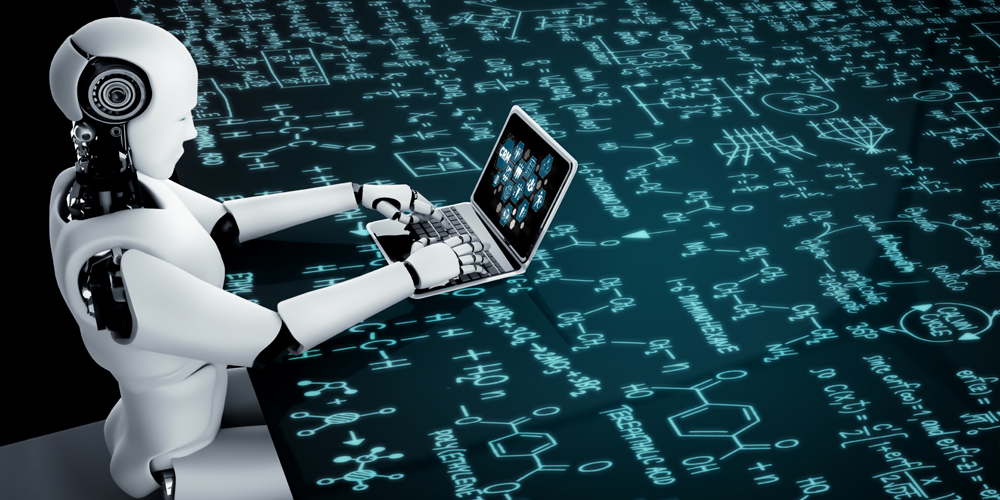
The impact of artificial intelligence is no longer confined to technology, economics, and labor markets. It has begun to penetrate one of the most sensitive institutions of modern society: academia. With the rapid advancement of language models such as “ChatGPT,” the central question is no longer whether these technologies will transform education, but to what extent they may redefine the meaning of learning itself, the nature of knowledge, and the role of universities in the digital age.
The ongoing debate within universities is not merely about students using AI to write essays and complete assignments. Rather, it concerns a much deeper crisis that strikes at the core of the educational process. When a program becomes capable of producing coherent academic essays and sophisticated analyses in language resembling human output, traditional methods of evaluation themselves come into question. This has led many academics to ask: how can genuine student effort be distinguished from content generated by algorithms? And can essays and take-home assignments still measure critical thinking and individual creativity?
The seriousness of the current transformation lies in the fact that artificial intelligence threatens not only conventional jobs, but also the very heart of academic work itself: the production, analysis, and formulation of knowledge. For decades, higher education—particularly in the humanities—has relied on the research essay as a tool for teaching students how to think critically, analyze information, and write effectively. Yet with the emergence of systems capable of generating academic texts within seconds, this model appears to be facing an unprecedented challenge.
A growing number of academics have expressed concern after AI applications demonstrated remarkable abilities in handling complex questions and producing responses that sometimes surpass the performance of university students. This raises a fundamental dilemma: if knowledge becomes instantly and easily accessible, what value will traditional education continue to provide? Will universities evolve from institutions that produce knowledge into spaces that merely manage knowledge already available digitally?
However, the crisis extends beyond academic assessment. It also exposes a deeper divide between the technological and humanistic spheres. For decades, the humanities and technology have existed in a state of intellectual separation—a phenomenon famously described by C. P. Snow in his influential concept of “The Two Cultures,” in which he highlighted the growing disconnect between humanists and scientists. Today, artificial intelligence revives this question with greater urgency: can technologies capable of reshaping society truly be developed without a deep understanding of history, ethics, philosophy, and human behavior?
Ironically, the age of technology has simultaneously exposed both the importance and the weakness of the humanities. On one hand, major technology companies increasingly require ethical and social frameworks to address the implications of artificial intelligence. On the other hand, humanities disciplines have experienced continuous decline within universities over the past decade in favor of science, technology, engineering, and mathematics (STEM) fields. This shift has produced generations with advanced technical skills, yet often lacking broader critical understanding of the social, political, and cultural transformations generated by technology.
The current crisis appears to reveal the limitations of the traditional educational model, which for decades treated technology as a mere supporting tool rather than as a force capable of reshaping the nature of knowledge itself. Artificial intelligence is not only transforming access to information; it is redefining the meaning of “knowledge production” and altering standards of creativity, writing, and analysis.
In this context, an important ethical and philosophical question emerges: should the use of AI in academic writing be considered a form of cheating, or is it simply a natural evolution comparable to calculators and search engines? The challenge is that existing academic rules were never designed to address systems capable of linguistic reasoning and idea generation in ways that closely resemble human thinking. As a result, universities now face a growing ethical and regulatory vacuum.
Despite widespread concerns, some scholars argue that artificial intelligence could become a historic opportunity to rebuild education rather than destroy it. Instead of emphasizing memorization and the reproduction of information, these technologies may push universities toward educational models centered on critical thinking, analytical reasoning, dialogue, and fact verification—skills that remain difficult to automate completely.
Moreover, the current transformation may impose a new form of integration between the humanities and technological disciplines. AI specialists will increasingly need deeper knowledge of philosophy, ethics, sociology, and history, while students of the humanities will need to understand natural language processing, algorithms, and digital systems that now shape public consciousness and knowledge production.
Ultimately, artificial intelligence places traditional education not only before a technological crisis, but before a philosophical one concerning the very meaning of learning itself. Universities today are confronting more than new tools; they are confronting a civilizational transformation that may fundamentally redefine the relationship between human beings and knowledge. The real challenge may not lie in resisting artificial intelligence, but in rethinking the kind of education humanity needs in an age when machines are increasingly capable of writing, explaining, and thinking in ways that resemble human intelligence.
Most read