

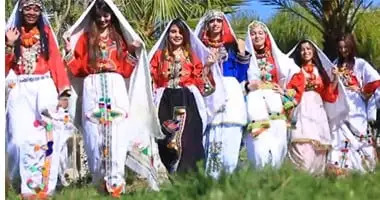
Amazigh culture is one of the oldest living human cultures and has, for centuries, constituted a fundamental pillar in shaping the identity of North Africa. The Amazigh people, who refer to themselves as “Imazighen,” meaning “free people,” are considered the indigenous inhabitants of a vast geographical region stretching from the Siwa Oasis in Egypt in the east to the Canary Islands in the west, and from the Mediterranean coasts in the north to the depths of the Sahara Desert in the south. For centuries, the Amazigh lived in harmony with nature and developed a comprehensive way of life reflecting their independence, deep connection to the land, and steadfast attachment to their culture despite major historical transformations—from the Phoenicians and Romans to the Islamic conquest and modern colonialism.
The Amazigh language, or “Tamazight,” represents the cornerstone of Amazigh identity. It is an ancient language that is today written in the Tifinagh script, an indigenous alphabet dating back to the ancient Libyan eras. Although the Amazigh language suffered from neglect and marginalization for centuries, it survived through oral transmission across generations, preserved in songs, proverbs, folk tales, and poetry. In recent decades, Tamazight has gained official recognition in both Morocco and Algeria, where it has become a national and official language and has begun to be taught in schools and used in the media. This marks the beginning of a new phase in the revival of Amazigh identity and the strengthening of its place in public life.
Amazigh culture is not merely a language; it is also a complete system of customs, traditions, and values. Amazigh communities celebrate distinctive occasions that reflect their connection to the land and the agricultural seasons. Among the most important of these celebrations is “Yennayer,” the Amazigh New Year, observed on January 12. It is considered an agricultural festival symbolizing renewal and fertility. On this day, Amazigh families prepare traditional dishes, while celebrations featuring singing, dancing, and folk games bring together families and communities in an atmosphere that reflects solidarity and collective joy.
The Amazigh woman occupies a distinguished place within society. She is not only a homemaker, but also the guardian of language, memory, and traditional crafts. In many regions, women are responsible for transmitting culture from one generation to another, whether through storytelling or through engraving symbolic motifs onto textiles, pottery, and jewelry. Amazigh symbols carry profound meanings; they are not merely decorative ornaments, but cultural messages expressing concepts deeply rooted in the Amazigh worldview, such as protection, fertility, harmony with nature, and the balance between humanity and the universe.
Amazigh arts embody this ancient culture in multiple forms. Amazigh music expresses collective emotions and is often accompanied by traditional instruments such as the qraqeb, bendir, and rebab. Songs vary between religious, heroic, and romantic themes, serving as a means of expressing joy, sorrow, and the everyday concerns of Amazigh communities. Likewise, collective Amazigh dances—especially the “Ahwash” dance in Morocco and Kabyle dances in Algeria—highlight harmony and vitality while functioning as forms of communal communication and expression.
Despite the historical challenges faced by the Amazigh people, including attempts at cultural erasure and assimilation, they have succeeded in preserving a strong and dynamic identity. Mountains, remote villages, and relative isolation contributed significantly to protecting Amazigh culture from dissolving into other cultures. With the beginning of the twenty-first century, the Amazigh cause witnessed a powerful revival manifested in demands for cultural and linguistic rights, the establishment of associations and institutions dedicated to Amazigh heritage, and the organization of festivals and cultural events aimed at reviving and promoting Amazigh traditions.
Religion also constitutes an important element within Amazigh culture. The Amazigh embraced Islam at an early stage, yet they preserved their cultural and spiritual particularity through popular interpretations of religion, reverence for saints, and local religious festivals that blend spirituality with celebration. At its core, Amazigh Islam is characterized by tolerance and harmony with the local environment, reflecting the nature of the Amazigh people, who combine religiosity with cultural openness.
Amazigh culture is not merely a heritage of the past; it remains a living component of national identity in North African countries and a vital element of cultural plurality and diversity. In an era of globalization, preserving this culture becomes a collective responsibility, as it represents a rich model of coexistence, dignity, freedom, and rootedness in the land. Promoting Amazigh culture and granting it the recognition it deserves is not only a form of justice for a long history of struggle and resilience, but also a step toward building a future founded on respect for difference and recognition of all components of national identity.
Most read