The Druze Between Sectarian Instrumentalization and the Possibilities of National Integration

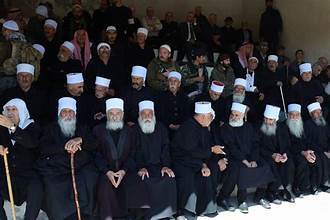
Minorities in the Arab world have long occupied a sensitive position within projects of domination or protection, particularly when external actors seek to reshape the regional balance of power along sectarian or ethnic lines. In this context, the Druze—owing to their distinct religious identity and tightly structured social organization—have often been viewed as an ideal subject for instrumentalization in partition-oriented projects, most notably within Israeli strategic conceptions concerning the fragmentation of Syria and Lebanon. Yet such instrumentalization has not always stemmed from an internal Druze agenda; rather, the community has frequently been burdened with roles and functions that transcend its own collective choices, within a strategic discourse that reduces sectarian groups to merely security or geopolitical variables.
Within this framework, Israeli political and security elites have consistently perceived minorities, including the Druze, as potential points of vulnerability within regional states that could be exploited to achieve strategic penetration. This outlook materialized in attempts to promote quasi-independent entities, such as the hypothetical “Alawite State” along the Syrian coast or a “Druze State” centered in Suwayda, as referenced in several Israeli strategic studies between 1980 and 2005. However, this reductionist perspective assumes that the sect as a whole could transform into a partner or proxy, without taking into account the complex internal structures of Druze identity, their attachment to place, national belonging, and the historical anti-colonial discourse embedded within the community. In other words, Israel miscalculated in assuming that Druze loyalty could be purchased through “support” or reshaped according to fragmentationist agendas.
One of the paradoxes surrounding Israeli attempts to integrate the Druze internally while isolating them externally lies in the contradiction at the heart of Israeli policy toward the community. On the one hand, Israel incorporates Druze citizens within state institutions inside the Green Line through military service and parliamentary representation, granting them a distinct legal status. On the other hand, it seeks to instrumentalize Druze communities in Syria and Lebanon as tools for weakening and fragmenting those states through support for separatist initiatives.
This political contradiction reflects a functional use of the Druze rather than a genuine partnership with them. Over time, this approach has generated a growing Druze current critical of Israeli policies, whether within the Galilee—as illustrated by Druze protests against the 2018 “Nation-State Law”—or in Jabal al-Arab, where Syrian Druze maintained a sovereign national discourse even during the harshest phases of repression.
This raises an important question: why did the partition-oriented project fail within the Druze environment? Despite repeated attempts, the Druze community never evolved into a driving force for separatist projects in any regional arena, for several reasons:
-
The Druze religious structure restricts political engagement outside the framework of the state:
The Druze faith, which highly values secrecy and social discipline, generally does not permit political decision-making to shift from the religious leadership to external actors, thereby limiting susceptibility to political recruitment. -
The collective memory of the community carries painful experiences with external alliances:
Most notably during the Lebanese Civil War, when the Druze found themselves entangled in violent conflicts with their surroundings, leading to greater caution toward involvement in foreign-sponsored agendas. -
Druze leaderships in Syria and Lebanon learned from history:
Whether through Kamal Jumblatt’s rejection of Israeli intervention or the refusal of Druze religious leaders in Suwayda to cooperate with Israeli forces during the Syrian uprising, the dominant trend within the community has been characterized by what may be termed “sovereign neutrality” rather than participation in fragmentationist alignments.
Here emerges another paradox concerning “Druze particularism” between isolation and targeting. Israel interpreted the Druze community’s distinctiveness as justification for attempts to separate it from the Syrian state, yet it failed to understand this distinctiveness as an adaptive mechanism within the framework of the nation-state rather than a readiness to secede from it.
In other words, the community’s apparent isolationist tendencies—manifested in self-governance structures, religious institutions, and tribal frameworks—have functioned primarily as defensive mechanisms rather than inherently separatist projects. Herein lies a fundamental flaw in the logic of Israeli instrumentalization: the reduction of communal particularity to a presumed desire for separation, a mistaken conclusion that has repeatedly produced political failure.
From the foregoing, it can be concluded that attempts to instrumentalize the Druze within partition-oriented agendas reflect a colonial mentality that views sectarian groups as tools rather than partners. Despite immense pressures, the Druze community has largely succeeded in preserving a national narrative in Syria, Lebanon, and even within Israel itself, rejecting incorporation into externally engineered projects. Ethically, moreover, this type of instrumentalization constitutes a blatant violation of the right of communities to determine their own future within their homelands, rather than through dubious forms of external engineering.
These conclusions naturally lead to a broader question about the future: how can sectarian instrumentalization be overcome within a democratic framework? In this regard, the repeated failures of externally driven attempts to manipulate sectarian communities—including the Druze—open the door to serious discussion about an alternative model that transcends the logic of fragmentation and sectarian engineering. One such alternative is the philosophy of the “Democratic Nation,” which has recently emerged as a critical discourse among several liberation movements in the Middle East.
As an alternative model, the Democratic Nation is based on pluralistic decentralization that recognizes local identities without transforming them into foundations for conflict or secession. If applied in the Syrian context, such a model could provide the Druze community—and other components of society—with a political space that enables them to preserve their cultural and religious particularities within a shared democratic framework, free from both external exploitation and exclusionary central authority.
Accordingly, a decentralized model founded upon non-coercive functional national integration of social components would move sectarian groups away from becoming channels for foreign intervention or bases for separatist projects. Instead, they would be reconstituted as active components within a pluralistic and horizontal social contract that breaks decisively with the logic of partition. In this sense, the Druze rejection of being positioned as instruments in the hands of external projects is fundamentally consistent with the principles of the Democratic Nation and decentralized governance, even if this stance has not been theoretically articulated in those precise terms.
Most read