
Regional Disorder, Geopolitical Reconfiguration, and the Search for a New Strategic Equilibrium

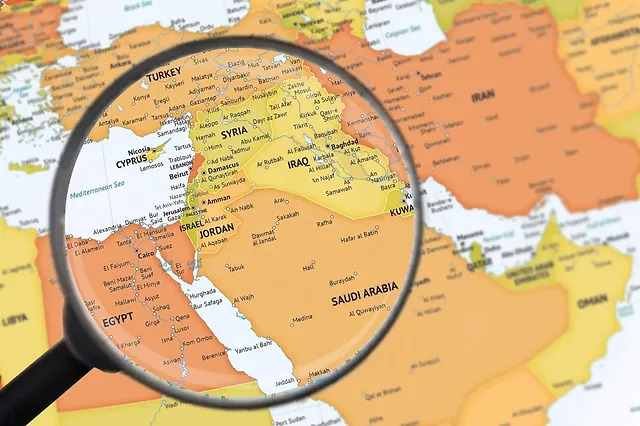
Few regions in the contemporary international system combine such a concentration of strategic importance, historical complexity, and persistent instability as the Middle East. Situated at the crossroads of Europe, Asia, and Africa, endowed with vast energy resources, and home to the sacred sites of the three monotheistic religions, the region has long occupied a central place in global geopolitics. Yet its significance extends far beyond geography, energy, or religion. The Middle East has become one of the principal arenas in which the major transformations of the twenty-first-century international order are unfolding. The decline of unipolarity, the emergence of a more fragmented multipolar system, the rise of non-state actors, the erosion of traditional state authority, and the growing interaction between regional and global rivalries are all particularly visible in this region (Fawcett, 2022; Halliday, 2005).
The contemporary Middle East cannot be understood through the lens of isolated crises. Rather, it constitutes a regional system characterized by interconnected conflicts, overlapping security dilemmas, and competing projects of political order. The Israeli-Palestinian conflict, the rivalry between Iran and Israel, the strategic ambitions of Turkey and the Gulf monarchies, the fragility of Syria, Iraq, Lebanon, and Yemen, and the involvement of external powers such as the United States, Russia, and China form part of a broader process of systemic transformation. The wars and crises that have marked the region since the beginning of the twenty-first century are not merely episodes of instability; they are manifestations of a deeper reconfiguration of power relations at both the regional and international levels.
The events triggered by the Hamas attack of October 7, 2023, and the subsequent war in Gaza have further exposed the fragility of the existing regional order. Simultaneously, the normalization agreements between Israel and several Arab states, the Chinese-sponsored rapprochement between Saudi Arabia and Iran, and the gradual diversification of Gulf foreign policies suggest that new political and strategic arrangements are emerging. Whether these developments will contribute to a more stable regional order or merely generate new forms of competition remains an open question.
This essay argues that the Middle East is entering a prolonged phase of structural transition characterized neither by generalized collapse nor by sustainable stabilization. Instead, the region is moving toward a form of regulated instability in which competing actors seek to manage, rather than resolve, underlying conflicts. Understanding this transformation requires an examination of the historical roots of regional disorder, the enduring centrality of the Palestinian question, and the increasingly important rivalry between Iran and Israel (Chtatou, 2026, May 18 ; Chtatou, 2026, May 20).
Historical Foundations of Regional Instability
The contemporary political geography of the Middle East remains profoundly shaped by the collapse of the Ottoman Empire and the territorial arrangements imposed after the First World War. The Sykes-Picot Agreement of 1916 and the subsequent mandate system established political boundaries that often reflected European strategic interests more than local social realities (Fromkin, 1989). The resulting states incorporated diverse ethnic, tribal, linguistic, and religious communities within borders that frequently lacked historical legitimacy.
As Hourani (1991) observed, the post-Ottoman states inherited a fundamental challenge: the need to transform administrative entities into cohesive political communities. While some states achieved varying degrees of national integration, many remained vulnerable to internal fragmentation. State-building efforts were often accompanied by authoritarian political structures designed to suppress social divisions rather than resolve them. Consequently, the apparent stability of many Middle Eastern states during the twentieth century frequently concealed deeper structural weaknesses.
he rise of Arab nationalism represented the most ambitious attempt to overcome these inherited divisions. Inspired by anti-colonial movements and embodied most prominently by Egyptian President Gamal Abdel Nasser, Arab nationalism sought to transcend state boundaries and create a broader political community based on shared language, history, and culture (Dawisha, 2003). However, the movement ultimately failed to establish a unified Arab political order. Inter-Arab rivalries, competing state interests, and military defeats—particularly the Arab defeat in the 1967 Six-Day War—undermined its legitimacy and effectiveness.
The decline of Arab nationalism created an ideological vacuum that alternative political projects sought to fill. Political Islam emerged as one of the most significant of these alternatives. The Iranian Revolution of 1979 demonstrated that religiously inspired political movements could successfully challenge both authoritarian regimes and international power structures. More broadly, Islamist movements gained influence throughout the region by presenting themselves as alternatives to both failed nationalist projects and externally imposed political models (Kepel, 2002).
At the same time, sectarian identities increasingly became instruments of geopolitical competition. While sectarian divisions between Sunni and Shi’a communities have deep historical roots, their contemporary political significance has often been amplified by state actors pursuing strategic objectives. As Gause (2014) argues, many conflicts commonly described as sectarian are better understood as struggles for power and influence that employ sectarian narratives as mobilizing tools. The result has been the emergence of a regional environment in which identity politics and geopolitical competition reinforce one another.
The Palestinian Question and the Limits of Conflict Management
No issue has shaped Middle Eastern politics more profoundly than the Israeli-Palestinian conflict. Despite dramatic changes in regional geopolitics over the past seven decades, the Palestinian question remains a central source of instability, political mobilization, and international controversy. Its significance derives not only from its immediate humanitarian and political dimensions but also from its symbolic role in broader regional and global narratives concerning justice, sovereignty, and self-determination.
The creation of the State of Israel in 1948 and the displacement of large numbers of Palestinians established the foundations of a conflict that continues to shape regional politics. Subsequent wars in 1956, 1967, and 1973 transformed the strategic landscape of the Middle East while reinforcing the centrality of the Palestinian issue. Although peace agreements were eventually reached between Israel and Egypt and later between Israel and Jordan, the Palestinian question remained unresolved.
The Oslo Accords of 1993 represented the most significant attempt to achieve a negotiated settlement. Yet the optimism generated by Oslo gradually gave way to disappointment. Continued Israeli settlement expansion, the fragmentation of Palestinian political authority, recurrent outbreaks of violence, and declining confidence in the peace process undermined prospects for a two-state solution (Shlaim, 2001). What emerged instead was a situation characterized by ongoing conflict management rather than conflict resolution.
The Gaza war that followed the events of October 2023 dramatically highlighted the limitations of this approach. The assumption that the Palestinian issue could be indefinitely contained while regional normalization advanced proved increasingly difficult to sustain. The conflict demonstrated that unresolved questions of sovereignty, statehood, and national identity continue to possess the capacity to destabilize regional political arrangements.
From a broader perspective, the Palestinian issue reveals a central paradox of contemporary Middle Eastern diplomacy. While several Arab governments have prioritized economic modernization, security cooperation, and strategic diversification, public opinion throughout much of the Arab and Muslim worlds remains strongly attached to the Palestinian cause. This divergence between state interests and popular sentiment creates a persistent legitimacy challenge for regional governments.
Moreover, the conflict increasingly reflects broader transformations in international politics. Competing narratives concerning international law, human rights, security, and self-determination have turned the Israeli-Palestinian conflict into a global issue extending far beyond the boundaries of the region itself. Consequently, any future regional order that fails to address the Palestinian question is likely to remain inherently fragile.
Iran and Israel: The Emergence of a Regional Cold War
If the Palestinian question represents the historical core of Middle Eastern instability, the rivalry between Iran and Israel has become its principal contemporary strategic axis. Since the Iranian Revolution of 1979, relations between the two states have evolved from indirect hostility into a multidimensional confrontation encompassing military, political, ideological, and technological dimensions.
Iran’s regional strategy has been based largely on the development of a network of allied non-state actors extending from Lebanon to Iraq, Syria, and Yemen. This so-called “Axis of Resistance” serves multiple purposes. It enhances Iran’s regional influence, provides strategic depth, and creates deterrence capabilities against both Israel and the United States (Nasr, 2006). Through these relationships, Tehran has been able to project power beyond its borders while avoiding direct military confrontation (Chtatou, 2026, May 18 ; Chtatou, 2026, May 20).
Israel, meanwhile, views Iran’s regional expansion and nuclear ambitions as existential threats. Israeli security doctrine has therefore emphasized maintaining overwhelming military superiority and preventing the emergence of strategic conditions that could undermine its deterrence capabilities. This approach has included covert operations, cyber warfare, intelligence activities, and targeted military strikes against Iranian-linked assets throughout the region.
The resulting relationship resembles a form of regional Cold War. Like the global Cold War of the twentieth century, it is characterized by indirect confrontation, proxy conflicts, and competing ideological narratives. Yet it differs in one crucial respect: the absence of stable mechanisms for crisis management. While deterrence has thus far prevented full-scale war, repeated episodes of escalation demonstrate how easily local incidents could trigger broader regional confrontations.
The rivalry also reflects a deeper struggle over the future political order of the Middle East. Iran promotes a vision centered on resistance to Western influence and opposition to Israeli regional integration. Israel and many Arab states, by contrast, increasingly favor a regional framework emphasizing economic cooperation, technological development, and strategic alignment against perceived common threats. The competition between these visions is likely to remain one of the defining features of Middle Eastern politics for the foreseeable future.
By the mid-2020s, therefore, the Middle East had entered a period in which historical conflicts, ideological divisions, and geopolitical rivalries had become deeply intertwined. The Palestinian question continues to shape regional legitimacy and political identity, while the Iran-Israel confrontation increasingly structures regional security dynamics. Understanding how these tensions interact with broader economic and geopolitical transformations requires an examination of the evolving role of the Gulf monarchies, the changing involvement of global powers, and the persistent fragility of several key states—issues that will be addressed in the next section of this study.
Regional Realignment, Great-Power Competition, and State Fragility
The Gulf Monarchies and the Transformation of the Rentier State
Among the most consequential developments in the contemporary Middle East is the transformation of the Gulf monarchies from relatively passive rentier states into increasingly assertive geopolitical actors. For decades, the political economy of the Gulf Cooperation Council (GCC) states was defined by the classical rentier model, whereby hydrocarbon revenues enabled governments to maintain political stability through extensive welfare systems, public-sector employment, and limited taxation (Beblawi & Luciani, 1987). This arrangement produced a distinctive social contract in which political participation was often exchanged for economic security.
However, the long-term sustainability of this model has come under increasing scrutiny. Fluctuations in energy prices, demographic pressures, technological change, and the prospect of a global energy transition have encouraged Gulf leaders to pursue ambitious diversification strategies. Saudi Arabia’s Vision 2030, the United Arab Emirates’ investments in technology and artificial intelligence, and Qatar’s efforts to position itself as a global diplomatic and financial hub all reflect a broader recognition that economic modernization has become a strategic necessity rather than a policy option.
These transformations are not merely economic. They are reshaping the geopolitical behavior of Gulf states. As Kamrava (2018) notes, Gulf monarchies have increasingly sought to exercise strategic autonomy by diversifying their international partnerships and reducing excessive dependence on any single external power. This trend is evident in their simultaneous engagement with the United States, China, Russia, India, and the European Union.
The emergence of a more proactive Gulf diplomacy has altered the regional balance of power. The United Arab Emirates has pursued an activist foreign policy extending from the Horn of Africa to the Eastern Mediterranean. Saudi Arabia has combined economic modernization with a more assertive regional posture. Qatar has developed a unique diplomatic profile based on mediation, strategic communication, and soft power projection. Collectively, these developments indicate that the Gulf monarchies are no longer merely objects of regional politics; they have become central architects of the emerging regional order.
Nevertheless, significant vulnerabilities remain. Economic diversification projects face structural challenges, including labor-market reforms, educational transformation, and the need to foster innovation-based economies. Furthermore, Gulf prosperity remains closely linked to regional stability. Any major military confrontation involving Iran, Israel, or critical maritime corridors would have profound consequences for Gulf economies and political systems.
The Abraham Accords and the Reconfiguration of Regional Politics
The signing of the Abraham Accords in 2020 marked one of the most significant diplomatic developments in the Middle East since the Egyptian-Israeli peace treaty of 1979. The normalization agreements between Israel, the United Arab Emirates, Bahrain, Morocco, and later Sudan reflected a fundamental shift in regional priorities. For the first time, several Arab governments openly pursued relations with Israel without conditioning normalization on the prior resolution of the Palestinian question (Chtatou, 2025, July 9).
This development challenged one of the core assumptions that had shaped Arab diplomacy for decades. Whereas previous initiatives generally linked normalization to progress toward Palestinian statehood, the Abraham Accords were based on a different logic: the pursuit of mutual strategic, economic, and technological interests regardless of developments in the Israeli-Palestinian conflict (Chtatou, 2025, July 9).
Several factors contributed to this shift. Shared concerns regarding Iranian influence encouraged closer security cooperation between Israel and certain Arab states. Economic opportunities associated with technology, investment, tourism, and trade provided additional incentives. Equally important was a broader recognition that traditional approaches to regional diplomacy had produced limited results.
Yet the Abraham Accords also revealed significant contradictions. While governments emphasized strategic cooperation and economic benefits, public opinion across much of the Arab world remained strongly sympathetic to the Palestinian cause. The Gaza war following October 2023 exposed this tension with particular clarity. Although normalization agreements formally survived the crisis, the conflict highlighted the limitations of a regional order that seeks to marginalize rather than address the Palestinian issue.
The long-term significance of the Abraham Accords therefore remains uncertain. On one hand, they may represent the foundation of a new regional architecture centered on pragmatic cooperation and economic integration. On the other hand, their sustainability may depend upon the extent to which broader questions of justice, sovereignty, and political legitimacy are eventually addressed (Chtatou, 2025, July 9).
The Relative Decline of American Hegemony
For much of the post-1945 period, the United States served as the principal external power shaping Middle Eastern politics. Through military alliances, security guarantees, economic partnerships, and diplomatic initiatives, Washington exercised a level of influence unmatched by any other actor. The collapse of the Soviet Union further consolidated American predominance, leading many observers to view the Middle East as a cornerstone of a U.S.-led international order.
The early twenty-first century, however, witnessed a gradual transformation of this situation. The wars in Afghanistan and Iraq revealed the limits of military intervention as a tool for regional engineering. Rather than producing stable democratic allies, these interventions generated unintended consequences, including state fragmentation, sectarian polarization, and the expansion of Iranian influence (Dodge, 2012).
At the same time, broader shifts in global politics encouraged a reassessment of American strategic priorities. The rise of China as a peer competitor redirected attention toward the Indo-Pacific region. Energy independence resulting from domestic shale production reduced the strategic urgency of direct involvement in Middle Eastern energy security. Public fatigue with prolonged military engagements further reinforced pressures for retrenchment.
Importantly, the relative decline of American influence should not be confused with withdrawal. The United States remains the most powerful military actor in the region and continues to maintain extensive security partnerships. However, regional actors increasingly perceive Washington as one power among several rather than as an uncontested hegemon. This perception has encouraged states to diversify their diplomatic options and pursue more flexible foreign policies.
The result is a transition from a predominantly American-centered regional order toward a more pluralistic and competitive environment. While this shift creates opportunities for regional autonomy, it also increases uncertainty by removing some of the stabilizing mechanisms associated with hegemonic leadership.
China, Russia, and the Return of Great-Power Competition
The transformation of American influence has coincided with the growing involvement of other major powers. Russia and China, although pursuing different objectives and employing different instruments, have both expanded their presence in the Middle East.
Russia’s intervention in Syria in 2015 marked a turning point in regional geopolitics. By providing decisive military support to the Syrian government, Moscow demonstrated its willingness and ability to shape outcomes in a region traditionally dominated by Western powers. The intervention secured Russia’s military presence in the Eastern Mediterranean, strengthened its diplomatic influence, and reinforced its image as a reliable partner for governments facing internal challenges (Trenin, 2018).
Yet Russia’s influence remains constrained by structural limitations. Its economic footprint is relatively modest compared with that of the United States, China, or the European Union. Moreover, the consequences of the war in Ukraine have imposed significant burdens on Russian resources and diplomatic flexibility.
China’s rise in the Middle East follows a different trajectory. Unlike Russia, Beijing has generally avoided military involvement and instead emphasized economic engagement. The region occupies a crucial place within China’s Belt and Road Initiative, both as a supplier of energy resources and as a strategic corridor linking Asia, Africa, and Europe (Rolland, 2017).
China’s diplomatic role has also expanded. The 2023 rapprochement between Saudi Arabia and Iran, facilitated by Beijing, demonstrated that China is increasingly willing to translate economic influence into political capital. Nevertheless, Chinese policymakers remain cautious about assuming extensive security responsibilities. Beijing seeks stability, but it prefers to achieve this through economic interdependence rather than military commitments.
The growing presence of multiple external powers contributes to the emergence of a genuinely multipolar Middle Eastern environment. While such a system may offer regional states greater diplomatic flexibility, it also risks intensifying competition and complicating efforts to manage crises.
Fragile States and the Persistence of Regional Disorder
A comprehensive understanding of the Middle East’s future must also account for the continuing fragility of several key states. Syria, Lebanon, Iraq, and Yemen illustrate different manifestations of state weakness, yet they share common characteristics: limited institutional capacity, contested sovereignty, economic crisis, and vulnerability to external intervention.
Syria remains perhaps the clearest example of the long-term consequences of state collapse. More than a decade after the outbreak of civil war, the country continues to experience territorial fragmentation, economic devastation, and large-scale displacement. Although the government has regained control over significant portions of the country, reconstruction remains constrained by sanctions, political divisions, and inadequate financial resources.
Lebanon presents a different but equally troubling picture. Once regarded as one of the Arab world’s most dynamic economies, the country has experienced a profound financial and political collapse. The breakdown of the banking system, the devaluation of the national currency, and the paralysis of state institutions have undermined public confidence and accelerated emigration. Simultaneously, the presence of Hezbollah ensures that Lebanese politics remain deeply intertwined with broader regional rivalries (Traboulsi, 2012).
Iraq occupies an intermediate position between recovery and fragmentation. The defeat of the Islamic State reduced one major source of instability, yet the country continues to struggle with corruption, governance deficits, and competing centers of authority. The coexistence of state institutions, regional actors, and armed groups creates a complex political landscape in which sovereignty remains incomplete.
Yemen, meanwhile, exemplifies the humanitarian dimensions of regional disorder. Years of conflict have devastated the country’s infrastructure, economy, and social fabric. The fragmentation of political authority and the involvement of external actors have transformed Yemen into one of the most severe humanitarian crises of the modern era.
Collectively, these cases illustrate a broader regional phenomenon: the erosion of the traditional Westphalian state. In many parts of the Middle East, authority is increasingly shared among governments, militias, tribal networks, religious organizations, and external patrons. This diffusion of power complicates conflict resolution and contributes to the persistence of chronic instability (Chtatou, 2026, May 18 ; Chtatou, 2026, May 20).
Toward a New Regional Order?
The developments examined above suggest that the Middle East is undergoing a profound transformation whose ultimate direction remains uncertain. Economic modernization, diplomatic realignment, great-power competition, and state fragility interact in ways that simultaneously create opportunities for cooperation and risks of confrontation.
The emerging regional order is unlikely to resemble either the Arab nationalist era of the mid-twentieth century or the American-dominated system that followed the Cold War. Instead, it appears increasingly characterized by multipolarity, strategic flexibility, and fragmented authority. Whether this evolving order can generate sustainable stability remains one of the central questions of contemporary international politics.
Geoeconomics, Future Scenarios, and the Prospects for Regional Order
Energy, Geoeconomics, and the Transformation of Regional Power
For much of the twentieth century, the geopolitical significance of the Middle East rested primarily on its vast hydrocarbon resources. Oil shaped alliances, military interventions, development strategies, and international rivalries. From the creation of the modern petroleum economy to the oil shocks of the 1970s and the globalization of energy markets, the region became an indispensable component of the world economy (Yergin, 2020).
Yet the twenty-first century has introduced a more complex reality. Although the Middle East continues to possess some of the world’s largest oil and natural gas reserves, the global energy transition is gradually reshaping the strategic environment in which regional states operate. Renewable energy technologies, climate policies, electrification, and changing consumption patterns are altering long-term assumptions regarding energy security and economic development.
This transformation does not imply the imminent disappearance of oil as a strategic commodity. Most forecasts suggest that hydrocarbons will remain essential to the global economy for decades. However, the political economy of energy is changing. The question is no longer whether oil will continue to matter, but how long it will remain the dominant foundation of regional power.
Consequently, many Middle Eastern governments are attempting to diversify their economic structures before the transition becomes irreversible. Saudi Arabia’s Vision 2030, the United Arab Emirates’ investments in advanced technologies, Qatar’s expansion into finance and logistics, and various regional infrastructure initiatives reflect a recognition that economic resilience increasingly depends upon innovation, connectivity, and human capital rather than solely on natural resources.
Geoeconomics has therefore become a central dimension of regional competition. States are increasingly competing through investment strategies, logistics corridors, digital infrastructure, technological partnerships, and sovereign wealth funds. The region is witnessing the emergence of a new strategic landscape in which economic influence and technological capabilities are becoming as important as military power (Chtatou, 2026, May 18 ; Chtatou, 2026, May 20).
At the same time, climate change introduces additional pressures. Rising temperatures, water scarcity, food insecurity, and environmental degradation represent long-term challenges that may prove as consequential as traditional security threats. Scholars increasingly argue that environmental stress could become a major driver of social instability, migration, and political contestation throughout the Middle East during the coming decades (Selby, 2019).
Thus, the future of the region will be shaped not only by wars and diplomacy but also by economic adaptation and environmental sustainability.
Demographic Change, Youth Aspirations, and Social Transformation
Beyond geopolitics, the future of the Middle East depends fundamentally on demographic and social dynamics. The region possesses one of the youngest populations in the world. Millions of young people are entering labor markets that often struggle to generate sufficient employment opportunities. This demographic reality presents both opportunities and risks.
The Arab uprisings of 2010–2011 demonstrated the political significance of youth aspirations. Although the outcomes of those movements varied considerably from country to country, they revealed widespread demands for political participation, economic opportunity, transparency, and dignity (Lynch, 2016).
Many of the structural grievances that fueled those uprisings remain unresolved. Economic inequality, unemployment, corruption, and weak governance continue to affect large segments of regional societies. While some governments have implemented reforms designed to modernize institutions and expand economic opportunities, progress has often been uneven.
At the same time, social transformation is accelerating. Digital technologies, social media platforms, educational expansion, and globalization are reshaping identities and expectations. Younger generations increasingly interact with global cultural, economic, and political currents, creating pressures for adaptation within traditional political systems.
These developments suggest that future stability will depend not only on interstate relations but also on the capacity of governments to establish more inclusive and responsive forms of governance. States that successfully manage social and economic transformation may strengthen their legitimacy; those that fail to do so could face recurring cycles of unrest.
Scenario One: Escalation and Regional Confrontation
The first and most pessimistic scenario involves the escalation of existing conflicts into a broader regional confrontation. Under this scenario, tensions between Israel and Iran intensify beyond the level of indirect competition and evolve into sustained direct military conflict.
Such an escalation could involve multiple theaters simultaneously, including Lebanon, Syria, Iraq, Gaza, the Red Sea, and the Persian Gulf. Proxy actors would likely become directly involved, transforming localized confrontations into a regional crisis. The disruption of maritime trade routes and energy infrastructure could generate significant consequences for the global economy.
The political implications would be equally profound. Fragile states could experience further destabilization, refugee flows might increase dramatically, and regional polarization would deepen. External powers would face difficult choices regarding intervention, mediation, or strategic restraint.
While most regional actors seek to avoid this outcome, the accumulation of crises, miscalculations, and security dilemmas means that escalation cannot be entirely excluded. The history of the Middle East demonstrates that unintended consequences frequently shape political developments as much as deliberate strategic planning (Chtatou, 2026, May 18 ; Chtatou, 2026, May 20).
Scenario Two: Managed Instability
The second scenario is arguably the most plausible. Under conditions of managed instability, conflicts persist but remain largely contained. Rivalries continue, yet major actors avoid crossing thresholds that would trigger full-scale regional war.
This scenario reflects the current trajectory of the region. States compete economically and strategically while simultaneously maintaining channels of communication. Proxy conflicts continue at varying levels of intensity, but mechanisms of deterrence prevent uncontrolled escalation.
Managed instability does not imply peace. Rather, it describes a condition in which political actors learn to coexist with persistent tensions. Regional politics become characterized by periodic crises, temporary accommodations, and selective cooperation.
Such an outcome may appear unsatisfactory, yet it could represent a realistic form of stability in a region where deep structural disagreements remain unresolved. In this scenario, economic modernization proceeds unevenly, diplomatic relations fluctuate, and regional institutions remain relatively weak, but large-scale systemic collapse is avoided.
Many analysts argue that the Middle East has already entered such a phase. The coexistence of competition and cooperation, conflict and diplomacy, confrontation and accommodation suggests that the region may increasingly resemble other historically contested geopolitical spaces where instability becomes normalized rather than exceptional.
Scenario Three: Regional Integration and Strategic Cooperation
The most optimistic scenario envisions the gradual emergence of a more cooperative regional order. This would require significant improvements in several key areas.
First, meaningful progress would need to occur regarding the Israeli-Palestinian conflict. Although a comprehensive settlement may remain difficult to achieve, even partial political arrangements could reduce one of the principal sources of regional tension.
Second, a sustainable accommodation between Iran and its Arab neighbors would be necessary. The restoration of diplomatic relations between Saudi Arabia and Iran demonstrated that dialogue remains possible despite profound disagreements.
Third, economic interdependence would need to deepen. Regional infrastructure projects, energy cooperation, technological partnerships, and trade integration could generate incentives for stability and reduce the attractiveness of confrontation.
Finally, new security mechanisms would need to emerge. Unlike Europe after the Second World War, the Middle East lacks strong regional institutions capable of managing crises and promoting collective security. The development of such mechanisms would represent a major step toward a more stable regional order.
Although this scenario remains unlikely in the short term, it should not be dismissed. History demonstrates that regions previously characterized by intense conflict can eventually develop cooperative frameworks when political leadership, economic incentives, and strategic circumstances align.
Conclusion: The Middle East in an Age of Strategic Transition
The contemporary Middle East stands at a historical crossroads. The regional order that emerged during the second half of the twentieth century is gradually disappearing, yet no coherent alternative has fully taken its place. The result is a prolonged period of transition characterized by uncertainty, competition, and adaptation.
The central argument of this essay is that the Middle East is neither collapsing into chaos nor moving toward comprehensive peace. Rather, it is entering an era of regulated disorder in which competing actors seek to manage tensions without fundamentally resolving them. Historical conflicts, geopolitical rivalries, economic transformations, demographic pressures, and global power shifts interact to produce a complex and evolving strategic environment.
The Palestinian question remains a crucial source of political legitimacy and regional mobilization. The Iran-Israel rivalry increasingly structures security dynamics. Gulf monarchies are redefining the foundations of economic and political power. External actors are adapting to a more multipolar environment. Fragile states continue to challenge traditional notions of sovereignty and governance (Chtatou, 2026, May 18 ; Chtatou, 2026, May 20).
Taken together, these developments suggest that the future of the Middle East will be determined less by the elimination of conflict than by the capacity of regional actors to institutionalize competition, reduce escalation risks, and create frameworks for coexistence. Stability, if it emerges, is unlikely to resemble the rigid order of previous decades. Instead, it will probably take the form of a flexible and evolving equilibrium shaped by continuous negotiation among diverse actors with competing interests.
The future of the Middle East, therefore, remains open. Its trajectory will depend not only on governments and great powers but also on the aspirations of its societies, the adaptability of its institutions, and the ability of regional leaders to transform interdependence into cooperation. Whether the region ultimately moves toward confrontation, managed instability, or greater integration will be one of the defining geopolitical questions of the twenty-first century.
References
- Acharya, A. (2018). The end of American world order (2nd ed.). Polity Press.
- Anderson, L. (2016). The state and social transformation in Tunisia and Libya, 1830–1980. Princeton University Press.
- Barnett, M. (1998). Dialogues in Arab politics: Negotiations in regional order. Columbia University Press.
- Beblawi, H., & Luciani, G. (Eds.). (1987). The rentier state. Croom Helm.
- Brown, N. J. (2013). When victory is not an option: Islamist movements in Arab politics. Cornell University Press.
- Chtatou, M. (2026, May 18). The Powder Keg Called The Middle East: Geopolitical instability, strategic rivalries, and the specter of regional war – Analysis. Eurasia Review. https://www.eurasiareview.com/18052026-the-powder-keg-called-the-middle-east-geopolitical-instability-strategic-rivalries-and-the-specter-of-regional-war-analysis/
- Chtatou, M. (2026, May 20). Has the war against the United States established Iran as a regional power in the Middle East? [Analysis]. Eurasia Review. https://www.eurasiareview.com/20052026-has-the-war-against-the-united-states-established-iran-as-a-regional-power-in-the-middle-east-analysis/
- Chtatou, M. (2025, July 9). The Abraham Accords: Urgent need for recasting – Analysis. Eurasia Review. https://www.eurasiareview.com/09072025-the-abraham-accords-urgent-need-for-recasting-analysis/
- Cleveland, W. L., & Bunton, M. (2016). A history of the modern Middle East (6th ed.). Westview Press.
- Dawisha, A. (2003). Arab nationalism in the twentieth century: From triumph to despair. Princeton University Press.
- Dodge, T. (2012). Iraq: From war to a new authoritarianism. Routledge.
- Fawcett, L. (2022). International relations of the Middle East (6th ed.). Oxford University Press.
- Frisch, H. (2021). The Abraham Accords: A preliminary assessment. Israel Affairs, 27(4), 559–574.
- Fromkin, D. (1989). A peace to end all peace: The fall of the Ottoman Empire and the creation of the modern Middle East. Henry Holt.
- Gause, F. G., III. (2014). Beyond sectarianism: The new Middle East Cold War. Brookings Institution Press.
- Gelvin, J. L. (2020). The modern Middle East: A history (6th ed.). Oxford University Press.
- Gerges, F. A. (2018). Making the Arab world: Nasser, Qutb, and the clash that shaped the Middle East. Princeton University Press.
- Gerges, F. A. (Ed.). (2014). The new Middle East: Protest and revolution in the Arab world. Cambridge University Press.
- Halliday, F. (2005). The Middle East in international relations: Power, politics and ideology. Cambridge University Press.
- Hinnebusch, R. (2018). The international politics of the Middle East (2nd ed.). Manchester University Press.
- Hourani, A. (1991). A history of the Arab peoples. Harvard University Press.
- Hudson, M. C. (2017). The Middle East dilemma: The politics and economics of Arab integration. Columbia University Press.
- International Crisis Group. (2024). The Gaza war and regional escalation risks. International Crisis Group.
- Kamrava, M. (2018). Inside the Arab state. Oxford University Press.
- Kepel, G. (2002). Jihad: The trail of political Islam. Harvard University Press.
- Kaussler, B. (2021). The Abraham Accords and the changing regional order in the Middle East. Mediterranean Politics, 26(5), 651–659.
- Kerr, M. H. (1971). The Arab Cold War: Gamal Abdel Nasser and his rivals, 1958–1970 (2nd ed.). Oxford University Press.
- Lesch, D. W. (2019). The Middle East and the United States: History, politics, and ideologies (6th ed.). Routledge.
- Lynch, M. (2016). The new Arab wars: Uprisings and anarchy in the Middle East. PublicAffairs.
- Mansfield, P. (2019). A history of the Middle East (5th ed.). Penguin.
- Mearsheimer, J. J. (2014). The tragedy of great power politics (Updated ed.). W. W. Norton.
- Milton-Edwards, B. (2020). Contemporary politics in the Middle East (4th ed.). Polity Press.
- Nasr, V. (2006). The Shia revival: How conflicts within Islam will shape the future. W. W. Norton.
- Owen, R. (2013). State, power and politics in the making of the modern Middle East (3rd ed.). Routledge.
- Pappé, I. (2006). The ethnic cleansing of Palestine. Oneworld.
- Quandt, W. B. (2005). Peace process: American diplomacy and the Arab-Israeli conflict since 1967 (3rd ed.). Brookings Institution Press.
- Rolland, N. (2017). China’s Eurasian century? Political and strategic implications of the Belt and Road Initiative. National Bureau of Asian Research.
- Said, E. W. (1979). The question of Palestine. Vintage Books.
- Selby, J. (2019). Climate change and the Middle East: Political implications and environmental challenges. Middle East Report, 49(291), 12–19.
- Shlaim, A. (2001). The iron wall: Israel and the Arab world. W. W. Norton.
- Snyder, G. H. (1997). Alliance politics. Cornell University Press.
- Telhami, S. (2013). The world through Arab eyes: Arab public opinion and the reshaping of the Middle East. Basic Books.
- Trenin, D. (2018). What is Russia up to in the Middle East? Polity Press.
- Traboulsi, F. (2012). A history of modern Lebanon (2nd ed.). Pluto Press.
- Valbjørn, M. (2020). International relations theory and the Middle East: A critical approach. Routledge.
- Walt, S. M. (1987). The origins of alliances. Cornell University Press.
- Waltz, K. N. (1979). Theory of international politics. McGraw-Hill.
- Yergin, D. (2020). The new map: Energy, climate, and the clash of nations. Penguin Press.
- Youngs, R. (2022). The resilience of authoritarianism in the Middle East. Carnegie Endowment for International Peace.
- Zakaria, F. (2008). The post-American world. W. W. Norton.
- Zisser, E. (2023). The regional consequences of the Gaza war. Middle East Quarterly, 30(4), 1–12.
Most read



Read also