One Hundred Days of Confrontation: Why Is a Settlement Between Washington and Tehran So Elusive?

One hundred days after the outbreak of the U.S.–Israeli confrontation with Iran, the Middle East appears to have entered a new phase of conflict—one that is neither a full-scale war nor a stable peace. The current landscape reflects a state of “tense deterrence,” where limited military engagements coexist with indirect negotiations, while all parties seek to improve their bargaining positions through a combination of military, economic, and diplomatic instruments.
Despite recurring discussions about de-escalation, developments on the ground suggest that the path toward a sustainable settlement remains fraught with obstacles. Military tensions in the Gulf and the Strait of Hormuz, the continuation of economic sanctions, and disputes over frozen Iranian assets all underscore the profound crisis of trust between Washington and Tehran. As a result, any potential agreement has become far more complex than a simple ceasefire or a temporary political understanding.
A Contest of Wills More Than a Military Conflict
Recent developments indicate that the confrontation is no longer centered solely on Iran’s nuclear program or isolated military incidents. Rather, it has evolved into a broader struggle over the regional balance of power in the Gulf and the wider Middle East. The United States seeks to consolidate a regional security architecture that protects its allies, secures global energy flows, and constrains Iranian influence. Iran, meanwhile, aims to secure recognition of its regional role and strategic interests while resisting efforts to marginalize its influence.
In this context, limited military operations should be viewed as part of a broader bargaining process in which force is employed as a political instrument. Each side seeks to raise the costs of confrontation for the other while avoiding a direct war whose consequences could prove unpredictable and difficult to contain.
The Strait of Hormuz: The Real Center of Gravity
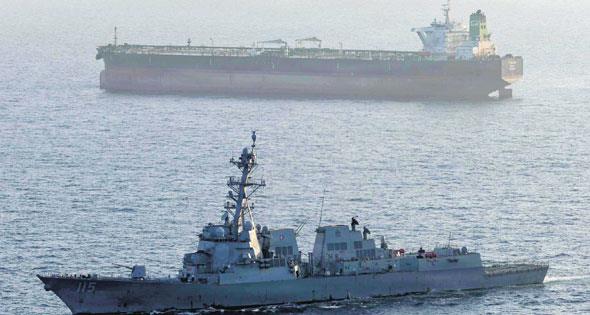
Although public attention often focuses on military exchanges, the core of the crisis revolves around the security architecture of the Gulf and, more specifically, the Strait of Hormuz. This narrow waterway, through which a significant share of the world's seaborne oil trade passes, represents one of Iran’s most important strategic assets. For Tehran, it serves as a powerful leverage point capable of influencing global energy markets. For the United States and its allies, however, freedom of navigation through the Strait is a non-negotiable strategic imperative linked directly to global economic stability.
Consequently, Washington does not view Iranian activities in Hormuz merely as localized security concerns but as challenges to the broader regional order it has helped sustain for decades. Conversely, Tehran regards overwhelming American control over Gulf security as a direct threat to one of its most valuable geopolitical tools.
The Trust Deficit: The Greatest Obstacle to Diplomacy
Iranian statements in recent months reveal that the primary obstacle is not the absence of communication channels but the collapse of political trust. Tehran argues that Washington simultaneously promotes dialogue while maintaining sanctions and military pressure. The United States, on the other hand, believes Iran uses negotiations to buy time, strengthen its regional position, and preserve strategic leverage.
This mutual suspicion lies at the heart of the current deadlock. The ongoing negotiations are less about reaching a comprehensive settlement than about managing tensions and preventing escalation. As such, diplomatic engagement functions primarily as a mechanism for crisis management rather than conflict resolution.
Frozen Assets: Economics as a Strategic Weapon
The dispute over frozen Iranian assets has emerged as one of the most sensitive dimensions of the confrontation, illustrating how economic instruments have become central tools of geopolitical competition. For Iran, the release of these assets is not only a matter of sovereign rights but also an economic necessity amid mounting domestic pressures caused by years of sanctions.
For Washington, however, these assets constitute a strategic lever that can be used to influence Iranian behavior and extract political concessions. Discussions about redirecting some of these funds to compensate U.S. allies in the Gulf for damages caused by Iranian actions carry significance far beyond financial considerations. Such proposals send a broader political message: the costs of Iran’s regional policies may extend beyond sanctions and could involve the repurposing of Iranian resources for the benefit of its rivals.
Should such measures be implemented, they would likely deepen the trust deficit and further complicate diplomatic efforts by convincing Tehran that Washington is attempting to unilaterally redefine the rules of engagement.
The Iranian Economy: Between Resilience and Attrition
Despite years of sanctions, Iran has demonstrated a considerable capacity for economic adaptation by expanding trade networks with China, Russia, and several Asian partners. Nevertheless, the current confrontation continues to place significant strain on the Iranian economy. High inflation, currency depreciation, and restricted access to international financial systems have increased the urgency of securing sanctions relief and gaining access to frozen assets.
At the same time, Washington continues to bet that sustained economic pressure will eventually reduce Tehran’s room for maneuver and compel it to make strategic concessions. Yet the experience of recent years suggests that while sanctions have imposed substantial costs, they have not fundamentally altered Iran’s core strategic calculations.
Pakistan’s Role: Mediation Beyond Geography
Amid these tensions, Pakistan has emerged as an increasingly important intermediary. Its significance stems not only from its historical ties with Iran but also from its strong security relationships with the United States and key Gulf states.
Islamabad’s diplomatic efforts reflect a growing regional awareness that prolonged escalation could destabilize the Gulf as a whole, with serious implications for energy markets and international trade. Pakistan’s mediation therefore represents an attempt to preserve channels of communication and prevent the crisis from escalating into direct confrontation.
The Gulf States at the Heart of the Equation
The consequences of the confrontation extend well beyond Washington and Tehran. Gulf states, by virtue of their geographic location and economic importance, find themselves at the center of the crisis. While maintaining close security partnerships with the United States, these countries have little interest in becoming battlegrounds in a broader regional conflict.
Moreover, persistent instability threatens ambitious economic diversification programs, large-scale development projects, and investor confidence across the region. Consequently, Gulf capitals have become increasingly supportive of diplomatic initiatives and de-escalation efforts, recognizing that regional stability is now as much an economic necessity as it is a security imperative.
China and Russia: Cautious Beneficiaries
In the background, both China and Russia are carefully monitoring developments. China, as one of the world's largest energy importers, has a direct interest in preventing disruptions to oil supplies and safeguarding its economic investments linked to the Belt and Road Initiative. Iran also occupies an important place in Beijing’s long-term regional strategy.
Russia, meanwhile, sees continued tensions between Washington and Tehran as a means of diverting American attention and resources from other geopolitical theaters. Yet Moscow also has little interest in a large-scale regional war that could generate unpredictable consequences or destabilize global energy markets.
The Limits of American Power and Iranian Influence
The current crisis highlights a fundamental strategic reality: neither side possesses the ability to impose its will completely on the other. Despite overwhelming military superiority, the United States faces political, economic, and strategic constraints that make a full-scale war both costly and uncertain. Iran, for its part, possesses extensive regional networks, asymmetric capabilities, and significant influence across multiple theaters, yet lacks the resources necessary to sustain a prolonged direct confrontation with the United States.
This dynamic has produced what might be described as a condition of “strategic stalemate,” in which each side possesses sufficient capabilities to prevent defeat but insufficient leverage to secure a decisive victory.
Where Is the Crisis Headed?
Current indicators suggest that the most likely scenario is the continuation of the status quo: indirect negotiations accompanied by ongoing military and economic pressure. Regional and international mediation efforts may succeed in achieving limited arrangements involving frozen assets, maritime security, or partial sanctions relief. However, a comprehensive settlement will remain elusive as long as deeper disagreements concerning regional influence, the nuclear issue, and Gulf security arrangements remain unresolved.
At the same time, the risk of broader escalation cannot be dismissed. Any major attack against critical interests on either side or a significant miscalculation could rapidly transform the current confrontation into a far more dangerous conflict.
Ultimately, the first one hundred days of this confrontation demonstrate that the dispute between Washington and Tehran has long since transcended disagreements over nuclear activities or economic sanctions. It has evolved into a struggle over the future regional order and the balance of power in the Middle East. While negotiations continue and mediators remain active, one reality stands out above all others: the region continues to operate under a fragile truce, and no lasting settlement will be possible without addressing the deeper strategic roots of the conflict rather than merely managing its military and economic manifestations.
Most read