Iran Recalibrates the Deterrence Equation with Washington

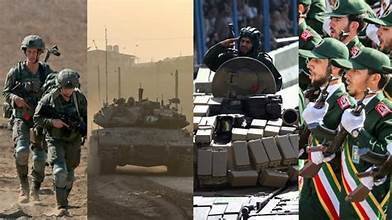
The confrontation between Iran and the United States does not appear to be heading toward a swift settlement, despite the relative decline in the intensity of military operations in recent days. Statements issued by Iran’s Islamic Revolutionary Guard Corps (IRGC), alongside accelerated diplomatic activity ahead of the United Nations General Assembly meetings, reveal a more complex equation than a simple exchange of threats. Tehran is seeking to raise the cost of any new U.S. attack while simultaneously keeping the door to negotiations open, attempting to manage the conflict through a combination of military deterrence and political pressure.
Against this backdrop, the IRGC has warned that any new U.S. attack on Iran would be met with the use of new weapons and a shift in the geography of confrontation, alongside attacks on U.S. interests and assets and targets that have not previously been struck. While Tehran has not specified the nature of these weapons or the identity of the new targets, the significance of the statements lies not only in their military content but also in the political message they convey: any new escalation would not necessarily replicate previous rounds of confrontation.
Expanding the Scope of Deterrence
Through its latest military rhetoric, Iran appears intent on redefining the deterrence equation with the United States. The threat to employ new weapons and expand the range of potential targets is intended to convey the message that continued military pressure will not necessarily bring Tehran into submission, but could instead push it to broaden the arenas of confrontation and increase the costs of escalation.
IRGC spokesman Hossein Mahvi said that Iran would change the “weapons and geography of the war” if it came under another attack, while stressing that Tehran was prepared for a prolonged conflict. He also referred to the deployment of weapons with new capabilities and the targeting of locations that had not previously been included in Iran’s target set.
From a political perspective, this rhetoric reflects an attempt to prevent Washington from basing its calculations on the assumption that any future confrontation would simply be a modified version of previous rounds. The broader the range of potential targets and the more diverse the available instruments of retaliation, the greater the uncertainty surrounding any U.S. decision to escalate.
Yet this form of deterrence also carries a clear risk. Expanding the scope of potential targets may increase the possibility of miscalculation, particularly when political communication between the two adversaries is strained and military calculations overlap with multiple regional conflicts.
From Deterring Washington to Warning Regional States
A notable feature of Iran’s recent rhetoric is that it has not been directed solely at the United States. Tehran has also warned regional states that might allow their territory or facilities to be used in any military action against Iran.
The Khatam al-Anbiya Central Headquarters, which coordinates operations among Iran’s armed forces, warned regional countries against participating in any action targeting Iran. It stated that Tehran would regard states involved in such actions as parties to the attack and would no longer exercise the same restraint toward them.
This warning carries implications that extend beyond the immediate military dimension. Tehran appears to be seeking to influence the calculations of regional governments before Washington makes any new decision on escalation by raising the potential costs of military or logistical cooperation with the United States.
The regional arena thus becomes part of Iran’s deterrence equation rather than merely a backdrop to the U.S.-Iranian confrontation. The broader the network of potential participants in the conflict, the more complicated any decision to escalate becomes for Washington and its regional partners.
The Strait of Hormuz: Economic Pressure versus Military Pressure
The Strait of Hormuz occupies a central position in this equation. The confrontation between Washington and Tehran is being conducted not only through military threats and attacks but also through maritime traffic, energy flows, and international trade.
Preliminary data from analytics firm Kpler, as reported by Reuters, showed that 12 cargo vessels transited the Strait of Hormuz over the weekend, compared with 35 during the previous weekend. These figures remain incomplete, however, as some vessels may switch off their location-transmitting devices.
The importance of Hormuz lies in the fact that any sustained disruption to maritime traffic through the strait could rapidly transform a regional security issue into an international economic crisis. Iran can therefore exert influence over maritime traffic, but prolonged disruption could also broaden the circle of actors affected by the crisis and intensify international pressure on Tehran.
Conversely, U.S. efforts to pressure Iran through the maritime and economic environment could encourage Tehran to make greater use of its leverage in the strait.
Hormuz consequently becomes one of the most important arenas for testing the strategic resolve of both sides, where military security considerations intersect with energy security, supply chains, and global trade.
Diplomacy Continues Despite Escalating Threats
The central paradox of the current situation is that military escalation is occurring alongside clear diplomatic activity.
While the IRGC is declaring its readiness for a prolonged war and threatening to deploy new weapons, Iranian Foreign Minister Abbas Araghchi is traveling to New York to participate in the UN General Assembly meetings, with a stop in Doha for consultations on regional developments.
Iranian President Masoud Pezeshkian is also expected to travel to New York, where he is scheduled to address the General Assembly and hold meetings with a number of leaders and officials on the sidelines of the gathering.
This dual track should not necessarily be viewed as contradictory. In prolonged conflicts, military signals and diplomatic initiatives can serve the same broader purpose: improving a party’s bargaining position by influencing the calculations of its adversary.
From this perspective, Iran’s diplomatic engagement can be interpreted as an attempt to combine a demonstration of its capacity to withstand escalation with the preservation of political channels capable of preventing the conflict from developing into an open-ended war whose consequences may prove difficult to control.
Trump Between Threats and the Possibility of a Meeting
On the U.S. side, the Trump administration appears to be seeking to preserve a broad range of options.
According to U.S. media reports, President Donald Trump has expressed openness to meeting Pezeshkian while also being quoted as saying that he remains at the stage of deciding how to proceed regarding the war with Iran.
The combination of threats of economic deterioration or military escalation with the possibility of a direct meeting reflects the nature of the current U.S. approach toward Tehran: maximum pressure does not necessarily mean closing the door to negotiations. Rather, pressure can be used to increase the costs of maintaining the Iranian position before potential talks.
However, the absence of an official announcement regarding a meeting between the two presidents remains significant. Discussion of a possible meeting does not necessarily mean that a stable negotiating track has already emerged.
More importantly, any meeting, should it take place, would be shaped by the balance of power produced by the preceding war and escalation, as well as by the issues that continue to divide the two sides, including the nuclear program, regional security, sanctions, and the guarantees sought by both parties.
The Nuclear Issue Returns to the Fore
Perhaps the most consequential development in Iran’s domestic political debate is the renewed discussion of withdrawing from the Treaty on the Non-Proliferation of Nuclear Weapons (NPT).
Iranian parliamentarian Hossein-Ali Haji-Deligani said that a legislative proposal calling for withdrawal from the treaty had been submitted to the parliamentary leadership and was awaiting approval to be placed on the parliamentary agenda.
There does not yet appear to be complete Iranian consensus on the move. Statements by members of the parliamentary National Security and Foreign Policy Committee have reflected differences between those who argue that a unified decision must be taken within the state institutions and those who warn that withdrawal could lead to increased external pressure on Iran.
This highlights one of the most sensitive dimensions of the crisis. If withdrawal from the NPT were to become official policy, it would represent more than a legal or technical step. It would send a strategic signal to the United States, Israel, and European governments regarding the future direction of Iran’s nuclear program.
At the same time, the mere introduction of the idea within Iran’s political institutions could serve as a bargaining instrument without necessarily meaning that a decision to withdraw has been made.
It is therefore important to distinguish between raising withdrawal as a political option and turning it into an official and actionable decision.
A Domestic Debate over Pezeshkian’s Visit
Iran’s domestic politics have also been affected by the external crisis. Pezeshkian’s anticipated visit to New York has triggered debate among competing political currents inside Iran.
While the reformist newspaper Arman Emrooz described the visit as a courageous step, the conservative Kayhan called for a more forceful address and warned against sending any signal that could be interpreted as weakness toward the United States.
Former Communications Minister Mohammad-Javad Azari Jahromi also expressed reservations about the usefulness of presidential participation under certain circumstances.
The debate demonstrates that the confrontation with Washington is no longer solely a foreign-policy issue. It has become part of a broader debate over the direction of Iranian policy itself: should Tehran expand diplomatic engagement and negotiations, or should it prioritize demonstrating firmness and preserving its sources of strategic leverage?
Pezeshkian’s address to the United Nations may therefore be directed toward two audiences simultaneously: the international community, where Iran seeks to influence the calculations of major powers, and the domestic audience, where the president must demonstrate that diplomatic engagement does not amount to abandoning Iran’s sources of strength.
Between War and Negotiation: A Crisis Without a Rapid Exit
The simultaneous developments suggest that the U.S.-Iranian confrontation has entered a phase that can be described as the management of escalation rather than a clear transition toward either war or peace.
Iran is raising the level of its military rhetoric, warning regional states, threatening to change its weapons and targets, and emphasizing its ability to endure a prolonged conflict. At the same time, it is maintaining diplomatic activity and preparing to participate in the UN General Assembly.
The United States, for its part, continues to apply pressure and issue threats while leaving open the possibility of direct engagement with the Iranian leadership.
At the center of this equation are the Strait of Hormuz and the nuclear issue, which remain two of the most sensitive instruments of pressure. The former gives Tehran leverage over international trade and energy flows, while the latter remains at the heart of the strategic dispute between Iran and the West.
Yet the continuation of this equation carries growing risks. The longer the confrontation persists, the greater the potential for miscalculation, particularly if military pressure coincides with economic restrictions, maritime tensions, and escalation over the nuclear issue.
Conclusion: Deterrence Alone Cannot Resolve the Conflict
Current developments do not indicate that either side has made a final choice between escalation and negotiation. Instead, Washington and Tehran appear to be operating within a gray zone that combines military pressure, political signaling, and diplomatic engagement.
Iran is betting that raising the costs of confrontation can discourage Washington from launching another round of escalation, while the United States is relying on continued economic, political, and military pressure to push Tehran toward concessions.
The success of either strategy, however, will depend not simply on the strength of the messages being conveyed, but on each side’s ability to manage the risks generated by those messages.
If threats turn into concrete actions, the crisis could move from a phase of mutual deterrence toward a broader confrontation whose trajectory may become increasingly difficult to control. If, however, threats are used primarily as instruments to improve negotiating positions, the crisis itself could create the conditions for a new diplomatic track.
Between these two possibilities, the UN General Assembly meetings, Iranian and American diplomatic activity on their sidelines, the situation in the Strait of Hormuz, and the future of nuclear agreements and commitments will remain key indicators of the direction the crisis takes in the coming phase.
The central question is therefore no longer simply whether Iran and the United States will confront each other again, but whether both sides can use instruments of power and pressure without crossing the threshold beyond which escalation becomes greater than politics’ ability to contain it.
Most read




Read also