How Declining Trust in Washington Is Pushing Southeast Asia Toward Strategic Balance

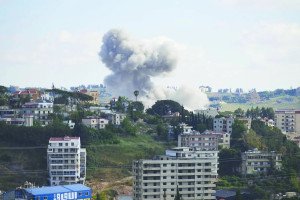
The consequences of the confrontation between the United States and Israel on one side, and Iran on the other, are no longer confined to the Middle East or global energy markets. Their impact has reached geographically distant yet strategically sensitive regions, foremost among them Southeast Asia. In a region that for decades formed one of the principal theaters of American influence in Asia, quiet but profound reassessments are now taking shape regarding the United States’ role, the future of security dependence, and the limits of confidence in American guarantees.
Although Southeast Asian governments have publicly maintained positions of neutrality and non-interference regarding the conflict, developments behind the scenes are far more significant than official statements suggest. Regional states are not viewing the war merely as a Middle Eastern crisis, but as a direct test of Washington’s ability to manage simultaneous crises, protect its partners, and sustain security commitments in a world marked by multiple flashpoints and rising domestic constraints inside the United States.
From Middle East War to Asian Anxiety
From the perspective of ASEAN states, the war with Iran exposes a dual American dilemma. On one hand, U.S. military and political resources are stretched across major theaters including Europe, the Middle East, and strategic competition with China in the Indo-Pacific. On the other hand, domestic political currents in Washington increasingly favor reducing external burdens under slogans such as “America First.”
This contradiction raises a fundamental question in Southeast Asian capitals: if the United States struggles to manage current crises, to what extent can it be relied upon in future contingencies that directly affect Asian security?
This is no longer a theoretical concern. The visible American inability to fully shield Gulf partners from Iranian threats sent a powerful message to middle and smaller powers alike: alliance with a superpower does not necessarily guarantee absolute security.
Eroding Trust Does Not Mean Alignment With China
One of the most common analytical mistakes is to assume that any decline in American influence automatically benefits China. Regional realities are more complex. While public opinion indicators and elite sentiment show declining confidence in Washington, this does not automatically translate into strategic alignment with Beijing.
Many states in the region view China as an indispensable economic partner, yet remain cautious about its growing security role, its behavior in the South China Sea, and its use of economic leverage for political purposes.
What is emerging, therefore, is not a shift from an American camp to a Chinese camp, but a transition from exclusive dependence to flexible balancing.
The Rise of Diversification Strategy
Faced with this environment, Southeast Asian states are increasingly adopting a pragmatic strategy based on diversified partnerships. The United States is no longer the sole security partner, nor is China the only economic option. Powers such as Japan, Australia, India, Turkey, the United Kingdom, and the European Union are increasingly viewed as alternative sources of defense technology, economic cooperation, and diplomatic support.
This shift reflects growing strategic maturity in the region. Middle powers no longer see themselves as forced to choose between two competing poles. Instead, they seek to maximize gains from all sides while minimizing vulnerability to great-power volatility.
War, Energy, and Political Economy
The war with Iran also has a direct and highly significant consequence for Southeast Asia: energy security. ASEAN economies depend, to varying degrees, on oil and gas imports from the Middle East, making any disruption in the Strait of Hormuz a direct threat to growth and financial stability.
Higher energy prices, volatile shipping and insurance costs, and declining investor appetite for risk all place pressure on economies built on manufacturing, exports, and open trade. For this reason, regional states view conflict in the Gulf not as a distant geopolitical issue, but as a domestic threat to employment, inflation control, and social stability.
America’s Influence Problem in Asia
What the current crisis reveals is not merely a temporary disagreement, but a deeper transformation in how the United States is perceived across the region. For decades, Washington was seen as the maritime guarantor, balancing power, and political anchor of the regional order. Today, however, many increasingly view it as a power overstretched abroad, divided at home, and inconsistent in its external commitments.
Frequent changes of administration and shifting priorities from one presidency to another deepen the sense of uncertainty. Asian states tend to prefer predictable partners, not powers that redefine commitments every four years.
Does China Benefit?
China benefits partially from this environment, but not without limits. Tensions with several regional states—particularly the Philippines—and ongoing maritime disputes constrain Beijing’s rise.
In other words, declining trust in America does not automatically create trust in China. Instead, it creates a relative vacuum in which multiple powers compete for influence.
An Opportunity for ASEAN or a Test of Its Unity?
The current moment may offer ASEAN an opportunity to strengthen internal cohesion. Rather than merely managing differences among members, the bloc could develop a more coordinated foreign policy, stronger energy security mechanisms, and more integrated defense approaches.
Yet such a path is far from guaranteed. Internal divisions remain significant, and member states continue to differ in priorities—some focused primarily on China, others on economics, and others on quiet balancing strategies.
Conclusion
The Iran war demonstrates that major geopolitical shifts are measured not only by developments on the battlefield, but also by how they reshape the calculations of distant allies and partners. In Southeast Asia, this shift is visible in declining trust in American guarantees, the rise of hedging strategies, diversified partnerships, and growing efforts to secure greater strategic autonomy.
The region is not turning against Washington. It is recalibrating its expectations of it. That distinction is crucial. American influence may not collapse suddenly, but it can gradually erode when allies begin preparing for a world in which the United States may not always be present, willing, or able.
Most read