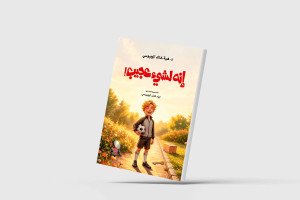

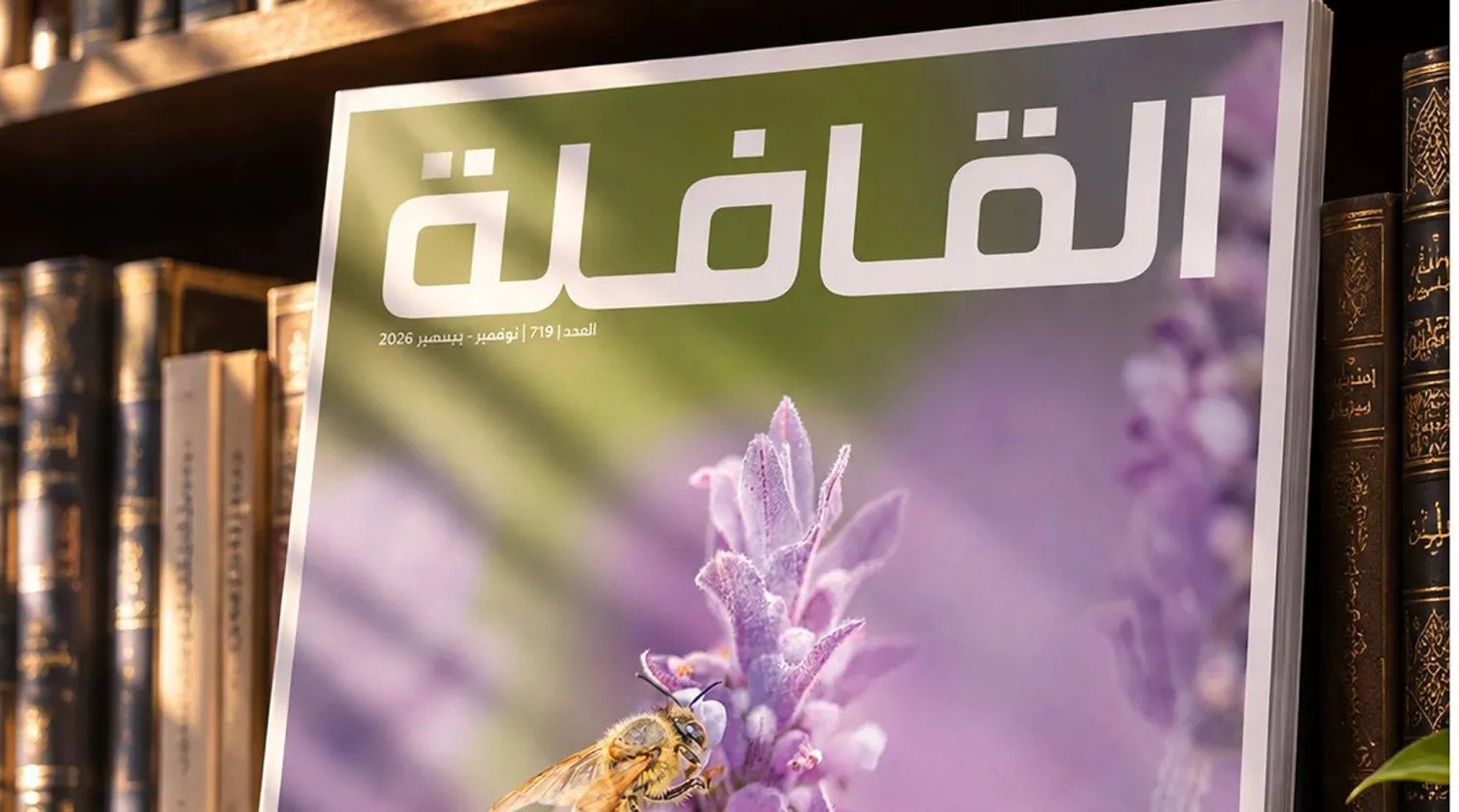
In its latest issue, Al-Qafilah, the magazine published by Saudi Aramco, moves beyond conventional cultural and literary themes to examine questions concerning the future of humanity and its place in a world undergoing rapid scientific and technological transformation. As the nature of knowledge, its production, and its circulation continue to evolve, the magazine brings together discussions on the humanities, education, literature, the arts, science, and the environment. Despite their diversity, these subjects converge around a central question: How can human beings preserve their distinctive identity and role in a world increasingly shaped by technology and changing patterns of thought and everyday life?
The range of topics featured in the issue reflects an effort to understand contemporary transformations from interconnected perspectives, linking scientific progress to its social and cultural implications. Knowledge, in this context, is presented not merely as an accumulation of information, but as an essential means of understanding humanity, society, and the surrounding world.
The Humanities: A Crisis of Recognition and the Erosion of Critical Thinking
The issue places “The Humanities: Forgotten Realities” at the centre of its coverage, examining the challenges facing these disciplines amid the rapid expansion of technical and applied fields. This shift has reshaped educational priorities and fuelled growing doubts about the value of teaching philosophy, sociology, and literature, as well as questions about their relevance to labour-market demands and development objectives.
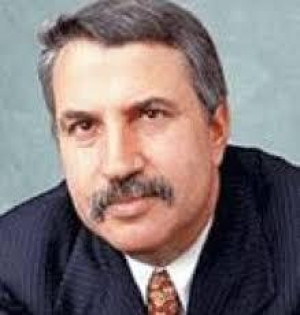
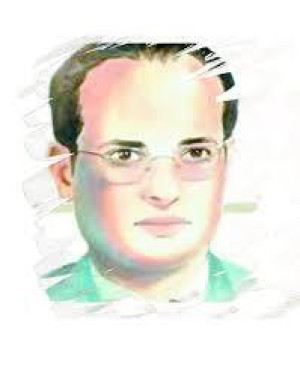
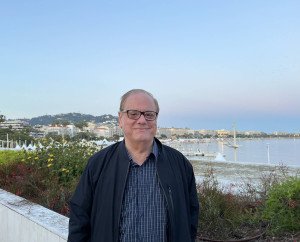
The feature brings together three academics and researchers — Abdul Salam Al-Wail, Samaher Al-Dhamen, and Abdulsalam Benabdali — who offer complementary perspectives on the social and intellectual value of the humanities, the crisis of teaching these disciplines in Arab universities, and their ability to retain their critical function in the face of contemporary change.
Abdul Salam Al-Wail challenges the tendency to measure the value of the humanities solely in terms of employment prospects and economic returns. He argues that their contribution extends beyond academic specialisation to include shaping identity, reinforcing values, building trust, and strengthening social cohesion — all of which are essential not only to society but also to economic development itself. He further maintains that the spread of artificial intelligence will make critical thinking, ethical judgement, and an understanding of human contexts increasingly important, as these are capabilities that cannot easily be reduced to automation.
From the perspective of higher education, Samaher Al-Dhamen examines the imbalance in how scientific and humanities disciplines are perceived, and the resulting decline in the latter's appeal among students. She notes that some students enter humanities programmes out of necessity, viewing them as a temporary stage before moving to other fields. Addressing this problem, she argues, requires more than simply updating curricula. It calls for a deeper reassessment of the educational system and teaching methods, as well as a renewed commitment to the university professor's role in nurturing intellectual curiosity and encouraging independent thought.
Abdulsalam Benabdali approaches the issue from a broader critical perspective. He argues that part of the crisis facing the Arab humanities stems from the adoption of Western theories and methodologies without due consideration of the historical and social conditions in which they originated. In many cases, this has turned academic disciplines into university courses that reproduce established concepts rather than use them as tools for understanding, analysing, and critically examining society.
Benabdali links this trajectory to the weakening of philosophical thinking, the decline of the public sphere, and the growing disconnect between universities and their social environments. Together, these factors have limited the ability of the humanities to influence society and generate independent critical knowledge.
Taken together, these perspectives suggest that the crisis of the humanities is not simply a matter of professional relevance or employment opportunities. It is rooted more deeply in the structure of educational institutions, the design of curricula, and the relationship between universities and society. Restoring their standing therefore requires a shift from consuming theories to producing knowledge, and from merely defending their importance to demonstrating their practical role in interpreting and shaping social and cultural transformations.
Hamad Al-Jasser: When an Intellectual Becomes an Institution of Knowledge
In its Literature and Arts section, Abdulaziz bin Salamah revisits the intellectual and scholarly career of Saudi scholar Hamad Al-Jasser, tracing his contributions to the development of education, journalism, and historical and geographical research in the Kingdom. The article presents him as a cultural figure whose work extended beyond individual scholarship to include the establishment and development of institutions dedicated to preserving and disseminating knowledge.
The feature follows Al-Jasser's engagement with manuscripts and libraries across the Arab world and beyond, his contributions to educational development in the Eastern Province and Najd, and his efforts to encourage literary activities among students. It also highlights his pioneering role in journalism, particularly through the founding of Al-Yamamah magazine in 1953, as well as his contribution to the development of publishing in Riyadh.
The significance of Al-Jasser's experience lies in his ability to combine research, documentation, and institution-building. His legacy includes an important body of scholarly and cultural work devoted to the history, geography, and people of the Arabian Peninsula.
Other contributions in the same section explore a wide range of literary and artistic themes. Ahmed Abdel Latif examines the phenomenon of suburban fiction in Spanish literature, while Lamia Shimt explores the novels of Sudanese writer Abdelaziz Baraka Sakin and their relationship with popular heritage. Ziad Al-Drees, meanwhile, questions the nature of Ibn Khaldun's enduring fame, asking whether it reflects a genuine engagement with his writings and ideas or is based, at least in part, on the symbolic status of his name in cultural memory.
The section also introduces readers to the work of Chinese writer Ning Ken, examines the value of books designed to teach novel-writing, and offers a cinematic comparison of the biographical films El Sett and Michael, focusing on their differing narrative and artistic approaches. It further features a poem by Saudi poet Ali Al-Hazmi and an exploration of the artistic experience of visual artist Abdullah Al-Othman.
Technology and Education: Who Shapes the Mind of the Future?
In its Horizons section, the magazine turns to the impact of digital tools on the formation of human awareness, particularly among younger generations. The feature “Pen or Tablet: Which One Shapes a Student's Mind?” raises questions about the consequences of moving from traditional learning tools to digital screens, examining the effects on learning, memory, and writing skills. It also reviews educational experiences in which schools and institutions rapidly embraced digital technology before reconsidering some of its outcomes.
This discussion is complemented by “How Social Media Is Redefining Fame,” which examines the transformation of social recognition — from status earned through achievement and creativity to online visibility driven by platforms and their algorithms. Fame is no longer necessarily linked to the intrinsic value of an individual's contribution; in some cases, it increasingly depends on the ability to attract attention and generate widespread engagement.
Together, these features suggest that the real challenge lies not in the use of technology itself, but in its influence on patterns of thinking, learning, value formation, and social standards.
Science and the Environment: Future Questions from the Laboratory to the Natural World
In the Science section, Khaled Karam explores the role of scientific research and sports medicine in improving athletic performance, enhancing physical capabilities, and breaking records. His contribution highlights how modern sporting achievements increasingly depend on the integration of training, technology, and medical knowledge.
In a different field, Saad Al-Qahtani examines the possibility of a world without bees and the potential consequences for food security, biodiversity, and ecological balance. The subject is also reflected in the issue's cover photograph, taken by Mohammed Al Ibn Al-Sheikh, depicting a bee on a lavender flower. The image provides a visual introduction to the feature “What If Bees Disappeared?”
The significance of this question does not lie in the prospect of all food disappearing from the world, but rather in the consequences that the loss of bees could have for the pollination of numerous crops and plants. Such a decline could threaten agricultural production and disrupt the complex relationships that sustain ecological systems.
In the Science Fiction column, Hassan Al-Khater explores a hypothetical scientific question: Could human beings ever dispense with food and obtain their energy directly from sunlight? The article examines the scientific and biological barriers that stand in the way of such a possibility.
The section also investigates the human tendency to attribute human characteristics to artificial intelligence systems, while exploring communication networks in forests, from birdsong to the chemical signals exchanged by plants.
Through these topics, the magazine broadens the discussion of scientific progress, connecting discoveries and technological applications to fundamental questions about the future of food, the environment, and human life.
The Chair: From a Symbol of Power to a Witness to Social Change
The issue's main special feature is devoted to “The Chair,” approaching an everyday object from historical, social, political, and artistic perspectives rather than treating it merely as a piece of furniture. Throughout its evolution, the chair has represented far more than a place to sit. At different points in history, it has embodied authority, status, and dominance, before becoming an essential feature of everyday life, work, and comfort.
The feature traces the evolution of chair design across civilisations and examines its relationship with human health and social interaction. It also explores the chair's presence in Arab culture, ancient mythology, and the Qur'anic text, as well as its symbolic significance in literature, theatre, cinema, and the visual arts.
In one of the contributions, Maha Qamar Al-Din offers a historical account of the chair's evolution, from ancient thrones symbolising authority and social hierarchy to the plastic seats that have become part of contemporary life. This journey demonstrates how ordinary objects can encapsulate social transformations and preserve evidence of changing lifestyles, relationships, and ideas about status and collective memory.
Knowledge in an Age of Transformation
Overall, the latest issue of Al-Qafilah offers a broad cultural and intellectual panorama that moves beyond traditional divisions between the humanities and applied sciences, and between literature, the arts, the environment, and technology. Despite their different subject matter, the issues explored in the magazine form part of a wider debate about humanity's place in a world where the tools of knowledge and the pace of its production are constantly changing, and where the boundaries between the natural and the digital, and between the individual and society, are becoming increasingly intertwined.
From the crisis of the humanities and the future of education to the transformations driven by digital platforms and the fragility of ecological balance, and finally to the cultural meanings embedded in everyday objects, the issue invites readers to consider a fundamental proposition: progress should not be measured solely by the tools and capabilities technology produces, but also by the extent to which it enables human beings to gain a deeper understanding of themselves, their societies, and the world they inhabit.
Most read