U.S. Retreat from Striking Iranian Energy Facilities: Managing Escalation and Prospects for Settlement

Background of the Situation
The crisis between the United States and Iran witnessed a significant development when U.S. President Donald Trump, on March 23, 2026, backed down from his previous threat to launch military strikes against Iranian energy facilities. The threat had been issued two days earlier and was conditional upon Iran reopening the Strait of Hormuz within 48 hours. Hours before the deadline expired, Trump announced a five-day extension, citing indications of progress in indirect communications between Washington and Tehran and the existence of an opportunity to discuss possible arrangements concerning the management of navigation in the strategic waterway.
However, the announcement was met with an official Iranian denial of any direct negotiations with the United States. Tehran described the American statements as an attempt to influence global oil and financial markets, particularly given the high sensitivity of these markets to developments affecting global energy security and maritime routes in the Gulf.
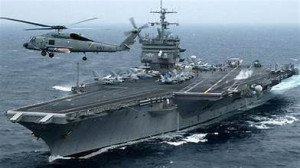
This development comes amid a broader military escalation in the region since the outbreak of war involving the United States and Israel on one side and Iran on the other. The conflict has been characterized by a combination of direct military operations alongside economic and diplomatic pressure. While the United States continues to strengthen its military presence in the region—by deploying additional forces and expanding military capabilities—parallel mediation efforts have intensified through indirect channels involving regional and international actors such as Turkey, Qatar, Oman, and Pakistan, in an attempt to contain the escalation and open a limited window for negotiations between the two sides.
Thus, the decision to extend the deadline reflects an overlap between the logic of military escalation and the logic of political crisis management. Washington seeks to maintain a high level of military pressure on Iran while simultaneously testing the prospects for reaching a settlement or temporary understandings that could prevent the conflict from escalating into a wider confrontation threatening regional stability and global energy supplies.
Second: Assessment of the Current Situation
Current indicators suggest that the decision to extend the deadline does not represent a strategic shift in U.S. policy but rather reflects an attempt to manage escalation rather than end it. This decision can be explained through several factors:
Regional Allies’ Pressure
Gulf states fear that targeting Iranian energy facilities could provoke direct Iranian retaliation against their own oil infrastructure, potentially expanding the scope of the war across the region. At the same time, mediation attempts have emerged through countries such as Pakistan, Qatar, Oman, and Turkey to encourage negotiations between the two parties.
U.S. Domestic and Economic Considerations
Military escalation has disrupted global energy markets and pushed oil prices higher, which could negatively affect the Republican Party in the upcoming congressional elections. Consequently, the U.S. administration seeks to contain the economic repercussions of the war on global markets.
Searching for a Diplomatic Exit
There are growing indications that Washington may be seeking a political settlement after early assumptions about the rapid collapse of the Iranian regime proved inaccurate, especially given the rising financial and military costs of the war.
Possibility of Military Maneuvering
Despite diplomatic rhetoric, the United States continues to reinforce its military presence in the region, raising the possibility that extending the deadline may serve as cover for additional military preparations.
Third: Strategic Dilemmas
The United States faces several challenges in managing the war, most notably:
- The absence of a clear strategy for ending the conflict.
- The failure of the assumption that the Iranian regime would collapse following the assassination of key leadership figures.
- A relative divergence between U.S. and Israeli perspectives regarding the course of the war.
- The increasing risk that the conflict could evolve into a prolonged war of attrition in the Middle East.
Meanwhile, Iran refuses to enter negotiations before the war is halted and guarantees, compensation, and sanctions relief are provided—factors that significantly reduce the prospects of a rapid agreement.
Possible Scenarios
Scenario One: Limited Political Settlement
This scenario assumes that indirect diplomatic efforts led by regional and international actors succeed in narrowing the gap between the United States and Iran, thereby opening a negotiation track aimed at containing the ongoing military escalation.
Such a settlement would likely be temporary or phased, focusing initially on urgent issues such as ensuring freedom of navigation in the Strait of Hormuz and avoiding attacks on energy infrastructure across the region.
The negotiations could also involve preliminary understandings regarding aspects of Iran’s nuclear program, such as freezing certain activities or expanding international monitoring in exchange for limited economic incentives or gradual sanctions relief.
Nevertheless, this scenario faces major obstacles, particularly the deep mutual mistrust between the two sides and their adherence to high-threshold demands. While Washington seeks broad restrictions on Iran’s nuclear and missile programs as well as its regional influence, Tehran insists on sanctions relief and guarantees against renewed military action before entering negotiations.
Probability: Low.
Scenario Two: Continued Limited War
This scenario assumes the continuation of the conflict within what can be described as a “limited war” or “controlled confrontation,” where military operations and economic pressures persist without escalating into a full-scale regional conflict.
Under this scenario, mutual strikes and indirect operations would likely continue while escalation remains relatively contained to avoid a wider war. The United States would continue employing economic and military pressure tools aimed at weakening Iran’s capabilities and gradually pushing it toward accepting less demanding negotiating terms.
Conversely, Iran may adopt a strategy of resilience and attrition, leveraging its capacity to influence maritime security and energy flows in the region as well as its regional alliances to maintain pressure on the United States and its partners without entering into a direct large-scale confrontation.
This scenario reflects a traditional pattern of crisis management in the Middle East, whereby escalation is maintained at a controlled level that allows each party to pressure the other without reaching a breaking point.
Probability: High.
Scenario Three: Major Escalation
This scenario assumes the collapse of diplomatic de-escalation efforts and the failure of political pressure to contain the conflict, which could push the United States to carry out its threats to strike Iranian energy facilities and critical infrastructure.
If such strikes occur, Iran would likely retaliate by targeting energy facilities or military bases belonging to the United States or its regional allies in the Gulf, or by attempting to disrupt navigation in the Strait of Hormuz.
Such developments could broaden the scope of the conflict across larger areas of the Gulf and the Middle East, potentially triggering a sharp rise in global energy prices and significant market disruptions.
This scenario could also draw additional regional actors into the conflict—directly or indirectly—transforming the confrontation into a large-scale regional crisis that would be difficult to contain quickly.
Probability: Medium.
Most Likely Scenario
Given current political and military indicators, the most probable outcome is the continuation of a limited war accompanied by indirect negotiation attempts between the United States and Iran.
Both parties face constraints that prevent a rapid settlement, yet both are also aware of the severe risks associated with a full-scale confrontation. The United States has thus far been unable to impose its full set of conditions on Iran, while Tehran appears unwilling to make major concessions that could undermine its strategic capabilities.
Consequently, the conflict is likely to persist within a framework of controlled escalation, combining military pressure with indirect diplomatic initiatives, while the prospects of either a settlement or broader escalation remain contingent upon developments on the ground and the positions of regional and international actors.
Conclusion
The U.S. decision to step back from striking Iranian energy facilities does not represent a strategic shift but rather reflects a tactical management of the conflict under economic, political, and military pressures. With the two sides still far apart in their conditions, the prospects of a rapid settlement remain limited, while the risk of wider escalation continues to loom.
Most read