
The Future of the Middle East Amid the Latest Developments in the War on Iran

The renewed escalation between the United States and Iran reveals that fundamental transformations are taking place across multiple fronts. Despite this escalation, however, diplomatic attention and mediation efforts remain focused on the possibility of reaching an understanding that could bring the diplomatic track back to the forefront. At the same time, the crisis surrounding the Strait of Hormuz and the Iranian nuclear issue remain the two most significant obstacles to any potential settlement between the two sides.
U.S. President Donald Trump continues to issue strongly worded statements and insist that the United States has already achieved victory over Iran after, in his view, preventing Tehran from acquiring a nuclear weapon. He has argued that the military operations pushed Iran's nuclear program “25 years backward,” while also asserting that Washington currently controls the Strait of Hormuz. Tehran, however, continues to insist on a number of conditions for reopening the vital waterway, while Pakistan continues its mediation efforts between the two sides.
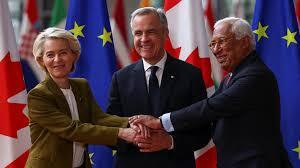
At the same time, the European Union's decision to join the campaign of “economic isolation” against Iran confirms the scale of these transformations while adding further complexity to any potential path toward a settlement. The imposition of a coordinated and highly restrictive financial and economic blockade by the United States and Europe would effectively isolate Iran from the international banking and trading system, with the aim of cutting off what remains of the Iranian regime's financial lifelines.
These developments therefore suggest that U.S. policy is moving toward a redistribution of costs and burdens—whether in the areas of security, trade, or energy—as the Trump administration continues to press its allies to assume greater responsibilities.
A Different Middle East After the War
Ultimately, however, one point should not be overlooked. For the first time since the outbreak of the war with Iran, discussions within the Pentagon are no longer focused primarily on the scale of forces Washington would need to continue military operations in the Middle East. Instead, the debate has moved toward a more fundamental question: Should the United States rebuild its military presence in the region in the form it maintained before the war in the first place?
This question points to potentially significant changes in the nature of Washington's military presence and influence across the Middle East.
The region that emerges after this war is therefore unlikely to resemble the Middle East that existed before it—particularly in terms of the structure of global leadership and the nature of U.S. dominance as the region's principal external power.
These changes could either contribute to an expansion of the conflict or lead to the emergence of an entirely new regional configuration shaped by evolving developments, shifting power dynamics, and a prolonged state of neither peace nor war.
Such an environment could create conditions for a new form of instability and disorder in the region, potentially producing scenarios whose consequences may extend well beyond the immediate conflict.
For that reason, the peoples and governments of the Middle East must pay close attention to these transformations. The central question is no longer merely how the current war will end, but what kind of regional order will emerge after it—and who will have the power to shape that order.
Source: Al Youm Al Sabea (The Seventh Day)
Most read