The Distant Drums of War Are Growing Louder

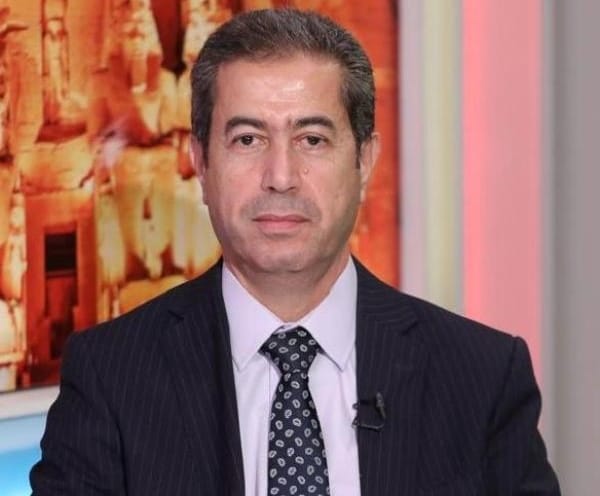
Dr: Theeb Qaralleh
The decisions, measures, meetings, and military demonstrations that have taken place on the international stage in recent months strongly indicate that the world’s major powers are preparing, mobilizing, and entering a clear phase of military readiness reminiscent of the atmosphere preceding major wars. Countries are redrawing their policies, positions, and alliances in anticipation of dramatic developments that may lie ahead.
Perhaps part of the picture can be gleaned from the cryptic message recently delivered by U.S. President Donald Trump, who stated bluntly: “Nothing can stop what is coming.” This statement offers a glimpse of what may unfold in the coming months and years, leading either to a stage where the fragile state of deterrence is restored or to an acceleration toward war. The remark came only days before the decision to change the name of the U.S. Department of Defense to the “Department of War,” a political step that reflects a mindset geared toward genuine readiness to use force.
Since the end of the Cold War in the early 1990s, the nerves of global decision-making centers have not been as tense as they are today. Nor have such sweeping decisions and measures been taken as those we are witnessing now—whether in the escalating rhetoric surrounding nuclear threats, the revival of the arms race, or the collapse of the agreements that had practically contained it over the past thirty years.
In Europe, Germany has announced—in a historic shift—that it will double its defense budget to reach 3.5 percent of its gross national product, and it has decided to reintroduce compulsory military service. Meanwhile, the United Kingdom has unveiled the largest sustained increase in military spending since the end of the Cold War, raising it to 2.5 percent of GDP, with plans to reach 3 percent later on. At the same time, France has adopted the concept of a “war economy,” conducting national mobilization exercises and preparing hospitals to receive tens of thousands of wounded people in emergency scenarios. Figures indicate that the European Union raised its military spending last year to a record €343 billion, an increase of 19 percent.
These preparations are not confined to the Western camp. They coincide with increasingly blunt messages from the opposing side. Russia has announced that it possesses new missiles capable of striking any European capital within minutes and has hinted at the possible use of nuclear weapons. China, for its part, recently showcased its formidable nuclear military capabilities—across air, land, and sea—along with its hypersonic missiles, during a display attended by the leaders of China, Russia, and North Korea, a move that provoked considerable anger in Washington.
Regionally, Turkey is building shelters across its provinces in anticipation of potential wars while rapidly advancing its domestic military industry. Israel, meanwhile, is carrying out maintenance on its bomb shelters and strengthening its food reserves.
Research reports issued by the Stockholm International Peace Research Institute (SIPRI), along with shared intelligence assessments, confirm that the collapse of arms-control agreements has pushed the world into a new arms race. All nuclear powers are now expanding their arsenals simultaneously. Public opinion surveys conducted this year also reveal that more than half of citizens in major countries believe that a third world war could erupt in the coming years.
All of this suggests that the arms race has awakened from its long slumber and that the Cold War has begun to reappear in new forms. Its manifestations will likely be seen in proxy wars and in the emergence of new alliances. As a result, the possibility of regional conflicts will remain present, while a major war could ultimately erupt due to miscalculations.
Director of the International Foresight Network
Since we are part of this world that is once again preparing for militarization, Arab states should not remain mere spectators to these developments. They must act on multiple levels: strengthening preparedness and readiness, developing strategic plans for national mobilization, acquiring defensive capabilities, constructing shelters, and securing strategic food reserves. At the same time, they must carefully reassess alliances and geopolitical alignments, analyze the evolving international landscape from all angles, and prepare from now for its fluctuations and surprises—both domestically and externally.
Most read