
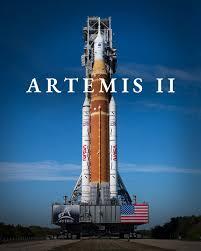
NASA’s Artemis program has revived the United States’ ambition to return to the Moon after nearly half a century since the end of the Apollo program. However, this initiative is not viewed as an end in itself, but rather as a transitional step within a broader vision aimed at enabling a sustained human presence beyond low-Earth orbit, ultimately extending to Mars. In this context, technological dimensions intersect with political and economic considerations, making the program a complex model that reflects profound transformations in the global architecture of space exploration.
I. From Apollo to Artemis: A Shift in Goals and Strategies
The Apollo program (1969–1972) achieved a historic milestone by landing 12 astronauts on the lunar surface. Yet Artemis surpasses this achievement in ambition, aiming to establish a sustainable human presence on the Moon by 2028 as a stepping stone toward Mars.
The program was institutionalized within a clear legal framework beginning in 2010, emphasizing a strategic objective of “expanding permanent human presence beyond low-Earth orbit.” This reflects a shift from the logic of symbolic achievement to that of long-term strategic sustainability.
II. The Program’s Technical Architecture
1. Orion Spacecraft and the Space Launch System (SLS)
The Orion spacecraft and the Space Launch System (SLS) form the backbone of the program. Orion serves as a partially reusable crew capsule, while SLS is designed as a heavy-lift rocket to transport astronauts to the Moon.
Recent trends within NASA, however, indicate a move toward reducing system complexity by relying on a single SLS configuration and abandoning certain planned upgrades, in an effort to lower costs and accelerate implementation. The increasing reliance on commercial components—such as propulsion stages—also reflects a gradual shift in design philosophy.
2. Human Landing System (HLS)
Because Orion is not designed to land on the Moon, NASA depends on separate spacecraft for this purpose, developed by two primary companies: SpaceX and Blue Origin. This system represents one of the most sensitive components of the program, given its technical complexity and developmental delays.
III. Expanding Operational Scope: From Missions to Settlement
1. Supporting Programs
NASA relies on the Commercial Lunar Payload Services (CLPS) program to deploy small robotic missions aimed at testing technologies and exploring potential landing sites. Additional efforts include the development of spacesuits and lunar surface systems such as rovers.
2. The Lunar Base
The shift toward establishing a permanent lunar base by 2030 marks a qualitative transformation in the program’s objectives. This direction was reinforced by an executive order issued by Donald Trump, which emphasized achieving “American space superiority.”
NASA has adopted a phased approach, beginning with intensified robotic missions, followed by recurring human presence, and ultimately leading to sustainable settlement. In this context, the agency decided to pause the Gateway project in favor of focusing directly on lunar surface infrastructure.
IV. Moon-to-Mars Architecture: Strategic Debate
The Artemis program constitutes the foundation of a broader strategy aimed at sending human missions to Mars. However, this vision remains subject to ongoing debate within U.S. political and legislative circles. Key issues include:
- The feasibility and value of a sustained human presence on the Moon
- Whether to rely on government-led systems (SLS and Orion) or commercial alternatives
- The viability of key program components, particularly HLS
- The nature and sequencing of the transition from the Moon to Mars
These debates are reflected in legislative proposals within Congress. The House of Representatives tends to favor maintaining the current program structure, while the Senate advocates for greater flexibility in reshaping the architecture.
V. The Rise of the Commercial Space Sector
The increasing reliance on the private sector represents one of the most significant shifts in the Artemis program. NASA is no longer solely developing its systems internally but is instead procuring services from commercial providers.
This approach seeks to:
- Foster innovation
- Reduce costs
- Support the U.S. space industry
However, it also introduces notable challenges, including:
- Market instability in the commercial space sector
- Technical delays in privately developed systems
- Risks associated with dependence on a limited number of providers
A report by the Aerospace Safety Advisory Panel (ASAP) indicated that the complexity and delays of the HLS could jeopardize the timeline for a crewed lunar landing, highlighting the limitations of relying on commercial actors for high-risk missions.
VI. Financial and Administrative Challenges
Despite an increase in the program’s budget to $8.5 billion in 2027, costs remain a major concern. Official reports have identified cost overruns amounting to approximately $6.8 billion in certain projects.
Key challenges include:
- Project complexity and interdependence
- Inaccurate initial cost estimates
- Schedule pressures
In this context, Congress faces difficult choices, including:
- Reallocating resources (e.g., reducing Gateway funding in favor of the lunar base)
- Maintaining current funding levels
Conclusion
The Artemis program reflects a fundamental transformation in U.S. strategic thinking in space—from a symbolic race to the Moon to a long-term effort to reshape human presence beyond Earth. However, this transformation is accompanied by significant technical and institutional complexity.
Balancing ambitions toward Mars, reliance on the private sector, and escalating financial pressures, the program’s success ultimately depends on the United States’ ability to strike a delicate balance between innovation and sustainability, as well as between government leadership and market dynamics.
Ultimately, Artemis is more than a space program—it is a real-world test of emerging models of technological governance in managing large-scale, multidimensional projects in an era of intensifying strategic competition.
Most read