Irregular Migration Between Morocco and Europe: The Limits of Security-First Policies and the Prospects for Investment Diplomacy

From border control to mobilizing capital and expertise: Why does the Morocco–EU partnership need a new model for migration governance?
Irregular migration between Morocco and the European Union is unlikely to be resolved through stricter border controls or increased security funding alone. The persistence of migratory flows despite numerous agreements and joint programmes reveals a gap between the instruments used to manage migration and the underlying economic, social, and political factors driving it. This calls for a reassessment of the Morocco–EU partnership, so that migration is no longer treated primarily as a security issue centered on preventing border crossings, but rather as a developmental and strategic challenge involving employment opportunities, investment distribution, and the mobilization of diaspora expertise.
Against this backdrop, the proposed establishment of an investment fund for Moroccans living abroad, inspired by the concept of the “Diaspora Hedge Fund” associated with the work of Dr. Anis H. Bajrektarevic, offers a framework for directing part of the Moroccan diaspora’s financial resources and professional expertise toward productive projects at home. The significance of this proposal, however, lies not merely in creating a new financial instrument, but in its potential to address a deeper structural misalignment among the aspirations of Moroccan youth, the strategic priorities of the state, and Europe’s economic and security interests.
The viability of this approach depends on whether these three stakeholders can establish a common framework in which local development becomes a shared interest, rather than reducing the relationship to an exchange of financial assistance for tighter border controls.
I. The Security-First Approach and Its Limited Impact on Root Causes
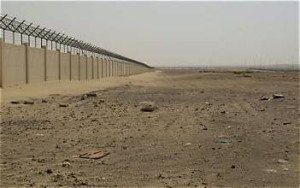
For many years, European policy toward migration from Morocco has prioritized border management and the disruption of smuggling networks. According to the figures presented in the source report, the European Union allocated at least €215 million to border security projects in Morocco between 2001 and 2019. Funding subsequently expanded, including an additional €140 million in 2018, of which €30 million was allocated to Morocco under the Border Management Programme for the Maghreb region. This was followed by commitments totaling €222 million between 2021 and 2024, alongside a further €190 million planned by the end of 2027.
If confirmed against official funding records, these figures indicate that border management has become a central component of the EU–Morocco partnership. The more important question, however, concerns not the volume of expenditure itself, but its actual impact on reducing the drivers of irregular migration and balancing security requirements with developmental needs.
Increasing resources devoted to surveillance and interception does not necessarily diminish the desire to migrate, particularly when that desire is linked to limited employment opportunities, a mismatch between education and labor-market requirements, or regional inequalities in development. When security measures are disconnected from social and economic policies, they may simply redirect migration routes or increase migrants’ reliance on smuggling networks without addressing the underlying causes of the phenomenon.
Morocco has expressed reservations about reducing its role to protecting Europe’s borders. In 2018, Foreign Minister Nasser Bourita rejected the notion that Morocco should serve as Europe’s outsourced border guard, a position that resurfaced during the 2021 Ceuta crisis. This tension reflects a structural problem within the partnership: the EU views migration control as a component of its internal security, while Morocco seeks to align cooperation in this field with its national interests, development priorities, and negotiating position vis-à-vis Europe.
Sustainable cooperation therefore requires more than additional security funding. It calls for a redistribution of responsibilities and benefits, alongside an expansion of the partnership to include productive investment, development in migration-origin regions, and stronger capacity within the Moroccan economy to absorb its young population.
II. Ceuta as a Test of Migration’s Geopolitical Dimension
The crises that have affected Ceuta in recent years demonstrate that migration cannot be explained by economic factors alone, nor can it be separated from the diplomatic and institutional context in which relations between Morocco and Europe unfold.
In May 2021, approximately 10,000 people crossed the border within 48 hours amid diplomatic tensions over Spain’s decision to admit Brahim Ghali, leader of the Polisario Front, for medical treatment. The crisis demonstrated how border management can be affected by political disputes and how fragile arrangements based primarily on bilateral cooperation can become.
The source report also describes a major migratory surge in Ceuta on July 30 and 31, 2026, with estimates ranging from 60,000 to 80,000 people and varying accounts of the resulting loss of life. These figures and details should be treated as reported claims requiring independent verification from reliable sources, particularly given the scale of the numbers and the discrepancies in casualty estimates.
Nevertheless, the broader analytical point remains important: major border crises can emerge from the interaction of multiple factors, including judicial decisions, migration policies, digital rumors, human-smuggling networks, security preparedness, diplomatic tensions, and underlying socioeconomic pressures.
According to the account presented in the report, some coverage referred to a Spanish Supreme Court ruling issued on July 8, 2026, and to more than one million applications for immigration regularization filed by the end of June that year. The report also raised questions about the handling of intelligence warnings received before the crisis. It further attributed to Spanish Prime Minister Pedro Sánchez a rejection of the claim that Moroccan authorities had deliberately organized the crossings, emphasizing instead the role of disinformation and smuggling networks.
Conversely, the report cited accounts suggesting that Morocco’s security deployment was lighter than usual, although the extent and motives of any such reduction remained disputed. It also noted that Sánchez’s visit to Algeria took place ten days before the crisis. However, temporal proximity alone does not establish a causal relationship between the two events.
These accounts underscore the importance of distinguishing established facts from media assessments and political hypotheses. Assigning responsibility to a single actor without sufficient evidence risks turning border crises into instruments of mutual accusation rather than opportunities to develop joint early-warning systems, humanitarian response mechanisms, and institutional coordination.
Official emphasis on disinformation and smuggling networks, while important, should not obscure the social and economic conditions that make some young people willing to risk their lives to reach Europe. Security factors may help explain how a particular crisis unfolds, but they cannot, on their own, adequately explain why the broader phenomenon persists.
III. The Opportunity Gap and the Changing Dynamics of Moroccan Migration
In important respects, the drivers of Moroccan migration differ from displacement associated with civil wars and institutional collapse. Under the analytical framework adopted in the report, Morocco is not a country experiencing internal warfare or the wholesale breakdown of its institutions. Rather, it faces challenges involving labor-market absorption, the distribution of opportunities, and the productive use of an educated population.
A significant part of Moroccan migration can therefore be understood as “aspirational migration,” in which individuals seek higher incomes, better returns on their qualifications, and professional opportunities commensurate with their expectations. This does not mean that other factors are absent, including regional inequalities, family considerations, or the desire for greater social security. Rather, limited opportunities represent one of the central elements in explaining the phenomenon.
The figures cited in the report highlight the importance of this issue. According to Morocco’s High Commission for Planning, the national unemployment rate reached 13% in 2025, compared with 38.4% among people aged 15–24 and 25.7% among university graduates. This disparity suggests that the problem concerns not only the number of available jobs, but also their quality, their capacity to absorb qualified workers, and the degree to which educational outcomes correspond to the needs of the economy.
The significance of this gap lies in its potential to generate a sense of blocked professional mobility among people who have invested in education and skills but cannot secure an adequate return on that investment in the domestic labor market. Migration, in this context, is not simply a response to poverty; it becomes a perceived pathway to social and professional advancement.
Turning this analysis into public policy, however, requires avoiding the reduction of Moroccan youth to a single category or assuming that unemployment alone explains every migration decision. Economic pressures interact with social expectations, perceptions of quality of life, family connections abroad, and access to established migration networks.
IV. The Moroccan Diaspora: From Remittances to Productive Investment
The Moroccan diaspora represents a strategic resource whose value extends beyond direct financial transfers. It can contribute to knowledge and technology transfer, expand export networks, strengthen commercial relationships, develop professional skills, and establish channels of cooperation between Moroccan institutions and their counterparts abroad.
According to the figures cited in the report, remittances from Moroccans living abroad exceeded $11.7 billion in 2024, equivalent to more than 8% of Morocco’s gross domestic product. Nevertheless, the report notes that diaspora investment accounts for only approximately 10% of total domestic private investment, a level King Mohammed VI described as unacceptable.
This comparison points to a potential gap between the diaspora’s financial capacity and its direct contribution to productive investment. Remittances play an important role in supporting household consumption, improving living standards, and financing education and housing. However, they do not automatically translate into projects that generate sustainable employment or strengthen local productivity.
It is essential to distinguish between remittances and direct investment, as each serves a different economic function. Transfers used for consumption or family needs should not be regarded as wasted resources. The challenge instead lies in establishing reliable, voluntary channels through which those who wish to invest can direct part of their savings toward projects with clear economic and social value.
The report also advances the hypothesis that some investment flows may disproportionately benefit urban networks closer to centers of decision-making, at the expense of other regions. However, the source itself acknowledges that this hypothesis has not yet been adequately measured in the Moroccan context. It should therefore be tested using detailed regional data rather than presented as an established fact.
This is where the proposed diaspora investment fund becomes relevant—not merely as a separate financial instrument, but as a potential mechanism for broadening access to investment opportunities, strengthening transparency, and linking private capital to local development priorities.
V. A Diaspora Investment Fund as an Instrument of Shared Development
The proposal involves establishing an investment fund for Moroccans living abroad, drawing inspiration from the “Diaspora Hedge Fund” concept advanced by Dr. Anis H. Bajrektarevic and adapting it to Morocco’s specific economic and institutional circumstances.
Rather than functioning as a conventional fundraising vehicle, the fund could become an investment platform connecting diaspora savings with productive projects, supported by clear standards for governance, financial disclosure, risk assessment, and the measurement of economic and social impact.
To achieve its objectives, the fund should be built around several principles.
First, geographically targeted investment should prioritize areas facing significant employment challenges and strong migration pressures, including the Rif, Al Hoceima, Nador, and southeastern Morocco. The aim would be to reduce the concentration of investment in major urban corridors and broaden the geographical distribution of development.
Second, investment should focus on productive sectors that respond to the actual needs of the Moroccan economy, rather than on symbolic projects or initiatives designed primarily to satisfy the performance indicators of international donors. Potential sectors include manufacturing, technology, digital services, agricultural value chains, and scalable small and medium-sized enterprises.
Third, Moroccan expertise abroad should be mobilized to support knowledge transfer, professional mentoring, and training. Temporary return programmes for specialists, partnerships between universities and businesses, and technology-transfer initiatives could help achieve this objective. The diaspora’s strategic value lies not only in its financial resources, but also in the human capital, professional experience, and knowledge networks it has developed.
Fourth, investment policy should be linked to reforming the relationship between education and employment. The objective should not simply be to create more jobs, but to generate positions suited to workers’ qualifications, improve training quality, and strengthen partnerships between educational institutions and the private sector.
The fund’s success would also depend on an institutional design that prevents conflicts of interest, reduces the risks of mismanagement, and ensures that investment decisions follow transparent economic criteria. Its mandate must be clearly defined: the fund cannot replace public investment or structural reforms, nor can it be held solely responsible for reducing unemployment or migration. It should instead operate as a complementary instrument within a broader development strategy.
VI. Rebuilding the Morocco–EU Partnership
A diaspora investment fund cannot deliver sustainable results if it remains disconnected from a broader framework of cooperation between Morocco and the European Union. The central challenge is to reconcile three sets of interests: Moroccan youth’s need for meaningful economic and professional opportunities; the Moroccan state’s interest in developing its regions and strengthening its capacity to determine its own development priorities; and Europe’s need to manage migration in an orderly and sustainable manner.
From the European perspective, productive investment in Morocco could complement border cooperation by supporting employment, strengthening local development, and expanding commercial opportunities. From Morocco’s perspective, however, cooperation should not become a unilateral obligation to protect Europe’s borders. It should generate measurable economic benefits, facilitate technology transfer, develop skills, and improve access to markets.
This requires moving away from crisis-driven funding toward long-term programmes built around clear performance indicators. These should include the number of sustainable jobs created, their quality and geographical distribution, business survival rates, and the extent to which Moroccan professionals abroad participate in local development.
The results of a new policy should not be measured solely by reductions in migration numbers. Regular migration and professional mobility can contribute positively to development, while freedom of movement and fundamental rights remain essential considerations in any cooperation framework. A more realistic objective is to reduce forced or dangerous migration and expand the options available to young people, making remaining in Morocco a viable and rewarding choice rather than the consequence of having no alternatives.
Conclusion: From Border Management to Opportunity Management
The experience of the Morocco–EU partnership demonstrates that border security, however important, is insufficient on its own to establish a sustainable migration policy. An effective approach requires the integration of security cooperation, regional development, productive investment, labor-market reform, and the mobilization of the Moroccan diaspora.
Within this framework, a diaspora investment fund could become a promising instrument if it is designed around transparent institutional arrangements, targets underserved regions, links financing to value-added employment, and enables Moroccan professionals abroad to contribute to knowledge and technology transfer. It is unlikely to succeed, however, if it merely aggregates financial resources or becomes a financial vehicle lacking effective governance and accountability.
At the European level, continuing to reduce migration policy to border control will leave cooperation vulnerable to diplomatic tensions and sudden crises. A more balanced partnership requires recognition that stability cannot be achieved by preventing movement alone. It also depends on expanding the economic and social opportunities that allow people to make freer choices about whether to migrate.
The required transformation is therefore not a shift from security to development in the sense of abandoning the former. It is a transition from an isolated security-first approach to an integrated model combining security, development, investment, and governance. When this model translates into a functioning factory in an underserved region, a skilled job for an educated young person, or a business led by Moroccan professionals returning from abroad, development investment becomes a practical component of migration governance rather than merely a slogan in diplomatic discourse.
Most read



Read also