The Yemen War: Threatening Oil Routes and Challenging the Alliance System

Rarely do military, economic, and diplomatic pressures converge as intensely as they have for Saudi Arabia in September 2026. The developments in Yemen, the Houthi advance along the western coast, the growing risks around the Bab al-Mandeb Strait, the disruption of shipping through the Strait of Hormuz, and the attack that disrupted Saudi Arabia’s East-West oil pipeline have placed the kingdom under a test that extends far beyond its ability to contain a security threat along its southern border.
The issue is not simply that Saudi territory has come under missile and drone attacks. It increasingly concerns Riyadh’s ability to protect the infrastructure on which its economic power rests, maintain the flow of oil exports, and preserve the network of alliances on which it depends in an increasingly unstable regional environment.
These developments have also emerged at a sensitive moment for Crown Prince and Prime Minister Mohammed bin Salman (MBS), who has made Vision 2030 the centerpiece of an effort to restructure the Saudi economy, reduce its relative dependence on oil, and strengthen the kingdom’s position as a global economic and political power.
The paradox, however, is that the current crisis is once again placing oil and regional security at the center of Saudi Arabia’s strategic calculations.
The longer the conflict continues, the greater the risk to export routes and vital infrastructure. And the longer the disruption persists, the harder it becomes to separate the kingdom’s domestic economic transformation from the region’s military upheavals.
First: The Shift in Yemen Opens a New Front for Saudi Arabia
The Houthi advance along Yemen’s western coast represents the most serious development in the current equation.
During September, the Houthis made significant gains along the Red Sea coast, including control over Mokha and strategic positions near the Bab al-Mandeb Strait, while strengthening their presence on islands in the Red Sea. Recent reports have described Houthi control of the Greater Hanish and Lesser Hanish islands as a development that expands the group’s ability to influence maritime traffic.
The fall of Mokha is particularly significant. The city lies on the Red Sea coast near one of the world’s most important maritime corridors, while Mayun Island, located at the entrance to Bab al-Mandeb, occupies an exceptionally sensitive strategic position.
The importance of these developments lies in the fact that Bab al-Mandeb is not merely a maritime passage linking the Red Sea with the Gulf of Aden. It is one of the critical links in the global trade and energy network connecting Asia and Europe.
From a Saudi perspective, the waterway is particularly important because the western Red Sea provides part of the alternative infrastructure available for transporting oil without relying exclusively on the Strait of Hormuz.
The extension of Houthi military control toward Bab al-Mandeb therefore creates a threat not only along Saudi Arabia’s southern frontier, but also to one of the routes Riyadh relies upon to reduce its exposure to Hormuz.
Second: From a Border Threat to an Economic Threat
The danger in the current situation is that the Houthi threat is no longer confined to the possibility of missile or drone attacks against southern Saudi Arabia.
The equation has moved to a more sensitive level: the ability to affect the movement of energy itself.
Houthi control of advanced positions along Yemen’s western coast increases the risks to shipping and maritime traffic in the region. Since 2023, instability in the Red Sea has already caused a major decline in shipping through the area, with many vessels diverting to longer and more expensive routes.
For Saudi Arabia, the resulting equation is increasingly difficult:
- The Strait of Hormuz faces risks linked to the conflict with Iran.
- The Red Sea and Bab al-Mandeb are increasingly exposed to Houthi threats.
- The Saudi pipeline that provides an alternative to Hormuz has itself been attacked.
The challenge is therefore no longer about losing a single alternative route. It is about the possibility that multiple export routes could come under pressure simultaneously.
Third: The East-West Pipeline Attack Reveals the Vulnerability of Saudi Oil Exports
The most significant economic development was the drone attack on the Saudi East-West oil pipeline on September 10.
The pipeline stretches for roughly 1,200 kilometers and connects oil-producing areas in eastern Saudi Arabia with the Red Sea port of Yanbu, allowing part of Saudi oil exports to bypass the Strait of Hormuz.
The attack damaged pumping infrastructure and led to the suspension of operations along the line, with estimates suggesting that restoring full operations could take several weeks.
The strategic importance of the pipeline lies in precisely what it was designed to provide: an alternative route that allows Saudi Arabia to export oil without relying entirely on Hormuz.
The situation is further complicated by limited inventories available at Yanbu, meaning that a prolonged shutdown could impose greater constraints on Saudi Arabia’s ability to maintain normal export levels.
But it is important not to conclude that the attack has already caused the collapse of Saudi oil exports or an immediate disruption of global oil supplies.
Recent reporting indicates that some buyers, including Poland’s Orlen, have been able to compensate for reduced Saudi shipments through alternative sources, even as Saudi supplies declined.
The principal danger at this stage is therefore not an immediate “collapse” of Saudi exports, but the possibility that a temporary disruption could develop into a prolonged crisis if infrastructure remains damaged while Hormuz and Bab al-Mandeb remain unstable.
Fourth: Why Does Oil Represent More Than Revenue?
It may be tempting to treat disruptions to oil exports as a temporary financial problem. For Saudi Arabia, however, the issue is much deeper.
Oil remains one of the principal pillars supporting public spending and investment in Vision 2030 projects.
Mohammed bin Salman has sought to reduce the kingdom’s dependence on oil by developing tourism, manufacturing, logistics, technology, entertainment, and major infrastructure projects.
But the transformation itself requires enormous expenditure.
A decline in oil revenues at a time when security and defense costs are increasing could therefore create a double pressure:
higher security expenditure + more volatile revenues.
This does not mean Saudi Arabia is approaching a conventional financial crisis. The kingdom still possesses substantial reserves, assets, sovereign wealth, and financial capacity.
The problem is that prolonged external crises could force Riyadh to reassess spending priorities, particularly if lower revenues coincide with the rising cost of protecting energy infrastructure and maritime routes.
Fifth: Southern Saudi Arabia Returns to the Foreground
Alongside the economic threat, Saudi Arabia is facing direct security pressure in Jizan, Najran, and Asir.
Missile and drone attacks have repeatedly targeted areas and infrastructure in the southern kingdom, including locations near Abha and Khamis Mushait.
These areas are significant not merely because they are border regions, but because they are historically and socially connected to tribal networks that extend across the Saudi-Yemeni frontier.
The conflict is therefore more complicated than a conventional confrontation between two states—or even between a state and an armed organization.
The Saudi-Yemeni border is not a complete social barrier. Tribal and family networks, as well as commercial relationships, extend across the modern political boundary.
This gives the Houthis, if the conflict continues, an opportunity to attempt to exploit local networks, exert pressure on tribal groups, or use the border economy as an instrument of conflict.
However, this factor should not be overstated. Cross-border tribal connections do not automatically translate into political loyalty to the Houthis, while the Saudi state possesses powerful security, economic, and administrative tools in the border regions.
The real danger would emerge if economic pressure, escalating attacks, and Houthi efforts to establish deeper local networks began reinforcing one another.
Sixth: The Biggest Test May Be the U.S. Alliance
The current developments place the Saudi-American relationship under a sensitive test.
For decades, Saudi Arabia has relied on the United States as its most important external security partner. Yet recent years have witnessed a reassessment of that relationship in Riyadh.
Saudi Arabia continues to seek a strong partnership with Washington, while simultaneously diversifying its international relationships, including with China, Russia, Turkey, and Pakistan.
The current crisis raises a different question: to what extent is the United States willing and able to provide direct military guarantees to Saudi Arabia?
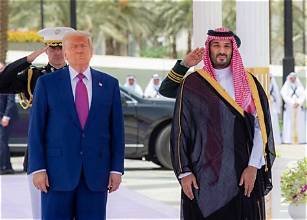
Reports indicate that the Donald Trump administration has been reluctant to become directly involved in another open-ended military front, while providing limited intelligence and targeting assistance.
This creates a fundamental strategic gap.
Saudi Arabia wants Washington to function as a security guarantor, while Washington seeks to avoid assuming the cost of an open-ended regional war.
That gap could become one of the most important determinants of Saudi foreign and security policy in the coming period.
Seventh: Is Riyadh Looking for an Alternative to the U.S. Alliance?
The Saudi-Turkish-Pakistani defense agreement signed in Mecca in August 2026 should be understood within this broader context.
The agreement states that an armed attack against one of the three countries would be treated as an attack against all three, while expanding defense cooperation among them.
It would nevertheless be misleading to describe the agreement as a complete substitute for the American security partnership.
The United States possesses a broad network of military capabilities, intelligence assets, bases, and partnerships across the Gulf that neither Turkey nor Pakistan can independently replicate.
The agreement nevertheless carries considerable political significance because it reflects Saudi Arabia’s desire to diversify the sources of its deterrence.
More importantly, the agreement did not remain merely a political declaration. On August 31, the three countries’ foreign and defense ministries and military chiefs met and agreed on steps to institutionalize cooperation, including establishing a secretariat for the agreement in Saudi Arabia and expanding cooperation in defense industries, technology, and joint training.
This makes it more complicated to argue that the agreement has produced no practical results.
At the same time, fundamental questions remain:
Will the principle that “an attack on one is an attack on all” become a genuine military commitment?
Would Turkey or Pakistan participate in combat operations to defend Saudi Arabia if a major conflict erupted?
What mechanisms would govern decision-making?
And what are the limits of each country’s military obligations?
These questions, rather than the political language of the agreement alone, will determine its real strategic value.
Eighth: Turkey and Pakistan Are Important Partners, but Not Simple Substitutes
Turkey possesses advanced military and defense-industrial capabilities, as well as considerable experience in the use of drones and defense technologies.
Pakistan, meanwhile, has substantial military capabilities, is a nuclear-armed state, and maintains longstanding defense relations with Saudi Arabia.
Yet the interests of the three countries are not identical.
Turkey seeks to preserve its strategic autonomy and balance relations with Iran, Russia, the United States, and the Gulf states.
Pakistan, for its part, has its own strategic calculations and is unlikely to want to become embroiled in an open-ended confrontation with Iran, particularly given its geography and security considerations.
The value of the trilateral arrangement therefore lies primarily in political deterrence, defense coordination, and diversification of strategic partnerships, rather than in functioning as an automatic military alliance comparable to NATO.
Ninth: The Israeli Dimension Is Both a Security and Political Issue
One of the most sensitive elements of the crisis is the possibility that Saudi Arabia could, directly or indirectly, seek Israeli intelligence or security assistance in confronting the Houthi threat.
Even if such cooperation remained limited or indirect, reports of such contacts could carry political costs for Riyadh.
Saudi Arabia is not simply another Gulf state within the Islamic regional system. It hosts Mecca and Medina, and its leadership formally carries the title of Custodian of the Two Holy Mosques.
Relations with Israel therefore have a symbolic dimension that goes beyond conventional foreign policy.
Yet this issue should not be exaggerated into an immediate crisis of regime legitimacy.
Under Mohammed bin Salman, Saudi foreign policy has already undergone significant transformation and has become more pragmatic in managing international relationships.
Saudi society is also not politically homogeneous.
A younger generation has benefited from recent social and economic reforms, while conservative constituencies and other social and political segments hold differing views toward Israel and the Palestinian issue.
The real political risk is therefore not simply “seeking Israeli assistance,” but how such cooperation is perceived and managed within Saudi society and the wider Muslim world.
Tenth: A Legitimacy Challenge Is Not the Same as a Regime Crisis
The current developments raise questions about the legitimacy of Mohammed bin Salman’s rule, but it is important to distinguish between “legitimacy pressure” and an actual threat to regime survival.
Since consolidating power, Mohammed bin Salman has built a highly centralized decision-making structure within the Saudi state.
Competing centers of influence within the royal family have seen their ability to operate independently reduced, while the relationship between the state and the religious establishment has been reshaped and political or social opposition has faced strong security and legal constraints.
At the same time, the government has benefited from a significant social base of support, particularly among segments of the younger population, due to social changes, expanded entertainment and employment opportunities, and the easing of some previous social restrictions.
There are therefore insufficient grounds to argue that the current external crisis threatens the Saudi state with collapse.
But highly centralized systems face a different vulnerability: the more power is concentrated at the top, the more the political cost of failure becomes concentrated there as well.
If the leadership successfully contains the crisis, centralization becomes an asset.
If military, economic, and political failures accumulate, however, that same centralization can become a liability.
Eleventh: The Royal Family — A Potential Risk, Not an Open Crisis
One of the most sensitive internal variables remains the royal family.
Saudi Arabia is not a competitive political system in the conventional sense. It is a monarchy whose stability depends partly on managing balances within the ruling family.
Mohammed bin Salman’s rise has profoundly reshaped those balances.
That does not mean there is currently an open internal conflict within the royal family.
A more accurate assessment is that the possibility of elite tensions generally increases when a centralized leadership faces a prolonged crisis.
If Saudi Arabia succeeds in containing the current crisis, centralized decision-making is likely to remain a source of strength.
If the war becomes a prolonged drain on resources, however, and if its financial and military costs increase while the leadership’s ability to present itself as the guarantor of Saudi security weakens, elite calculations could gradually change.
This remains a potential future scenario, not an established reality.
Twelfth: Sectarian and Eastern Province Dynamics
The Eastern Province, including Saudi Arabia’s Shiite communities, represents another issue that could become more sensitive if regional tensions escalate.
It is important, however, to distinguish between the existence of grievances or social tensions and the emergence of an organized security threat.
The Saudi state retains powerful security tools and has previously managed to contain significant episodes of unrest.
The danger would increase if external actors—particularly Iran or groups linked to it—attempted to exploit perceptions of discrimination or marginalization and convert them into political or security networks.
At that point, the conflict could begin to penetrate Saudi Arabia indirectly rather than remaining confined to its southern border.
Thirteenth: The Tribal Dimension Along the Border
Tribal networks become particularly significant because of the social and geographic nature of the Saudi-Yemeni frontier.
Tribal and social networks extend across both sides of the border, giving the conflict the potential to transcend formal political boundaries.
The Houthis may seek to exploit some of these networks, particularly if the war continues, trade routes remain closed, and local sources of income deteriorate.
But this factor should not be overstated.
Border tribes are not a unified political bloc, and their loyalties are influenced by economic, security, and local interests as much as by ideology.
The more realistic danger is therefore not a wholesale “tribal revolt” against the Saudi state, but the transformation of border regions into increasingly complex security and economic environments.
Fourteenth: Yemen Is Becoming a Node in the Wider Regional Conflict
The developments cannot be understood independently of the broader confrontation involving Iran, the United States, and their respective partners.
The Houthis are not operating in a strategic vacuum. Over recent years, the group has become an important component of Iran’s regional network of influence, even while retaining a degree of autonomy in its decision-making.
By controlling or threatening areas near Bab al-Mandeb, the group can influence one of the world’s most important maritime corridors.
This gives the Houthis leverage extending beyond Yemen.
The message is directed not only at Saudi Arabia, but also at the United States, Israel, the Gulf states, and global markets.
The higher the cost of maritime transport becomes, the more Yemen becomes part of the international energy equation.
Fifteenth: Why Has Bab al-Mandeb Become More Dangerous?
The strategic significance of Bab al-Mandeb lies in its status as one of the world’s major maritime chokepoints.
Its importance is derived not only from the volume of trade passing through it, but also from the difficulty of finding an equivalent alternative in terms of time and cost.
Diverting vessels away from the Red Sea generally means sailing around the Cape of Good Hope, adding distance, time, fuel costs, and insurance expenses.
Control or threat of areas around Bab al-Mandeb therefore gives the Houthis the ability to affect the global economy without possessing a conventional navy.
That is the essence of the location’s geopolitical power.
Sixteenth: The Simultaneous Pressure on Hormuz and Bab al-Mandeb Is the Most Dangerous Scenario
If the threat were limited to Bab al-Mandeb, Saudi Arabia could redistribute a larger share of its exports through alternative routes.
If the threat were confined to Hormuz, the East-West pipeline and Yanbu would provide a degree of strategic protection.
But the combination changes the equation.
Unstable Hormuz + threatened Bab al-Mandeb + disruption of the Saudi alternative pipeline = a narrowing of Riyadh’s strategic room for maneuver.
This is what makes the current crisis more dangerous than an isolated attack on a single oil facility.
The problem is not the loss of one piece of infrastructure. It is the simultaneous pressure being placed on several links in the energy chain.
Seventeenth: Saudi Arabia Still Possesses Major Sources of Strength
Despite the seriousness of the situation, it would be a mistake to portray Saudi Arabia as a state on the verge of collapse.
The kingdom still possesses:
- substantial financial reserves and assets;
- Saudi Aramco, one of the world’s largest energy companies;
- extensive oil infrastructure;
- advanced military capabilities;
- a broad network of international relationships;
- significant religious influence;
- a central role in the global economy;
- major defense and security spending capacity;
- strategic relationships with the United States, China, Turkey, Pakistan, and others.
Moreover, higher oil prices resulting from geopolitical risks could partially offset the financial impact of lower export volumes.
Brent crude has risen above $109 per barrel amid concerns over supply disruptions.
The economic effects of the crisis are therefore not linear.
Higher risks hurt Saudi export volumes on one side, but they can increase the value of every barrel that the kingdom manages to export on the other.
Eighteenth: The Real Risk Is Attrition, Not Collapse
The most realistic scenario is not the collapse of the Saudi state, but gradual strategic and economic attrition.
A prolonged war means:
- higher military spending;
- increased costs of protecting infrastructure;
- higher shipping and insurance costs;
- potential investment delays;
- greater domestic security expenditure;
- possible delays to some Vision 2030 projects;
- greater pressure to maintain social and economic spending to contain internal tensions.
If these factors persist for several years, the question will not simply be whether Saudi Arabia can afford the crisis, but what the cost of enduring it will be.
Nineteenth: Can Vision 2030 Withstand a Prolonged Regional War?
Vision 2030 is based in part on the idea that Saudi Arabia can use current energy revenues to finance a transition toward a more diversified economy.
A prolonged regional war, however, redirects resources toward security.
This creates a strategic paradox.
The greater the regional risks, the more Saudi Arabia must invest in defense and security.
The more security spending increases, the harder it becomes to maintain the same pace of investment in economic transformation.
But the crisis does not automatically imply the failure of Vision 2030.
Saudi Arabia still has substantial financial tools, and some projects can be rescheduled without being abandoned.
The central problem will be opportunity cost: what could Saudi Arabia have done with resources that are instead being diverted toward managing a prolonged war?
Twentieth: The Alliance Crisis May Matter More Than the Scale of the Attacks
Perhaps the most important political message of the current crisis is that Saudi Arabia is discovering the limits of reliance on external partners.
The United States does not necessarily want to fight every war Riyadh fights.
Turkey and Pakistan have signed a defense agreement with Saudi Arabia, but the practical value of that commitment has not yet been tested through a major military confrontation.
Other Gulf states are also facing their own security pressures.
Riyadh therefore faces a fundamental strategic question:
If Saudi Arabia were subjected to a major attack, who would actually fight alongside it?
This question matters more than the number of agreements that have been signed.
Twenty-First: The Trilateral Agreement Could Mark the Beginning of a New Security Framework
Nevertheless, the Mecca agreement should not be dismissed.
It may represent the beginning of a transition from Saudi Arabia’s heavy reliance on the American security umbrella toward a more diversified security model involving multiple partners.
The three countries have already begun institutional steps to implement the agreement, including the creation of a joint secretariat and expanded cooperation in defense industries, technology, and training.
If this process continues, the agreement could evolve from a political framework into a more coherent regional security structure.
But that will take time.
And time is precisely the resource that may be in short supply amid a rapidly escalating
Most read




Read also