The Middle East Conflict Between Washington and Tehran: A War Expanding Without a Path to Victory

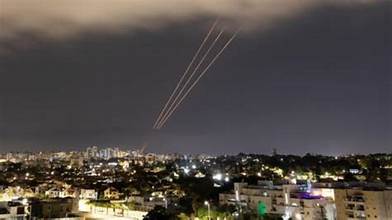
Every war ultimately revolves around a central question that defines both its meaning and direction: what does victory look like? In the escalating confrontation between the United States and Israel on one side, and Iran on the other, the answer appears more complicated than ever. While the discourse in Washington, D.C. and Jerusalem is framed around dismantling Iran’s nuclear capabilities, weakening Tehran’s regional influence, and perhaps forcing political change within the regime, the definition of victory in Tehran is far simpler and more realistic: survival, and preventing its adversaries from achieving their objectives.
This gap in the definition of victory is not a theoretical detail; it is the key to understanding the conflict itself. In asymmetric wars, the militarily stronger side does not always prevail. Often, the advantage lies with the side that requires less in order to claim success. By that measure, Iran occupies a stronger position than conventional balances of power might suggest. It does not need to defeat the United States or Israel. It merely needs to endure, obstruct its opponents’ plans, and raise the cost of war.
There is little dispute that the United States and Israel retain overwhelming military superiority in terms of technology, air power, intelligence, and precision long-range strike capability. They have demonstrated this repeatedly through operations targeting facilities, commanders, and strategic infrastructure. Yet recent experience has also shown that tactical military success does not necessarily translate into political success. The Iranian state has not collapsed, the system has not fractured, and Tehran’s regional and military networks remain intact. Most importantly, Iran has preserved its core strengths: adaptability, institutional depth, and the ability to sustain a long conflict.
Here lies one of the West’s central strategic miscalculations. Washington often approaches Iran as an adversary that can be compelled through sanctions, calibrated strikes, and sustained pressure, assuming that greater force will produce greater concessions. But Iran does not fight according to that logic. It is not seeking a conventional military confrontation. Rather, it seeks to exhaust its opponents, complicate their objectives, and prolong the conflict until the cost of continued pressure exceeds the cost of stepping back.
For this reason, the battlefield is not confined to Iranian territory. It extends into maritime corridors, energy markets, and regional alliance structures. Tensions in the Strait of Hormuz are not incidental episodes; they are strategic pressure tools. The narrow waterway, through which a substantial share of global oil trade passes, gives Tehran indirect leverage over the international economy even without entering open war.
Iran’s strategy is therefore less about dominance than entanglement. It does not require battlefield superiority if it can draw its adversaries into a conflict too expensive to win and too complex to conclude. This model of warfare has become increasingly familiar in the twenty-first century, where conventional military power often proves insufficient against an opponent relying on time, geography, and asymmetric networks.
When wars begin to stagnate, the instinct of major powers is usually escalation: more airstrikes, broader attacks on infrastructure, and eventually discussion of direct ground intervention. Yet such options carry immense strategic risks. Iran is not a passive target. It has repeatedly demonstrated a willingness to retaliate across the region, whether against interests or installations in Saudi Arabia, United Arab Emirates, Qatar, Bahrain, Kuwait, or Oman, as well as theaters such as Iraq and Jordan.
Any serious escalation against Iranian infrastructure would therefore be unlikely to remain contained within Iran’s borders. It could rapidly evolve into a wider regional conflict affecting energy security, maritime commerce, and the political stability of Gulf and Levant states. This helps explain the caution often visible in Washington, even at moments of peak tension.
Another less discussed but equally important factor is the limit of military capacity itself. Prolonged wars deplete missile inventories, strain defense supply chains, and raise the financial cost of sustained operations. The question is no longer simply whether Washington is willing to escalate, but whether it is prepared to sustain the operational and economic burden of another open-ended war.
In this context, repeated pauses and ceasefires are better understood as signs of unresolved conflict rather than genuine progress. Every truce extension may indicate not movement toward peace, but recognition that the alternative is worse. For Washington, a large-scale regional war or a global economic shock would be extremely costly scenarios. For Tehran, time itself creates leverage and strengthens its ability to endure.
Time, in this conflict, is not neutral. The longer the confrontation continues, the greater the pressure on energy markets, the weaker market confidence becomes, the higher insurance and shipping costs rise, and the more vulnerable global supply chains become. What began as a regional crisis could gradually evolve into a broader international economic shock.
From a purely military perspective, the advantage still clearly belongs to the United States and Israel. But wars are not measured only by the quantity of force. They are measured by whether that force can produce sustainable political outcomes. On that crucial point, Iran appears stronger than conventional metrics suggest. It has set a lower threshold for success, demonstrated greater tolerance for pressure, and shown that it can impose costs on its adversaries beyond the battlefield.
This leads to the heart of the matter: if victory means subduing Iran or fundamentally reshaping its strategic posture, that objective appears increasingly unattainable. What may be realistically achievable is managing the conflict, containing its expansion, and shaping its limits—not ending it decisively.
The real danger lies not only in the prospect of defeat, but in the persistent belief that more pressure, more time, or one additional round of escalation will somehow produce a different result. If that assumption is false, then the region is not facing a war on the verge of resolution, but one that may be inherently unwinnable.
The Middle East, in that sense, may be entering a new era of conflict: wars that do not end in victory, but continue because they have not been lost; wars that are managed because they cannot be solved; wars that are extended because prolongation appears less costly than resolution. In short, a conflict without a visible end.
Most read