
The Middle East After the War: Reshaping the Regional Order or Dismantling Its Rules?

Talk of a “reshaping of the Middle East” is hardly new. The concept emerged early after the Oslo Accords, when Shimon Peres advanced a vision of a new region built around economic interests and regional cooperation rather than conflict. The term returned to the forefront during the 2006 Lebanon War, when then-U.S. Secretary of State Condoleezza Rice spoke of the “birth pangs of a new Middle East.”
Yet the Middle East now being described as undergoing transformation is fundamentally different from those earlier visions. The issue is no longer centered on peace initiatives or economic integration, but on the redistribution of power under the pressure of war, shifting alliances, declining centers of influence, and the emergence of new ones. Whereas the projects of the 1990s assumed that economic cooperation could provide a pathway toward rebuilding the region, recent developments suggest that military power, security capabilities, and strategic geography have become the principal forces shaping regional change.
From the Gaza War to a Struggle Over the Regional Order
Since October 7, 2023, the confrontation has no longer been confined to the Gaza Strip. Its repercussions have spread to Lebanon, Syria, Yemen, and the Red Sea, before the indirect confrontation between Israel and Iran escalated into a more direct conflict involving the United States.
It has therefore become increasingly difficult to view these developments as a series of separate crises. What is unfolding is an interconnected struggle involving Israeli, Iranian, American, Turkish, and Gulf calculations, alongside the roles played by local armed groups.
The question is no longer simply who will prevail in one confrontation or another. It has become broader: Who possesses the capacity to deter? Who can control strategic waterways? And who can influence the future of states in which authority is divided among official institutions, armed organizations, and external powers?
These questions reveal that the current conflict extends beyond military fronts into a struggle over the rules of the regional order itself.
The Decline of Iranian Influence Does Not Mean the End of Its Disruptive Capacity
One of the most significant transformations produced by the war has been the weakening of the Iranian axis compared with its position in previous years. Hamas and Hezbollah have suffered severe blows, while the fall of Bashar al-Assad’s government removed a geographically and politically important link in Iran’s regional network of influence. At the same time, the confrontation has reached Iranian territory itself.
Yet reducing the picture to a decline in Iranian influence would be misleading. A diminished ability to manage an alliance network does not necessarily mean the loss of the ability to disrupt the strategies of its adversaries.
Iran still possesses significant strategic assets, most notably its geographic position around the Strait of Hormuz and its network of relationships with armed groups across the region, in addition to the ability of these groups to affect maritime traffic, energy flows, and regional security.
Developments around Hormuz, together with continuing threats linked to the Red Sea and Bab el-Mandeb, demonstrate that Tehran and its allies remain capable of imposing substantial costs on their adversaries despite the weakening of some of their traditional instruments of influence.
This makes it important to distinguish between influence and disruptive capacity. A state may lose part of its ability to shape stable political arrangements while retaining considerable capacity to prevent its adversaries from achieving their objectives easily.
Israel: Military Superiority Without Equivalent Political Influence
At the same time, Israel’s freedom of military action has expanded significantly. Israel has demonstrated its ability to conduct large-scale operations, destroy strategic facilities, target military and political leaders, and impose security arrangements on the ground across multiple theaters.
But military superiority does not automatically translate into the ability to construct an alternative political order.
The ability to destroy a military infrastructure does not necessarily mean the ability to establish a legitimate and stable authority in Gaza. Weakening Hezbollah alone is not sufficient to build a Lebanese state capable of monopolizing the use of force. Nor do strikes against Iran guarantee a long-term change in its behavior or eliminate its ability to rebuild its deterrent capabilities.
This reveals one of the central paradoxes of the current phase: Israel has become more capable of using force, but it does not necessarily possess the political capacity to transform military gains into a stable regional order that serves its long-term interests.
Military power can create new realities, but it cannot by itself produce political legitimacy, guarantee regional acceptance, or resolve questions concerning governance, reconstruction, and future security arrangements.
New Regional Powers in an Increasingly Complex Equation
Meanwhile, regional transformation is not being shaped by Israel and Iran alone. Turkey is seeking to expand its presence in Syria and the wider Levant, while the Gulf states are diversifying their security and strategic partnerships and seeking greater independence from exclusive reliance on the American security umbrella.
Other countries, including Pakistan, are also becoming more visible in regional deterrence and security calculations. At the same time, middle powers are gaining greater room for maneuver, allowing them to operate between competing blocs rather than align completely with a single camp.
This shift reflects a gradual movement away from a regional model based on clearly defined blocs toward a more fluid system in which economic, security, and military interests overlap. A state may cooperate with Washington on one issue, coordinate with Beijing or Moscow on another, and maintain channels of communication with the adversaries of its partners.
The Middle East is therefore becoming less reducible to a binary confrontation between “Israel and Iran” or between “the United States and the resistance axis,” and increasingly resembles a multipolar regional system characterized by shifting arrangements.
Maritime Corridors Are Becoming Instruments of Power
One of the clearest signs of this transformation is that maritime corridors are no longer merely infrastructure for global trade. They have become a direct component of the regional power struggle.
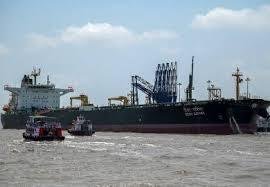
The Strait of Hormuz, Bab el-Mandeb, and the Suez Canal constitute strategic chokepoints linking Middle Eastern security to global energy flows and commercial traffic. Any prolonged disruption of these routes affects not only the countries surrounding them, but also energy prices, supply chains, inflation, and international trade.
This means that control over geography is no longer limited to possessing territory or securing land borders. The ability to threaten trade and energy routes has itself become a form of strategic influence that states and non-state actors can use in managing conflict.
From this perspective, the Red Sea and the Arabian Gulf are no longer secondary theaters of confrontation. They have become integral to the core regional equation.
Are We Witnessing a New Middle East?
If by “reshaping the Middle East” we mean changes in the balance of power, alliances, and the roles of regional actors, then the transformation is already clearly underway. But if the term implies that a new and fully established regional order has emerged, such a conclusion would be premature.
There is still no decisive victor capable of imposing its rules across the region. The Palestinian issue remains without a final political settlement, the future relationship between Israel and Iran remains unresolved, and Syria, Lebanon, and Yemen continue to represent open arenas with multiple possible outcomes.
Moreover, the weakening of one actor does not automatically mean the rise of another. The vacuums created by war can become new arenas of competition rather than evolving into stable zones of influence.
The more accurate description of the current phase may therefore be that the Middle East is undergoing a redistribution of power rather than completing the construction of a new regional order.
Toward a Multipolar Regional Order
The most likely trajectory is toward a multipolar Middle East that is more heavily armed and less predictable.
Israel will remain one of the region’s strongest military powers, but it will face political limits in translating military superiority into stable regional arrangements. Iran may be weaker than it once was in some of its traditional areas of influence, but it will retain capabilities that allow it to disrupt regional calculations and raise the costs of efforts to isolate or marginalize it.
Turkey and the Gulf states, meanwhile, are likely to continue expanding their roles—not only as economic powers but also as increasingly autonomous actors in shaping the region’s political and security calculations.
The United States, for its part, will remain the most influential external power in the Middle East, but the nature of its presence may change. The issue is no longer simply the scale of American power, but the extent to which its allies trust Washington to use that power to protect them in every crisis and under the conditions they expect.
Dismantling the Old Order Before Building a New One
Ultimately, it may be more accurate to say that the Middle East is currently experiencing the dismantling of the rules of the old regional order rather than the stabilization of a new one.
The war has redefined the concept of deterrence, increased the strategic importance of maritime corridors, weakened some networks of influence, encouraged regional powers to diversify their alliances, and elevated military and security capabilities as key determinants of the regional balance of power.
But redistributing power does not necessarily mean rebuilding the regional order.
The more important question, therefore, is no longer whether the Middle East is being reshaped. That process is already taking place to varying degrees. The more consequential question is who will participate in shaping the next regional order, who will possess the ability to influence its rules, and who will be left merely to bear the costs of transformations decided by others.
What ultimately takes shape in the region will not be determined by military power alone. It will also depend on the ability to convert power into sustainable political arrangements.
That is the struggle that has yet to be decided.
Most read