The Great Victory Day
Russia is observing a three-day truce in the war in Ukraine to commemorate the eighty-first anniversary of the “Great Victory” over Nazi Germany at the end of World War II. Yet behind the atmosphere of celebration lies a stark reality: Moscow has been unable to decisively conclude its war with Ukraine after five years of fighting against its smaller neighbor.
Vladimir Putin rescued Russia from collapse following the fall of the Soviet Union, but he has not succeeded in restoring the country to the rank of great powers it once occupied. In the past, Moscow maintained military bases across the world, enjoyed the support of communist parties, and cultivated extensive military and economic alliances. Today, however, Russia has been forced to shut down its base in Kidal, deep in the deserts of Mali, only three years after its establishment. Meanwhile, the Hmeimim airbase in Syria — once a symbol of Russian influence and expansion — has increasingly assumed what officials describe as a “humanitarian character.” Even the seasoned Foreign Minister Sergey Lavrov could offer Russia’s ally Iran in its confrontation with the United States little more than expressions of support — and a few diplomatic courtesies.
The Russia of the “Great Victory” now finds itself confronting a reality far removed from the grandeur of its past. In its competition with the West, the United States far surpasses it in nearly every domain except nuclear armament. To the east, meanwhile, the rising Chinese giant has rendered comparisons increasingly difficult.
In many contemporary indicators, Russia is now categorized as a middle-ranking power. Yet how can one ask Russians to forget that they are descendants of both Peter the Great and Vladimir Lenin? However accurate such classifications may be, it remains a humiliating notion to describe the country of Vladimir Vladimirovich Putin as merely “middle-tier,” particularly when it remains the world’s second-largest oil producer. After all, is it not Russia that manufactures the Sukhoi Su-57, its answer to the American F-35 stealth fighter?
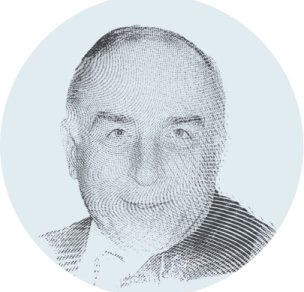
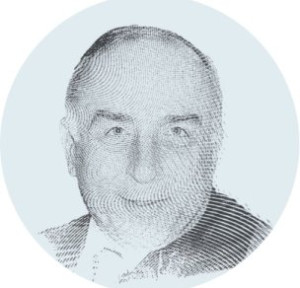
Former German Chancellor Helmut Schmidt once remarked sarcastically: “Russia is Upper Volta with missiles.”
For Russians, Victory Day has always been both a military and a national occasion. Few peoples suffered as the Russians did in confronting Nazi Germany. Those were truly brutal wars.
Most read

Read also