Southern Lebanon Between Withdrawal and Border Reshaping

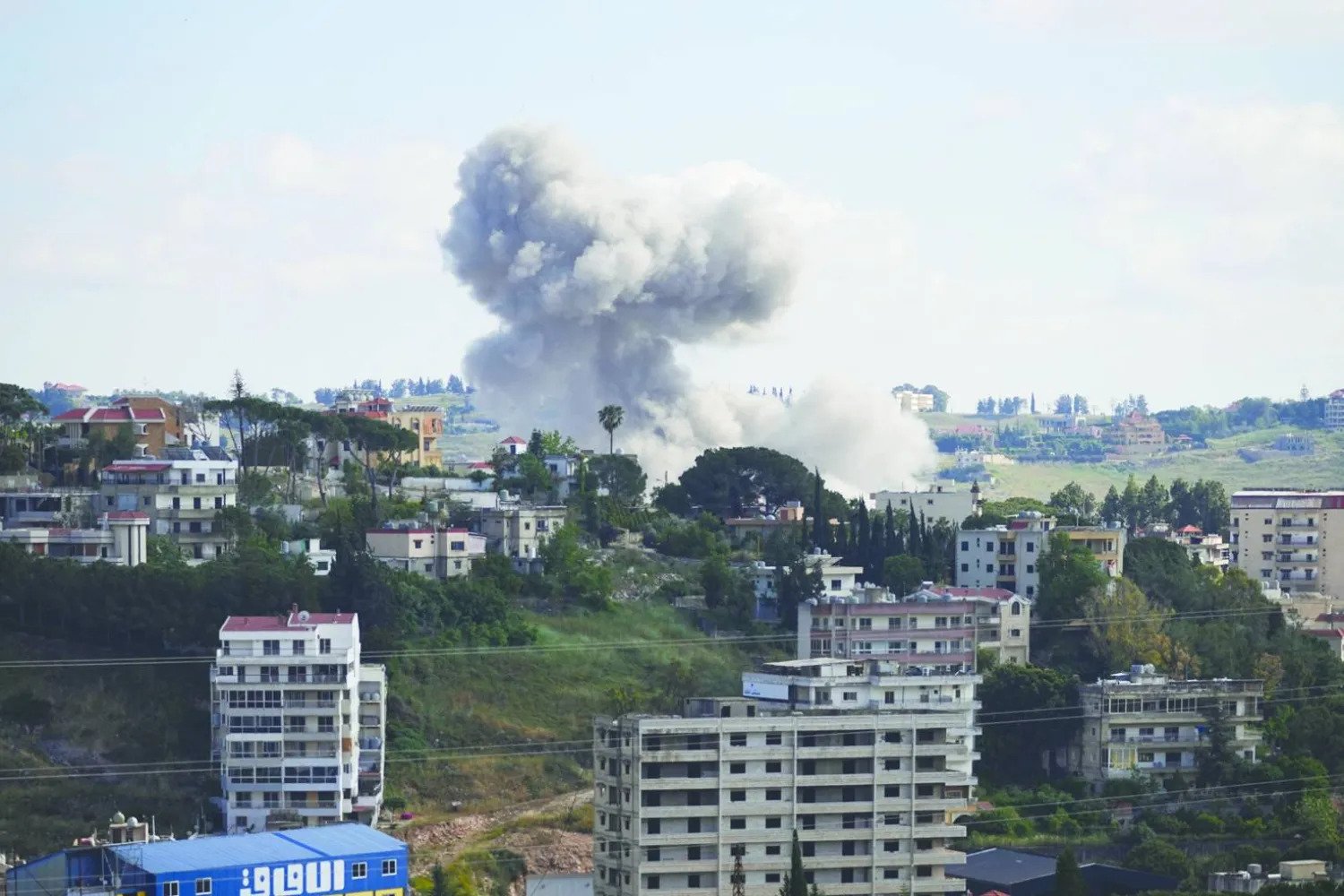
Israel’s withdrawal from southern Lebanon is no longer simply a question of when Israeli forces will leave Lebanese territory. It has become part of a broader struggle over the nature of the security environment that will emerge along the border between the two countries. While Lebanon insists on an Israeli withdrawal from territories it considers occupied, Israel appears increasingly focused on reshaping the military landscape in ways that would, before any potential withdrawal, limit Hezbollah’s ability to use southern Lebanon as a platform for surveillance, support, or attacks.
Against this backdrop, Israeli operations around several strategic highlands in southern Lebanon carry significance that goes beyond their immediate geographic value. The pattern emerging on the ground suggests that Israel may be developing a security approach based on controlling key strategic points rather than occupying a continuous geographic strip. If confirmed, such a shift would have significant military and political implications for the future of the border.
There is, so far, insufficient evidence to speak of an officially declared Israeli “high-ground belt” doctrine. Yet the pattern of operations and the focus on locations such as the Shiaf, Zawtar, and Ali al-Taher highlands support the hypothesis that Israel is prioritizing positions that provide greater surveillance and fire-control capabilities and allow it to influence a wider geographic area than the territory it physically occupies.
From Occupying a Strip to Controlling Key Strategic Points
If confirmed, this shift would represent an important change in the way Israel approaches the geography of southern Lebanon. Controlling a broad border strip requires the Israeli military to maintain a continuous deployment, secure supply routes, protect its forces, and bear a high human and military cost. By contrast, controlling a limited number of strategic highlands and key positions could allow Israel to achieve some of the same security objectives at a relatively lower cost.
The military importance of high ground lies in its very geography. Elevated positions provide wider fields of observation, enable the monitoring of movements in surrounding areas, and can offer forces positioned there greater control over fire. The struggle over these locations, therefore, is not necessarily about the land itself, but about the military function that the terrain provides.
The Ali al-Taher highlands stand out in this context as an important test case. Their location and commanding position over Nabatieh and surrounding areas give them military value that extends beyond their geographic size. Continued Israeli pressure on the area can therefore be interpreted as part of an effort to prevent Hezbollah from retaining positions that could provide surveillance, command, or logistical support capabilities.
This does not necessarily mean that Israel seeks to occupy every summit or establish a permanent military presence on each of them. The military equation is more complicated than that. The objective may instead be to deny Hezbollah the ability to use these strategic points, either through direct control or through security arrangements that prevent their return to military use.
This raises a crucial political question: the future dispute may not be simply about an Israeli withdrawal from southern Lebanon, but about who fills the vacuum left by that withdrawal.
Israeli Security Versus Lebanese Sovereignty
The central dilemma is that what Israel considers a security necessity may be viewed by Lebanon as a direct violation of its sovereignty.
Lebanon starts from a clear premise: Lebanese territory must remain under Lebanese sovereignty, and any Israeli military presence constitutes a continuation of occupation, regardless of the security justifications offered by Israel.
Israel, by contrast, operates according to a different logic: withdrawal cannot be separated from guarantees that Lebanese territory will not once again be used against Israeli settlements and population centers.
The result is a clash between two different concepts of security and sovereignty. Lebanon seeks a withdrawal that restores its sovereignty over its territory, while Israel wants, before or alongside any withdrawal, arrangements that prevent Hezbollah from rebuilding its military capabilities close to the border.
This gap is precisely what makes the negotiations more complicated than simply drawing a line on a map.
Why Is a Repeat of the 2000 Withdrawal Difficult?
Comparisons with the 2000 withdrawal are based on the fact that Israel ended its direct military presence across most of southern Lebanon without a bilateral agreement with the Lebanese government. Yet the circumstances that produced that withdrawal no longer exist in the same form.
In 2000, the Israeli decision was closely tied to domestic considerations, most notably the growing cost of maintaining a military presence in Lebanon, the human losses involved, and the political debate inside Israel over the value of continuing the occupation.
The withdrawal was therefore, to a significant extent, an Israeli decision to reassess the cost of remaining in Lebanon.
Today, however, Israel views southern Lebanon through a very different lens. The war with Hezbollah and the accumulation of its missile capabilities and military infrastructure have made the northern border a central component of Israeli national security calculations.
The Israeli question is therefore no longer simply: “Should we remain in Lebanon or withdraw?” It is closer to: “How can we withdraw without recreating the conditions that allowed a military threat to emerge on our border?”
That is a fundamental difference in the logic behind the decision.
2006: When Withdrawal Became Part of an International Arrangement
The 2006 experience was different as well. The cessation of the war emerged from intensive international diplomacy and culminated in UN Security Council Resolution 1701, which established a new political and security framework for southern Lebanon, including an enhanced role for the United Nations and the Lebanese Army.
But the environment that produced the 2006 arrangements has changed considerably.
The United Nations remains present, but its ability to impose or facilitate a new political settlement does not appear comparable to what it was in the aftermath of the 2006 war. At the same time, the United States has become the most influential actor in relation to Israel, making any future understanding more dependent on U.S.-Israeli calculations than solely on international mechanisms.
This leaves Lebanon facing a difficult equation: the international framework that helped organize the post-2006 phase is no longer, by itself, capable of producing a new settlement.
Israel Is Not Necessarily Rejecting Withdrawal — It Is Seeking Different Conditions for It
It would be misleading to reduce Israel’s current position simply to “opposition to withdrawal.” The current indications may instead point toward an effort to redefine the conditions under which withdrawal would take place.
Israel may accept, under political or American pressure, the principle of withdrawing from parts of Lebanese territory while simultaneously seeking to retain leverage on the ground that would allow it to influence the security arrangements that follow.
From this perspective, the focus on highlands and key strategic positions can be understood as both a military objective and a negotiating instrument.
The more Israel retains positions of strategic value, the greater its leverage in negotiating the arrangements that would follow any withdrawal. Lebanon, meanwhile, seeks to use American and international pressure to prevent temporary Israeli measures from becoming a permanent reality.
Geography thus becomes a negotiating tool.
The Problem of the Israeli “Line”
Another problem concerns the nature of any new security line Israel may attempt to establish on the ground.
If the objective is to create a buffer zone or push potential threats farther away from Israeli settlements, Israel may regard control of the highlands opposite its communities as an effective way of achieving that goal.
From the Lebanese perspective, however, any line extending beyond internationally recognized boundaries would amount to a de facto seizure of Lebanese territory, even if the occupation were neither comprehensive nor permanent.
The issue, therefore, is not simply the length of the line, but its legitimacy and function.
Is it a temporary military line?
A security zone?
A new reality on the ground?
Or a negotiating instrument that will eventually be incorporated into an agreement?
The answers to these questions will matter more than the number of kilometers separating Israeli forces from the border.
The Military Cost May Prevent Israel from Going Too Far
Despite the importance of the highlands to Israel, controlling them would not be an easy undertaking. Moving from air and artillery strikes to sustained ground control imposes a very different cost.
Terrain that provides an advantage to an attacking force can simultaneously become difficult defensive ground. Every advance requires securing troops and supply lines while confronting the possibility of continued operations behind Israeli lines.
This creates a fundamental paradox: the more Israel seeks to transform geographic superiority into permanent military control, the higher the cost of achieving it becomes.
The more realistic option may therefore be to use military force to reshape the security environment in southern Lebanon and then turn the resulting battlefield conditions into negotiating leverage, rather than assuming the burden of a permanent occupation.
This explains the importance of time.
Time as a Negotiating Weapon
Amid uncertainty over the terms of a settlement, time is not merely a period of waiting for Israel. It can be a tool for improving its negotiating position.
Maintaining a military presence allows Israel to alter conditions on the ground before any final agreement is reached. The more the facts on the ground change, the more difficult it becomes to restore the previous situation without offering political or security concessions.
Negotiations and military operations can therefore become parallel tracks rather than necessarily contradictory ones.
Israel may use negotiations to avoid the costs of an open-ended war while simultaneously using military pressure to improve its bargaining position. Lebanon, in turn, seeks to use American and international pressure to prevent temporary Israeli measures from becoming a permanent reality.
What Does This Mean for Lebanon?
Lebanon’s challenge is not limited to demanding an Israeli withdrawal. It also involves convincing international actors that any withdrawal must produce a sustainable security arrangement.
Returning to the previous status quo is not an easy option for Israel, while continued occupation is unacceptable to Lebanon.
Between these two positions, the Lebanese Army, international forces, the future of Hezbollah’s weapons, and border-monitoring arrangements all become interconnected elements of any future settlement.
This means that the withdrawal issue is unlikely to be resolved through a single decision. It will more likely require a package of understandings addressing who controls southern Lebanon, who monitors it, and what prevents the rebuilding of military capabilities there.
Ali al-Taher: A Test of the Postwar Landscape
Against this backdrop, the Ali al-Taher highlands appear to represent more than a military position. They are a test of a broader direction.
If Israeli attention remains limited to temporary military operations, the highlands may simply be battlefield objectives associated with the current phase of conflict.
But if control over Ali al-Taher and similar positions becomes a permanent element of future security arrangements, then the region could be witnessing a qualitative change in the concept of the Lebanese-Israeli border.
In that case, the “high-ground belt” would not merely be a geographic description, but a new security principle based on controlling a network of strategic points rather than occupying a continuous area.
If such a model takes shape, it would be more complicated than conventional occupation and potentially more difficult to resolve politically. It could allow Israel to maintain significant military influence without necessarily assuming the cost of occupying the entire border strip.
Between Withdrawal and Settlement
The most important lesson from the experiences of 2000 and 2006 is that Israeli withdrawal was not produced by a single factor in either case. In 2000, Israeli domestic calculations played a decisive role, while the 2006 withdrawal emerged within an international framework following the war.
The current phase, however, appears more complicated. Israel enters any negotiations from a different military position, Lebanon demands a full withdrawal, Hezbollah remains the most sensitive factor in Israeli security calculations, and the United States possesses exceptional influence over the negotiating process.
Expecting a repetition of either the 2000 or 2006 scenario may therefore be misleading.
The question today is not only when Israel will withdraw, but also who will guarantee that withdrawal does not recreate the threat that prompted Israel to remain — and who will ensure that Israeli security concerns do not become a justification for maintaining a permanent presence on Lebanese territory?
That is the real dilemma.
The future of southern Lebanon will therefore likely be determined not simply by the distance between Israeli forces and the border, but by the nature of the political and security arrangement governing the area after any withdrawal.
If negotiations succeed in transforming military control into mutually acceptable security arrangements, the highlands may ultimately become temporary bargaining chips.
If negotiations fail, however, these highlands could become the nucleus of a new border reality in which Israel has less need to occupy a broad strip and greater ability to influence southern Lebanon through a network of strategic positions.
This is precisely why the battle over Ali al-Taher matters: not because it alone will determine the future of southern Lebanon, but because it may reveal the direction in which Israel intends to redefine the security of its northern border in the period ahead.
Most read