Morocco’s New Political Test: Can the Elections Contain Growing Youth Discontent?

Introduction: An Election That Goes Beyond the Ballot Box
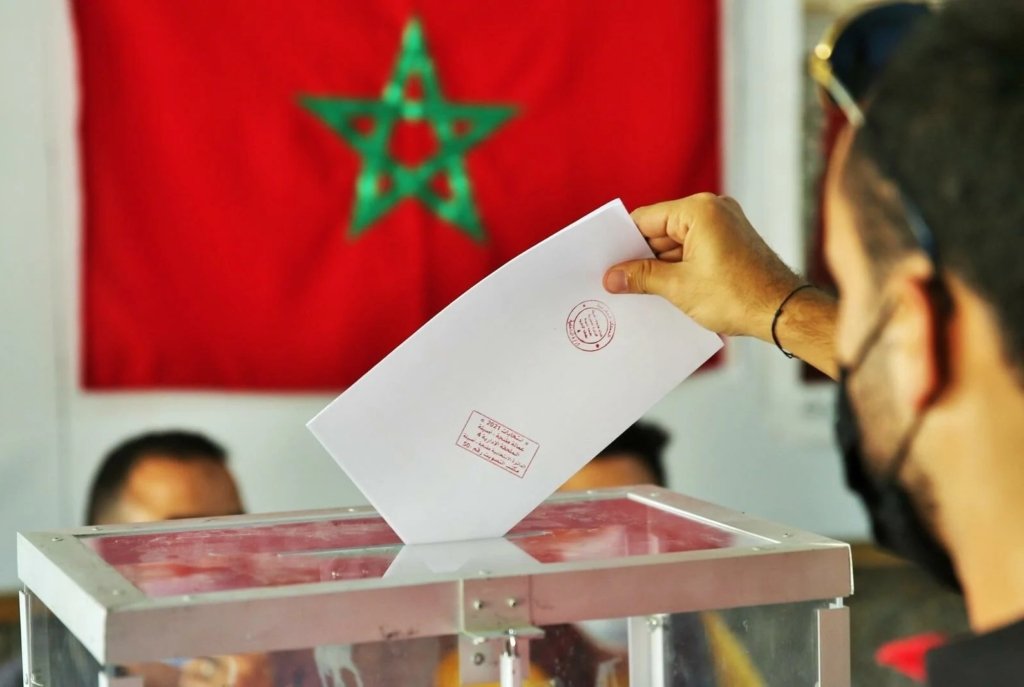
Moroccans are heading to the polls on September 23, 2026, to elect members of the House of Representatives in an election that, at first glance, appears to be part of the kingdom’s regular electoral cycle. A closer examination, however, reveals that the vote carries implications extending well beyond the redistribution of parliamentary seats or the formation of the next governing coalition.
The election comes at the intersection of three parallel developments: a growing crisis of trust between segments of the younger generation and political institutions; economic growth that has not translated sufficiently into employment opportunities and tangible improvements in public services; and a gradual transformation in the nature of political participation among a generation raised in a digital environment that does not necessarily regard political parties and parliament as the only channels for political expression.
The significance of the current election is heightened by the emergence of the “Gen Z 212” movement, which has expressed youth grievances over education, healthcare, employment opportunities, and social justice, while simultaneously raising a broader question about state priorities and the allocation of public resources.
The real question posed by the 2026 election is therefore not simply who will win the largest number of seats? It is whether Morocco’s political institutions can transform social discontent into political participation, or whether the gap between the state and younger generations will continue to widen.
First: Morocco Between Economic Success and a Distribution Crisis
One of the central paradoxes of Morocco’s current political landscape is the coexistence of positive economic indicators with growing perceptions that the tangible benefits of growth remain insufficiently distributed.
Over the past several years, Morocco has made significant progress in manufacturing, infrastructure, ports, railways, energy, and foreign investment. It has also strengthened its position as an industrial and logistics hub in North Africa.
The International Monetary Fund estimates that Morocco’s GDP grew by 4.9 percent in 2025 and projects growth of approximately 4.4 percent in 2026.
The political challenge, however, does not necessarily lie in the absence of economic growth. Rather, it lies in the relationship between growth and the distribution of its benefits.
When an economy expands while an educated young person remains unable to secure stable employment, works in a position below their qualifications, or believes that access to quality healthcare and education increasingly depends on the private sector, macroeconomic indicators become less convincing as evidence of improved living standards.
This is where the gap emerges between macroeconomic performance and individual perceptions of economic well-being.
The problem is not unique to Morocco, but it has particular political significance there because of the rising expectations of a young generation that is more globally connected and more capable of comparing its circumstances with those of other societies.
IMF data indicate that unemployment reached 13 percent in 2025, while unemployment among people aged 15–24 reached 37.3 percent. The share of young people who were neither employed nor enrolled in education or training stood at 25.2 percent in the third quarter of 2025.
The Moroccan challenge is therefore not simply a matter of “jobs.” It is a structural problem involving the transition from education to employment and from training to economic and social independence.
Second: A Younger Generation Is Changing the Political Equation
Perhaps the most important variable in the 2026 election is the generation entering public life with a weaker attachment to traditional forms of political participation.
The material underlying this analysis indicates that people aged 18–24 account for approximately 12 percent of Morocco’s population but represent only a limited share of registered voters.
This gap is not merely a statistical issue.
It reflects a deeper political possibility: a large generation in demographic terms may remain relatively underrepresented within the formal mechanisms through which political decisions are produced.
This generation is not necessarily politically apathetic, as low electoral participation might suggest.
On the contrary, it may be highly engaged with politics but less convinced that traditional political channels can translate that engagement into meaningful change.
This creates an important paradox:
Low youth electoral participation may reflect political engagement rather than its absence.
A young person who uses social media to discuss unemployment, education, healthcare, corruption, and public policy, participates in a protest campaign, or produces political content cannot simply be described as politically disengaged.
The deeper problem may be that this generation does not see a clear connection between such activity and the ballot box.
Third: “Gen Z 212” Is More Than a Protest over Public Services
The emergence of “Gen Z 212” represents an important development in understanding the relationship between young Moroccans and the state.
According to the source material, the movement emerged outside traditional party structures and relied on platforms such as TikTok, Instagram, Telegram, and Discord for mobilization and coordination.
This makes it fundamentally different from traditional protest movements that rely on identifiable leaders and established organizational structures.
The movement’s decentralized character is politically significant.
A traditional protest movement can be addressed through negotiations with its leadership, the incorporation of some of its demands, or the integration of its representatives into political institutions.
A decentralized network-based movement, by contrast, does not necessarily have a single political address with which authorities can negotiate.
The emergence of such movements therefore poses a different challenge to the state:
How can institutions engage with a political society that is increasingly organized through networks rather than parties?
This question extends beyond Morocco and reflects a broader global trend in which digital platforms can generate political mobilization faster than traditional institutions can respond.
Fourth: From “Where Are the Jobs?” to “Where Is the State?”
One of the most revealing slogans associated with Morocco’s youth protests has been the comparison between spending on stadiums and sports infrastructure and investment in healthcare and education.
The slogan, “The stadiums are there, but where are the hospitals?”, does not necessarily reject investment in sports as a national objective. Rather, it reflects a broader struggle over the prioritization of public resources.
This may become one of the most important political issues in the coming period.
Morocco is preparing to host major international sporting events, including the 2030 FIFA World Cup. These projects can generate investment, employment, tourism, infrastructure development, and international visibility.
But there is another side to the equation.
The larger the investments associated with the World Cup become, the greater the need to ensure that citizens do not feel that the state is capable of financing global-scale projects while remaining unable to resolve everyday problems.
The issue, therefore, is not simply whether stadiums should be built.
It is whether citizens can feel that a state capable of constructing a modern stadium is equally capable of providing a functioning hospital, a quality school, and meaningful employment opportunities.
This is a highly sensitive issue in public policy.
Political legitimacy based on economic performance is not built solely on investment volumes. It also depends on whether citizens can perceive the impact of that investment on their daily lives.
Fifth: Elections Alone Cannot Resolve the Crisis
It would be misleading to place responsibility for all of the problems revealed by the protests on the next parliament or government.
Morocco’s political system is a constitutional monarchy in which the king retains a central role in sovereign and strategic matters, while the government exercises executive authority and parliament performs legislative and oversight functions.
Under Article 47 of the Constitution, the king appoints the head of government from the political party that wins the largest number of seats in the House of Representatives. Yet the broader institutional structure means that executive power operates within a wider system of authority and decision-making.
Consequently, a change in the parliamentary composition does not automatically imply a comprehensive transformation in public policy or strategic state priorities.
This institutional reality is important for understanding youth frustration.
If voters believe that elections do not produce meaningful changes in the policies affecting their daily lives, their incentive to participate may decline.
The resulting crisis of confidence in parties, parliament, and government should therefore be understood not merely as a party-political problem, but as a crisis in the relationship between political representation and tangible outcomes.
Sixth: The Crisis of Political Parties Is More Complex Than Declining Popularity
Morocco’s political parties face a dual challenge.
On the one hand, they must convince voters that they have credible and implementable programs.
On the other, they must convince young people that parliament and government can actually produce meaningful change.
This helps explain why employment has become a central theme in the campaigns of major parties.
According to the source material, the National Rally of Independents (RNI) and the Authenticity and Modernity Party (PAM) have made youth employment a major campaign issue, with commitments to create one million jobs during the next parliamentary term. The governing coalition has also emphasized social protection, health insurance, education, infrastructure, and investment.
The problem is that electoral promises now confront citizens’ previous experience.
The larger the promises become without corresponding visible results, the less effective new promises may be in rebuilding trust.
The coming election will therefore test not only political programs, but also the credibility of implementation.
Seventh: The Justice and Development Party and the Test of Opposition
The Justice and Development Party (PJD) remains one of the most significant political competitors after suffering a dramatic collapse in the 2021 election, when its representation fell from 125 seats to only 13.
By contrast, the RNI won 102 seats, PAM secured 87, and the Istiqlal Party obtained 81. The three parties subsequently formed the governing coalition led by Prime Minister Aziz Akhannouch.
The PJD’s participation in the current election does not necessarily mean a return to its previous political position.
Nevertheless, its ability to recover part of its former electoral base would constitute an important indicator of the political mood.
Voters who punished the party in 2021 may reconsider their choices if they are dissatisfied with the performance of the current government.
At the same time, dissatisfaction with the government does not automatically translate into support for the opposition.
This distinction is crucial.
Punishment voting and positive support for a clear political alternative are not the same thing.
A voter may be dissatisfied with the government while remaining unconvinced by the opposition.
This is one of the central challenges facing Morocco’s party system.
Eighth: Al-Adl wal-Ihsan and the Politics of Boycott
The decision by the Al-Adl wal-Ihsan movement to boycott the election represents a different political path from electoral competition.
According to the source material, the movement argues that the structure of the party and electoral system limits parties’ ability to implement their programs and has therefore called for non-participation.
This raises an important political question:
Does electoral withdrawal increase pressure on the political system, or does it simply leave greater space for participating forces?
There is no single answer.
A boycott can serve as a mechanism for expressing political dissatisfaction, but it does not necessarily produce institutional representation for the demands being expressed.
In Morocco, the issue is further complicated by proportional representation and a fragmented party system, which make single-party government difficult.
The dispute raised by the movement is therefore not merely about elections. It concerns the relationship between elections and executive authority and the ability of a winning party to govern independently.
Ninth: The Central Issue May Not Be Who Wins, but Who Participates
From a broader political perspective, voter turnout may ultimately prove more significant than the ranking of individual parties.
A parliament produced by broad popular participation enjoys a wider social and political foundation.
Conversely, if turnout is low, particularly among young people, questions about the representativeness of the political system become more pressing.
Recent analyses have highlighted concerns over electoral abstention at a time when youth participation remains limited compared with their demographic weight.
This creates an important paradox:
Young people may not need to defeat an election in order to influence the political system; widespread abstention can itself become a political message.
Such abstention may communicate that the existing representative system does not provide sufficient incentives for young citizens to participate.
Tenth: Migration as a Form of Political Exit
Attempts at irregular migration also acquire a broader political significance within this context.
The source material refers to large-scale attempts to cross toward Ceuta, suggesting that such movements can be interpreted not only as a migration issue but also as a possible indicator of frustration with future economic and social prospects.
Migration can become an alternative to participation.
Instead of asking:
“How can I change the system?”
the question becomes:
“How can I leave the system?”
This is politically significant.
A citizen who stays and participates in politics is betting on the possibility of improving conditions from within.
A citizen who seeks to migrate is betting on changing their life by moving elsewhere.
Irregular migration can therefore serve, in some circumstances, as an indirect indicator of declining confidence in the future rather than simply a reflection of income disparities.
Recent analysis has linked mass migration attempts toward Ceuta to frustrations that also contributed to youth protests, while emphasizing that participants’ motivations are diverse and cannot be reduced to a single factor.
Eleventh: Healthcare and Education as Tests of the Social State
If unemployment represents the economic test, healthcare and education represent the social test.
The demands raised by “Gen Z 212” have focused heavily on these two sectors.
This is politically understandable because healthcare and education are among the areas through which citizens experience the state most directly in their daily lives.
A government may announce strong economic growth and major investment projects, but citizens do not evaluate its performance solely through macroeconomic indicators.
They ask more immediate questions:
Can my children receive a good education?
And:
Can I obtain decent medical treatment when I become ill?
Recent analysis has highlighted structural and implementation challenges facing Morocco’s healthcare reforms, including significant out-of-pocket expenditure and delays in implementing certain institutional reforms.
This helps explain why spending on major sporting projects has become politically sensitive.
Every dirham spent on a major project can become, in public discourse, a benchmark against which government spending on hospitals and schools is judged.
Twelfth: The 2030 World Cup — Development Opportunity or Test of Social Justice?
The 2030 FIFA World Cup represents one of Morocco’s most significant strategic projects for the coming years.
It cannot be viewed simply as a sporting event.
The infrastructure associated with the tournament could strengthen transportation, tourism, investment, services, and urban economies while creating long-term economic opportunities.
But there is another dimension.
The greater the investments associated with the World Cup, the greater the need to ensure that citizens do not perceive the state as capable of financing international-scale projects while failing to address local problems.
The World Cup could therefore become a political test of the fairness of development and the distribution of its benefits.
If investment generates employment, improves services, modernizes cities, and broadens economic activity, it could become part of the solution.
If its benefits remain concentrated in particular sectors or locations, however, it could become a symbol of inequality.
The government’s challenge will therefore not simply be to organize the World Cup successfully.
It will also have to answer a more politically consequential question:
How can Morocco ensure that citizens experience the World Cup as a national development project that produces direct benefits for them?
Thirteenth: The Future of the Relationship Between the Monarchy, Parties, and Youth
One of the most important conclusions emerging from the current landscape is that youth criticism does not necessarily appear to be directed at the monarchy to the same degree as it is at the government and political parties.
This distinction is politically significant.
Young Moroccans may be dissatisfied with unemployment, weak public services, corruption, or spending priorities without necessarily framing these concerns in the same way as questions about the legitimacy of the monarchy.
This helps explain why much of the criticism is directed toward parties, government, and parliament.
Yet a continuing gap between citizens and elected institutions could create another problem:
If political parties lose their ability to represent social demands, who will fill that role?
The answer could increasingly involve social movements, digital platforms, protests, migration, or new forms of civic organization.
The challenge, therefore, is not protest itself.
The deeper challenge is the possibility that formal institutions may become increasingly incapable of absorbing society’s political energy.
Fourteenth: Three Possible Post-Election Trajectories
Based on the available evidence, three broad trajectories can be considered for the period following the election, without assuming that any one of them is inevitable.
Scenario One: Rebuilding Trust
The next government could transform the youth issue into a genuine implementation program focused on employment creation, healthcare and education reform, private-sector development, and broader youth participation in public life.
Under this scenario, the protests could become a source of pressure that ultimately produces institutional reforms.
The decisive factor would not be the number of promises but the speed with which measurable results become visible.
Scenario Two: Reform Accompanied by Continued Protest
The government could make progress in some areas, but at a pace slower than young people expect.
In that case, protests could continue intermittently, particularly through digital platforms.
This would not necessarily indicate a systemic political crisis, but it would mean that the relationship between the state and younger generations would remain a continuing policy challenge.
Scenario Three: A Widening Political Gap
The most difficult scenario would involve persistent unemployment, inadequate public services, and declining political confidence alongside the belief that elections do not fundamentally change anything.
In such a situation, dissatisfaction could evolve from isolated protests into greater electoral abstention, increased migration, or the emergence of more organized digital movements.
This would not necessarily imply political collapse, but it would increase the cost of managing the relationship between the state and society.
Fifteenth: What Should the Region and the International Community Watch?
Morocco’s importance extends beyond its borders.
The kingdom is one of North Africa’s more institutionally stable states and maintains extensive relations with Europe, the United States, Africa, and the Arab world.
Its geographic position also makes it an important actor in migration, security, energy, investment, and trade.
For this reason, Morocco’s ability to manage its current social pressures carries broader regional significance.
The entire region is confronting a similar question:
How can economic growth and major investment be converted into social opportunities that young people can actually experience?
Morocco’s challenge is therefore neither purely economic nor purely political.
It is fundamentally a challenge of turning development into sustainable social legitimacy.
Sixteenth: The Outlook — From “Performance Legitimacy” to “Participatory Legitimacy”
Perhaps the most important transformation to watch in the coming years is the transition from a model based primarily on performance legitimacy toward one that combines performance with participatory legitimacy.
Major infrastructure projects, economic growth, and investment can provide the state with legitimacy based on performance.
But younger generations are also demanding to be part of the process through which priorities are defined.
This changes the nature of the social and political contract.
Young people do not simply want jobs. They also want to understand how the policies that create those jobs are formulated.
They do not simply want better hospitals. They want to feel that their voices helped determine healthcare priorities.
They do not simply want better universities. They want a clear pathway connecting education, employment, and their future.
The question is therefore shifting from:
“What does the state provide for citizens?”
to a more complex question:
“Do citizens feel that they are partners in determining what the state provides and how it provides it?”
Conclusion: The Election Is the Beginning of the Test, Not the End
Morocco enters the 2026 election at a different political moment from that of 2021.
Party competition is taking place against the backdrop of a new generation that is increasingly active in the digital sphere, highly sensitive to unemployment, public services, and social justice, and less closely attached to traditional party structures.
At the same time, the Moroccan landscape cannot simply be described as a “crisis.”
The kingdom possesses relatively stable institutions, has achieved significant progress in strategic economic sectors, has attracted investment, and has undertaken major infrastructure projects. It has also demonstrated an ability to implement long-term policies.
But these achievements now face a new test:
Can development generate a broader sense of fairness, opportunity, and participation?
This is likely to be the central question shaping the next phase.
An election can reshape parliament and government, but it cannot automatically resolve a crisis of trust.
A government can launch new programs, but announcements alone cannot restore confidence.
Political parties can make new promises, but they face a generation increasingly capable of comparing promises with results.
The real test after September 23, therefore, will not simply be the number of seats won by each party. It will be whether elected institutions can transform social frustration into measurable policies and turn young people from a largely protesting or hesitant constituency into active partners in public life.
If Morocco succeeds, the “Gen Z 212” movement could ultimately become less a symbol of political crisis than an opportunity to rebuild the relationship between society and institutions.
If the gap between development rhetoric and citizens’ everyday experiences persists, however, the issue will extend beyond the election itself and become a deeper question about the future of political representation in Morocco and the ability of the existing political model to respond to a new generation of citizens.
Ultimately, the most important indicator over the coming years may not be who wins the election, but whether young Moroccans once again find a reason to vote — or continue searching for their political voice outside the ballot box: on social media, in the streets, or even beyond the country’s borders.
Most read

Read also