
Modern World History: From 1950 to the Present Day is the ambitious title of a book published this year by Jeremy Black (Arcturus Publishing, London).
At first glance, one might wonder: Can a single book of no more than 254 pages adequately cover 76 years filled with momentous events that have shaped our understanding of life since the Second World War?
The answer is that the author, a professor of history at Britain's University of Exeter, succeeds in achieving this almost impossible goal by focusing on the global population explosion, climate change and global warming, the spread of new liberal values concerning minorities, the arrival of television in virtually every household, the computer and internet age, space exploration, and advances in medicine and technology.
The author divides his book into chapters covering the following subjects: the environment, humanity, society, technology, the economy, culture, global politics, national politics, and looking to the future. Given the space available, I shall confine myself here to discussing just one of these subjects: culture.
In the middle of the last century, culture was largely shaped by the Cold War between two opposing blocs: the Eastern bloc, represented by the Soviet Union and the communist countries within its sphere of influence, and the Western capitalist bloc, represented by the United States and Western Europe.
The former embraced the doctrine of “socialist realism” in art and literature, while the latter favored free experimentation in both form and content. The struggle between these opposing poles reverberated across many countries in Africa, Asia, and Latin America, as reflected in debates that arose in several Arab countries over the doctrines of “art for art's sake” and “art for society's sake.”
With the beginning of the third millennium, culture—alongside the economy and society—increasingly moved toward globalization, driven by the eradication of illiteracy, as occurred in China, rising educational attainment in the developing world, and the advent of the digital age.
This transformation manifested itself in several fields, including sports, cinema, television, postmodern philosophy, popular music, the visual arts, and architecture.
Sports, particularly football, became closely intertwined with politics. Examples include the boycott of South Africa by numerous countries during its system of racial apartheid, and, more recently, the controversy surrounding Russia's participation in the 2024 Olympic Games following its invasion of Ukraine.
In cinema, the American model consolidated its influence through the opening of several entertainment parks modeled on Disneyland, first in California and Florida, and subsequently in Tokyo and Paris. The latter reportedly welcomed 375 million visitors in 2022.
American cinema, however, was not alone on the international stage. It faced competition from Italian cinema, with its neorealist films beginning in the late 1940s; French cinema, with the New Wave movement of the late 1950s; and New German Cinema, whose prominent figures included Werner Herzog, during the period from 1962 to 1982.
Other major film industries included India's prolific Bollywood and Nigeria's Nollywood, while Chinese cinema remained closely tied to the political establishment.
Films also emerged that boldly criticized American policies, such as Apocalypse Now (1979), which condemned the United States' war in Vietnam.
The spread of television led to a relative decline in radio audiences and cinema attendance, while television actors rose to levels of fame comparable to those of film stars. Television series exploring social life proliferated, alongside comedies and crime dramas.
Broadcasting hours increased, and new satellite channels emerged. Among the productions that attracted particularly large audiences were Turkish television dramas and several Arab series.
Turning to philosophy and intellectual thought, existentialism, whose foundations were laid by the Danish philosopher Søren Kierkegaard, the German philosopher Martin Heidegger, and the French philosopher Jean-Paul Sartre, exercised considerable influence during the two decades following the Second World War.
This coincided with the emergence of the Theatre of the Absurd, represented by playwrights such as Samuel Beckett, Eugène Ionesco, and Arthur Adamov.
The influence of existentialism, however, began to diminish with the rise of structuralism through the work of Ferdinand de Saussure, Claude Lévi-Strauss, and Roland Barthes.
Structuralism was followed by postmodern schools of thought, including deconstruction, associated with Jacques Derrida, and the philosophies of Michel Foucault, Jacques Lacan, and Louis Althusser, which drew upon Marxist intellectual systems and Freudian psychoanalysis.
Yet these remained, for the most part, European and Western philosophies that had little significant impact on the Islamic world or China. In the Arab world, intellectual debate revolved primarily around religious and secular interpretations of the world.
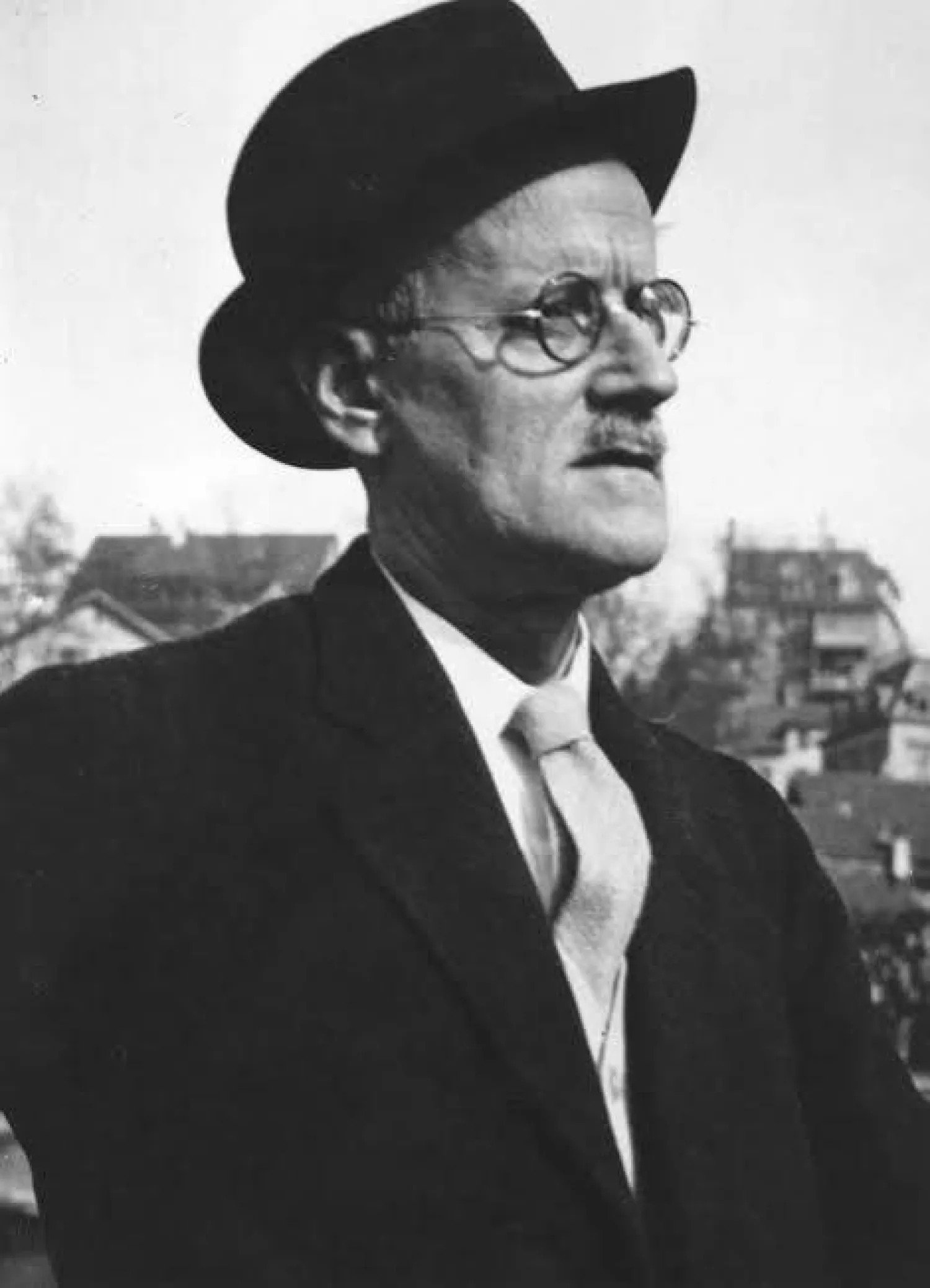
In literature, the intellectually profound novels of modernism, exemplified by the works of James Joyce, André Gide, Thomas Mann, and Franz Kafka, gradually gave way to more commercially successful and widely popular fiction.
Among the most notable examples were the novels of Agatha Christie, which were translated into more than 100 languages. Film adaptations of her works, such as Murder on the Orient Express (1974) and Death on the Nile (1984), attracted millions of viewers.
In Jeremy Black's book, images complement the written word. Alongside maps and charts, the volume contains a wealth of photographs depicting diverse personalities, events, and places.
Together, these elements create a vivid portrait of the modern era, bringing its atmosphere to life in the reader's mind and imagination.
Most read