
France’s Protests Enter a New Phase: Can Student Mobilization Revive Momentum in the Streets?

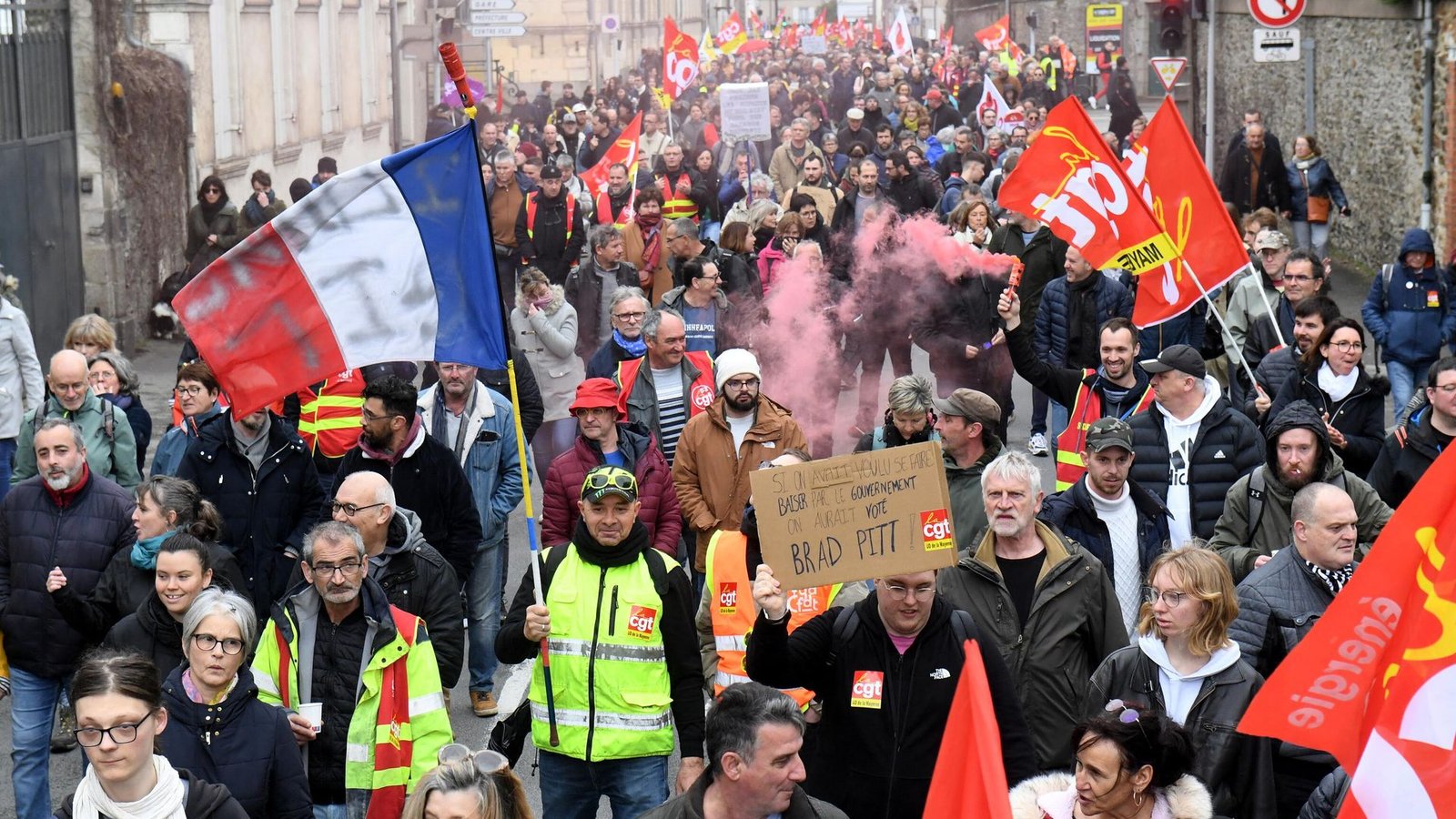
France’s protest movement is entering a new phase of escalation as student unions prepare to block access to several secondary schools and universities, coinciding with trade union calls for nationwide demonstrations on Thursday, November 5, 2026. These developments present the French government with a challenge that extends beyond immediate educational demands, testing its ability to contain growing social discontent over the rising cost of living and declining confidence in the effectiveness of government measures.
Although the number of demonstrators has declined over the past three weeks, students returning to educational institutions after a two-week break could inject fresh momentum into the protest movement. The significance of these developments is heightened by the convergence of student demands concerning educational quality and university admissions with broader trade union grievances over wages, public services, and purchasing power. This convergence raises the possibility of an expanding protest movement rather than a gradual decline.
The evolving situation in France reveals a striking paradox: while official figures indicate a decline in public participation, student organizations and trade unions are coordinating new demonstrations in an effort to transform fragmented dissatisfaction into more organized and effective social pressure on the government.
Declining Protest Numbers Do Not Signal the End of the Crisis
Figures released by the French Ministry of the Interior indicate a noticeable decline in protest participation during the second half of October 2026. The number of demonstrators fell from 550,000 on October 17 to 410,000 on October 24, before dropping to approximately 320,000 on Saturday, October 31.
The October 31 demonstrations took place across 291 gatherings nationwide, with approximately 70,000 participants in Paris alone.
These figures represent a decline of approximately 42% compared with October 17. While this reduction may reflect weakening weekly mobilization or shifting priorities among participants, it does not provide sufficient evidence that the underlying causes of the protests have disappeared.
In contrast, a youth trade union coalition estimated that approximately 500,000 people participated in the October 31 demonstrations, including 200,000 in Paris, highlighting the substantial discrepancy between official and organizer estimates.
This divergence carries political significance. While the government assesses the sustainability of the protests partly through participation figures, organizers seek to demonstrate that the movement retains a substantial base of public support.
Nevertheless, the most important indicator in the coming period will not simply be the size of demonstrations, but the protesters’ ability to broaden their mobilization and unite the demands of different social groups within a common framework.
Educational Institutions Become a Central Arena of Protest
Calls to block access to secondary schools and universities represent an important development in France’s protest movement. Student organizations have announced plans for coordinated action on Tuesday, November 3, and Thursday, November 5, coinciding with the resumption of classes and renewed mobilization efforts.
These actions are driven by demands addressing deteriorating educational conditions, inadequate resources within educational institutions, concerns over the university guidance and admissions system, and measures to reduce classroom overcrowding.
The demands reflect broader anxiety among young people about educational opportunities and future employment prospects.
The issue is therefore no longer limited to improving school facilities. It increasingly involves questions about equality of opportunity and whether the education system can provide students with a more secure future.
From an analytical perspective, educational institutions offer the protest movement an organizational advantage, as established student associations and unions can facilitate coordinated action and sustained mobilization.
Disruptions to classes could also increase pressure on authorities because of their direct consequences for students, families, and public institutions.
However, the success of this strategy will depend on the extent to which students respond to calls for blockades and the ability of participating organizations to maintain peaceful demonstrations.
Why Have Government Measures Failed to Contain Public Anger?
The French government has attempted to ease tensions by announcing a package of measures intended to address some student demands, including loans for school renovations and improvements to educational facilities.
Student representatives, however, have described these measures as insufficient, arguing that they fail to address fundamental problems involving university admissions and overcrowded classrooms.
This disagreement exposes a gap between the government’s approach and protesters’ expectations.
While some official measures focus on physical infrastructure and administrative improvements, students are calling for deeper changes affecting the structure of the education system and the distribution of educational opportunities.
Against this backdrop, French President Emmanuel Macron has called for classes to resume in a calm atmosphere, emphasizing that authorities have listened to young people’s concerns.
Nevertheless, continued calls for school and university blockades suggest that student organizations do not believe the government’s acknowledgment of their demands has translated into sufficiently concrete commitments.
The challenge, therefore, concerns the credibility of the government’s response as much as the substance of its proposed measures.
As long as students believe meaningful solutions are lacking, they may increasingly view public demonstrations as a more effective means of exerting pressure than conventional dialogue.
Rising Living Costs Connect Educational Grievances to Wider Social Discontent
Student protests cannot be separated from the broader socioeconomic pressures affecting France, particularly growing concerns over purchasing power, public services, and the rising cost of living.
Education, public services, and household incomes are closely interconnected issues for large sections of French society.
Persistent economic pressures could therefore encourage additional social groups to join demonstrations, even when their immediate demands differ.
The planned November 5 demonstration is particularly significant because it will test the ability of trade unions and youth organizations to transform their various grievances into a coordinated movement.
If these groups succeed in aligning their activities, the protests could evolve from intermittent weekly demonstrations into a broader social movement with greater capacity to influence political debates over public spending and socioeconomic reforms.
Conversely, if mobilization remains fragmented, the movement’s ability to secure tangible concessions could weaken despite continued public dissatisfaction.
Violence Adds a Security Dimension to the Crisis
Alongside the political and social challenges, French authorities are dealing with security incidents that have accompanied some recent demonstrations, even though most marches have remained peaceful.
According to Ministry of the Interior figures released on November 1, a total of 779 people were arrested during October 31 and the following night. This cumulative figure also includes police interventions associated with Halloween celebrations.
The ministry also reported 515 fire incidents and damage to 36 shops, three of which were looted, indicating that acts of vandalism continued to occur alongside the broader period of public mobilization.
These developments place the government in a difficult position as it seeks to maintain public safety and order while protecting citizens’ right to peaceful protest.
Violence could also influence public perceptions of the demonstrations, particularly if confrontations with security forces begin to dominate media coverage at the expense of educational and economic demands.
At the same time, a response focused exclusively on security measures may prove insufficient if the underlying socioeconomic grievances remain unresolved.
November 5: A Critical Test for the Protest Movement
The first days of November represent a potentially decisive period for determining the direction of France’s protest movement.
Attention will focus on the response to planned school and university blockades on Tuesday, November 3, followed by the trade union demonstrations scheduled for Thursday, November 5.
Three potential scenarios could emerge.
The first involves student organizations and trade unions successfully mobilizing large numbers of demonstrators, increasing pressure on the government to introduce clearer and more substantial measures.
The second scenario would see demonstrations continue with smaller crowds while retaining the capacity to cause limited disruptions to educational activities and public services, without developing into a broader political crisis.
The third scenario involves the government regaining the initiative by presenting more specific responses to protesters’ demands and opening channels of negotiation that reduce the incentives for further escalation.
It remains impossible to determine which scenario is most likely before the actual level of participation becomes clear.
This uncertainty is particularly significant because the decline in protest numbers during recent weeks coincides with efforts to reorganize the movement and expand its social base.
Could France’s Protests Evolve Into a Broader Political Crisis?
France’s protests highlight a challenge that extends beyond managing demonstrations or addressing individual sectoral demands.
At its core, the issue concerns the government’s ability to rebuild trust among students, workers, and other groups who believe existing policies are failing to respond adequately to their needs.
The situation is further complicated by the fact that declining participation does not necessarily indicate diminishing social anger, just as expanding calls for demonstrations do not automatically guarantee political change.
The future of the protest movement will therefore depend on three interconnected factors: the capacity of student organizations and trade unions to sustain mobilization, the government’s willingness to offer meaningful concessions, and the influence of security developments on public opinion.
Ultimately, France appears to be entering a period in which the balance of influence between the government and the streets will be tested once again.
After three weeks of declining participation, the resumption of classes and the upcoming trade union mobilization could mark a turning point in the protest movement.
The central question is not merely whether demonstrations can regain their momentum, but whether the French government can address the underlying grievances driving students and workers into the streets before widespread social dissatisfaction develops into a more complex political crisis.
Most read




Read also