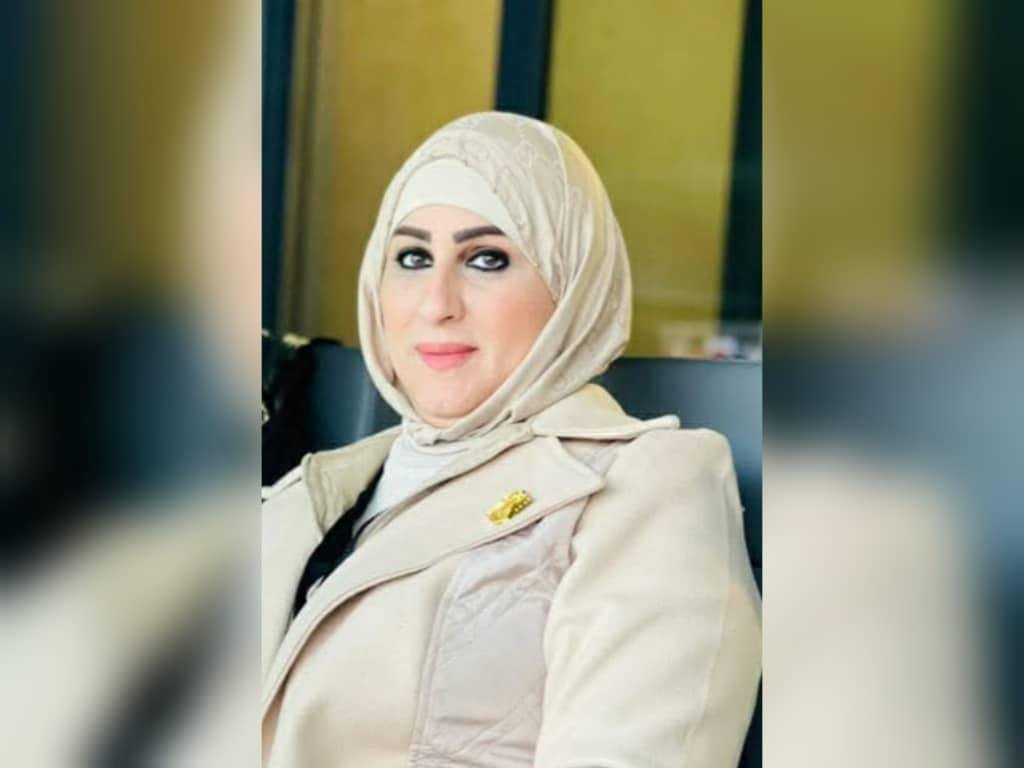
Aisha Al-Barghathi: A Patriot Who Works Quietly and Harbours Ambitions Beyond Borders
Not every encounter we have with others is fleeting. Some leave an impression that extends beyond the occasion and the place where the meeting took place, offering us an opportunity to discover individuals whose stories deserve attention. These are people whose presence is not defined by the spotlight surrounding them, but by the ideas they carry, the values they uphold, and the way they view humanity, their homeland, and the future.
During my participation in the International Partnership Conference on Combating Irregular Migration and Terrorism in Libya, I had the opportunity to meet Dr Aisha Al-Barghathi, a Libyan figure and activist working on issues concerning women and young people. She was recently elected President of the Arab Youth Union. Prior to that, she also played a role in overseeing women's affairs within the General Command of the Libyan Arab Armed Forces. Our encounter was not merely a brief introduction between conference participants; it developed into an in-depth conversation over dinner, revealing a personality whose humanitarian vision extends beyond professional responsibilities or community activism, placing people at the heart of her vision for building the future.
What struck me about Dr Aisha was not simply her ambition or the experience she has accumulated in institutional leadership and community work, but rather the remarkable combination of patriotism and human warmth that defines her character. I found myself speaking with someone who does not regard Libya merely as a political or geographical issue, but as a homeland in need of its sons and daughters, the energy of its young people, and a genuine belief that overcoming its challenges begins with investing in people and strengthening their ability to participate and bring about change.
Our conversation carried considerable depth, particularly when we turned to the role of women and young people in building a new Libya. It became clear that her vision does not treat women's empowerment as a rights-based demand detached from broader societal concerns, nor does it view young people merely as an age group in need of care and support. Rather, she sees both as essential pillars of any serious project aimed at rebuilding the state and society.
This is where the significance of her vision lies. Libya, having undergone profound political, security, and social transformations in recent years, needs to rethink the foundations of stability and reconstruction. Such a goal cannot be achieved through political settlements or security arrangements alone, however important they may be. These efforts must be accompanied by a social and development-oriented vision that creates greater opportunities for women and young people to participate and gives them a genuine role in decision-making and sustainable development.
Through her work in women's and youth empowerment and sustainable development, as well as her experience in institutional affairs, managing community initiatives, and building partnerships at local, Arab, and international levels, Dr Aisha appears to be among those who place their confidence in organised work and sustained impact, rather than relying solely on slogans or media visibility. Her experience is particularly valuable at a time when there is a pressing need for figures capable of building bridges of cooperation, turning ideas into initiatives, and connecting national ambitions with broader Arab and international opportunities.
Her election as President of the Arab Youth Union carries significance beyond the personal or symbolic value of the position. It opens up a wider space for her to engage with issues affecting Arab youth and places her in a position of responsibility for strengthening their role in their societies and expanding their opportunities to participate in development and public life. It also highlights the importance of women with proven capabilities assuming leadership positions—not as a form of symbolic representation, but as recognition of women's ability to lead initiatives, build partnerships, and help shape future priorities.
Yet, beyond positions, experience, and responsibilities, what has remained most vivid in my memory of this encounter is her quiet and composed humanity. Some people do not need to raise their voices to express their convictions, nor do they need to display their achievements to leave an impression on others. They speak simply, engage in thoughtful discussion, and allow ideas to take precedence over personalities. I found these qualities in Dr Aisha: an ambition that does not sacrifice composure, a sense of belonging that needs no fanfare, and a conviction that working for one's country is a daily responsibility, not an occasional gesture.
Nations are not built through major decisions alone, nor through agreements and conferences. They also need people who believe in the power of individuals to bring about change and who work to open pathways for future generations. Perhaps this was the most important insight I took away from my conversation with Dr Aisha Al-Barghathi: Libya's future should not remain hostage to its present crises. Instead, it can become a shared national project in which women and young people take their rightful place as partners in reconstruction and responsibility.
Some encounters provide us with new information, while others leave only passing impressions. But there are meetings that remind us that behind titles and positions lie human experiences worth pausing to reflect upon and sharing with others. My meeting with Dr Aisha was one of those encounters. It reaffirmed my conviction that hope for nations is not built on slogans, but on individuals who believe in their countries and work quietly and sincerely for their future, even when they are not always in the limelight.
Most read