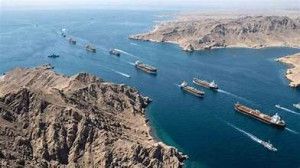
U.S. Escalation in the Strait of Hormuz

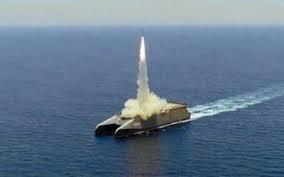
Relations between the United States and Iran are entering a new phase of escalation unprecedented in recent years, amid increasingly hostile rhetoric from U.S. President Donald Trump toward Tehran, particularly regarding the closure of the Strait of Hormuz. Washington’s posture appears to be shifting from diplomatic pressure and economic sanctions toward explicit threats of military action—an evolution that raises the prospect of escalation extending beyond tactical pressure into a broader regional confrontation.
In this context, Trump’s ultimatum demanding that Iran immediately reopen the strait—delivered in unusually sharp language rarely used by a U.S. president—signals a change in the management of the crisis. Rather than focusing on the Iranian nuclear file or traditional demands related to limiting uranium enrichment, the American discourse has centered primarily on the issue of maritime navigation in the Strait of Hormuz, one of the most critical chokepoints for global oil flows. This shift reflects Washington’s recognition that the closure of the strait represents a powerful strategic lever for Iran, capable of exerting pressure not only on the United States but on the global economy as a whole.
As the deadline set by the U.S. administration approaches, speculation is increasing about the possibility that Washington may resort to military options targeting Iranian infrastructure, including energy facilities and power plants. Such strikes would likely aim to raise the cost of escalation for Tehran and compel it to reconsider its position. In this scenario, Israel would likely join or support any potential military campaign, particularly given the strategic convergence between Washington and Tel Aviv regarding the objective of constraining Iran’s military capabilities and regional influence.
However, this trajectory raises a central strategic question regarding the effectiveness of military pressure in altering the behavior of the Iranian political system. Several analysts warn that escalating military pressure could ultimately produce the opposite effect, strengthening internal cohesion within Iran rather than weakening the regime. This assessment is rooted in the nature of the Iranian political system, which since its establishment has relied on a combination of revolutionary ideology, internal repression, and the mobilization of nationalist sentiment during periods of external confrontation.
Iran’s leadership also approaches the confrontation with the United States through the lens of strategic endurance—the belief that it can withstand economic and military pressure for a longer period than its adversaries can sustain escalation. From this perspective, the closure of the Strait of Hormuz functions as a strategic deterrent tool, since its consequences for global energy markets and the international economy could impose significant costs on Iran’s rivals.
Within this framework, some experts argue that the manner in which American demands are presented may inadvertently strengthen Iranian resistance. Direct and confrontational rhetoric can easily be interpreted in Tehran as an attempt to impose dictates, which may push Iranian leaders toward greater intransigence in order to preserve what they perceive as national dignity and sovereignty, even when the economic or military costs of confrontation are evident.
At the same time, potential military strikes could evolve beyond their immediate objective of reopening the strait, gradually transforming into a broader strategy aimed at weakening Iran’s capabilities over the long term. Current indicators suggest that some policymakers in Washington and Tel Aviv may view escalation as an opportunity to reshape the strategic environment surrounding Iran by degrading its military and economic infrastructure.
Yet historical experience in the region suggests that conflicts initiated through limited strikes often expand into prolonged confrontations that become difficult to control. Despite the clear air superiority enjoyed by the United States and Israel, Iran retains the ability to respond through asymmetric means, including targeting maritime traffic in the Gulf or activating regional networks of allied actors. Such responses could expand the conflict across multiple theaters in the Middle East.
Recent battlefield developments underscore this uncertainty. Incidents such as the downing of an American aircraft and the subsequent rescue operation involving a U.S. pilot highlight the unpredictable dynamics of military confrontation. Even overwhelming technological superiority does not guarantee swift victory, particularly in complex geopolitical environments like the Middle East, where wars often produce unexpected developments that reshape the strategic calculations of all actors involved.
Against this backdrop, the crisis surrounding the Strait of Hormuz represents a critical test of the limits of mutual deterrence between the United States and Iran. While Washington seeks to use military threats to force a change in Iranian behavior, Tehran appears to be betting on its capacity to endure pressure over time. Between these competing strategic calculations lies the greatest risk: that the current confrontation could spiral into a wider regional war whose consequences may reshape the balance of power in the Middle East for years to come.
Most read



Read also