Responding to Trump’s Proposal on the Gaza Strip

Any sincere observer of the events in Gaza who possesses even a minimal sense of humanity—regardless of nationality—cannot help but hope for the achievement of a ceasefire agreement, the restoration of normal life for the residents of the Gaza Strip, and the cessation of hostilities. Such a development would lead to the release of hostages and detainees and pave the way toward ending the Israeli occupation and establishing a Palestinian state, enabling both sides to live in security and peace.
Despite the importance—and indeed the necessity—of taking action to halt the fighting and end the conflict for humanitarian reasons, and to allow both peoples to express their political identities, it is no secret to Arabs, Israelis, and others that the current Israeli government does not believe in the two-state solution. This position has been explicitly stated by Prime Minister Benjamin Netanyahu. Moreover, according to Israeli statements, U.S. President Donald Trump is regarded as one of Israel’s closest allies. Consequently, the overall conditions are difficult, expectations remain limited, and the prospects are filled with risks and potential setbacks.
Analysts generally agree that implementing any security arrangement related to Gaza requires Israeli approval and, at a minimum, the consent of Hamas, even though one of the central elements of the proposals calls for Hamas to disarm and withdraw from its dominant political and military role in Gaza—something acknowledged by Hamas’s chief negotiator.
The multiple components and phases of the proposed agreement indicate that it concerns Palestinians broadly: Hamas, the people of Gaza, the Palestinian Authority in the West Bank, and even Palestinians in the diaspora.
We therefore face careful calculations and critical decisions concerning the future of the Palestinian cause—decisions that primarily concern the Palestinians themselves but whose consequences will have broad implications across the Arab and regional arenas.
Hamas’s response was both positive and tactically astute. It offered initial approval while insisting on discussing several points to clarify and confirm the mechanisms of the proposal. The White House interpreted the response as a constructive step.
For me, as an Egyptian and an Arab—as for many others—the Palestinian cause is a personal, national, and regional issue. However, the ultimate decision belongs to the Palestinians themselves. Our role is to provide support and sincere advice, as we have long done with the Palestine Liberation Organization (PLO) and later with the Palestinian Authority under the leadership of the late Yasser Arafat, followed by Mahmoud Abbas.
From this perspective, the following observations and recommendations are offered for dealing with the complex realities, the sensitive stage, and the competing priorities—while recognizing that the final decision to accept or reject the proposal rests with the Palestinian side.
An overwhelming majority of Palestinians seek to end the cycle of violence and war in Gaza. At the same time, they are determined that no agreement should come at the expense of lasting peace based on the establishment of a fully sovereign Palestinian state.
The two-state solution, endorsed by most of the international community, remains the only decisive and sustainable path to peace—even in the view of many prudent voices within Israel outside the current government.
However, the Israeli government, led by Netanyahu, rejects the two-state solution. This casts serious doubt on the sincerity and viability of any ambitious peace agreement and raises concerns about whether Israel would follow through with the process after the release of hostages.
Trump’s close alliance with Israel and his contradictory positions—such as opposing the annexation of the West Bank on the one hand while strongly supporting Israel on the other—have contributed to a lack of trust among Palestinians. Moreover, Netanyahu’s public reinterpretations of the provisions related to security arrangements and Hamas’s disarmament have further deepened the negative perception of the proposal.
The Trump administration presented its proposals regarding Gaza in multiple formats, ranging between 20 and 22 points, depending on the source of the document and the report. These versions vary slightly according to the intended audience. The first version was presented to an Arab–Islamic gathering, which welcomed it while publicly offering clarifications to safeguard Palestinian interests. These clarifications included rejecting forced displacement or relocation, opposing territorial annexation, supporting the establishment of a Palestinian state, ensuring immediate humanitarian assistance, securing an Israeli withdrawal, and guaranteeing human rights. This version was the one delivered to Hamas.
However, after consultations with Netanyahu, Trump announced a revised version emphasizing Israel’s security authority and the disarmament of Hamas. Palestinians viewed this revision as a negative shift that would increase Israeli control. The Pakistani envoy even stated openly that what was announced publicly did not correspond to what had previously been discussed with them.
In addition, the likely timeline for implementing the plan appears to be long-term, extending beyond Trump’s presidency. This raises concerns about potential differences in policy directions within the United States and about possible Israeli delays aimed at benefiting from future American electoral cycles.
Nevertheless, Hamas agreed in principle to the U.S. proposal while insisting on consultations and clarifications regarding its mechanisms and certain provisions. What is now required is to strengthen and safeguard the Palestinian position regarding Gaza and what follows. There is a reasonable basis for doing so, particularly with regard to several provisions and positions included in the proposal.
Among the elements that could reinforce this position are the growing international signals recognizing the State of Palestine at the United Nations, Trump’s own statements rejecting the annexation of the West Bank, adherence to the original version of the proposal submitted by the Arab–Islamic group, and the official statement issued by that group immediately after the proposal’s announcement. Additionally, the Arab–Islamic statement issued in response to Netanyahu following his meeting with Trump, as well as Trump’s recent remarks expressing his aspiration for comprehensive peace and security in the Middle East, all contribute to strengthening these safeguards.
There is also broad international support for ensuring that the entire process carries a Palestinian identity and character, and that any humanitarian arrangements should operate under the umbrella of international legitimacy. The American proposal has opened the door to this approach. The deployment of international forces would inevitably require broad international endorsement or authorization in order to sustain any agreement beyond changing political circumstances.
If full approval is eventually granted after consultations, Palestinians may consider requesting a United Nations Security Council resolution confirming the agreement and providing an opportunity to record positions in detail. A similar step was taken months earlier regarding a U.S. draft resolution aimed at achieving a ceasefire. Such a resolution would provide political momentum and ensure a proper interpretation of the agreement, helping guarantee its implementation even after the Trump administration, while safeguarding Palestinian rights and ensuring lasting peace.
Conclusion
The Palestinian response to Trump’s proposals reflects a willingness to engage positively, despite the tension between the urgent need to end hostilities and the necessity of protecting national rights and sovereignty, as well as the prevailing distrust of Israel’s position.
While peace and stability in Gaza are urgent objectives, the broader international and regional political context remains troubling and does not encourage optimism. It is therefore understandable that Palestinians and their supporters insist that any lasting solution must be grounded in recognition of their national rights and supported by a genuine framework and guarantees for the two-state solution, especially given that Palestinians—or at least Hamas—are being asked to take significant positions regarding their future role.
This could be achieved through the adoption of a Security Council resolution acknowledging or endorsing the agreement—a step the United States itself previously pursued in connection with its ceasefire initiative. Notably, Russia’s initial reaction to the proposal appeared open, particularly since it included a role for United Nations institutions and referred to the presence of international forces in Gaza.
Ultimately, achieving lasting peace requires reconciling these competing demands through a transparent, fair, and internationally supported political process. One can only hope that Palestinians will succeed in securing peace and safety for themselves, for the Arab world, and for the Middle East as a whole.
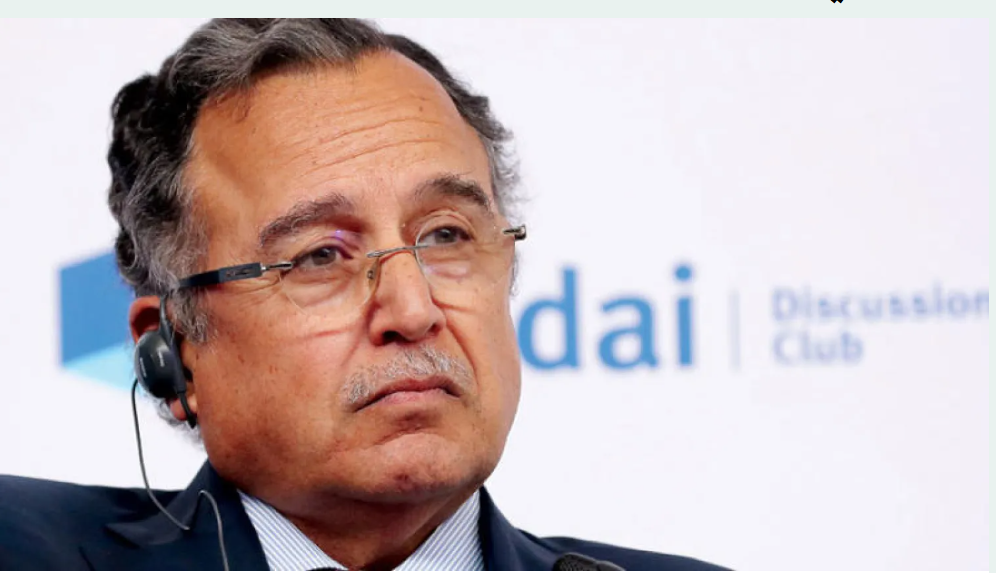
Former Egyptian Minister of Foreign Affairs
Source: Independent Arabia
Most read