
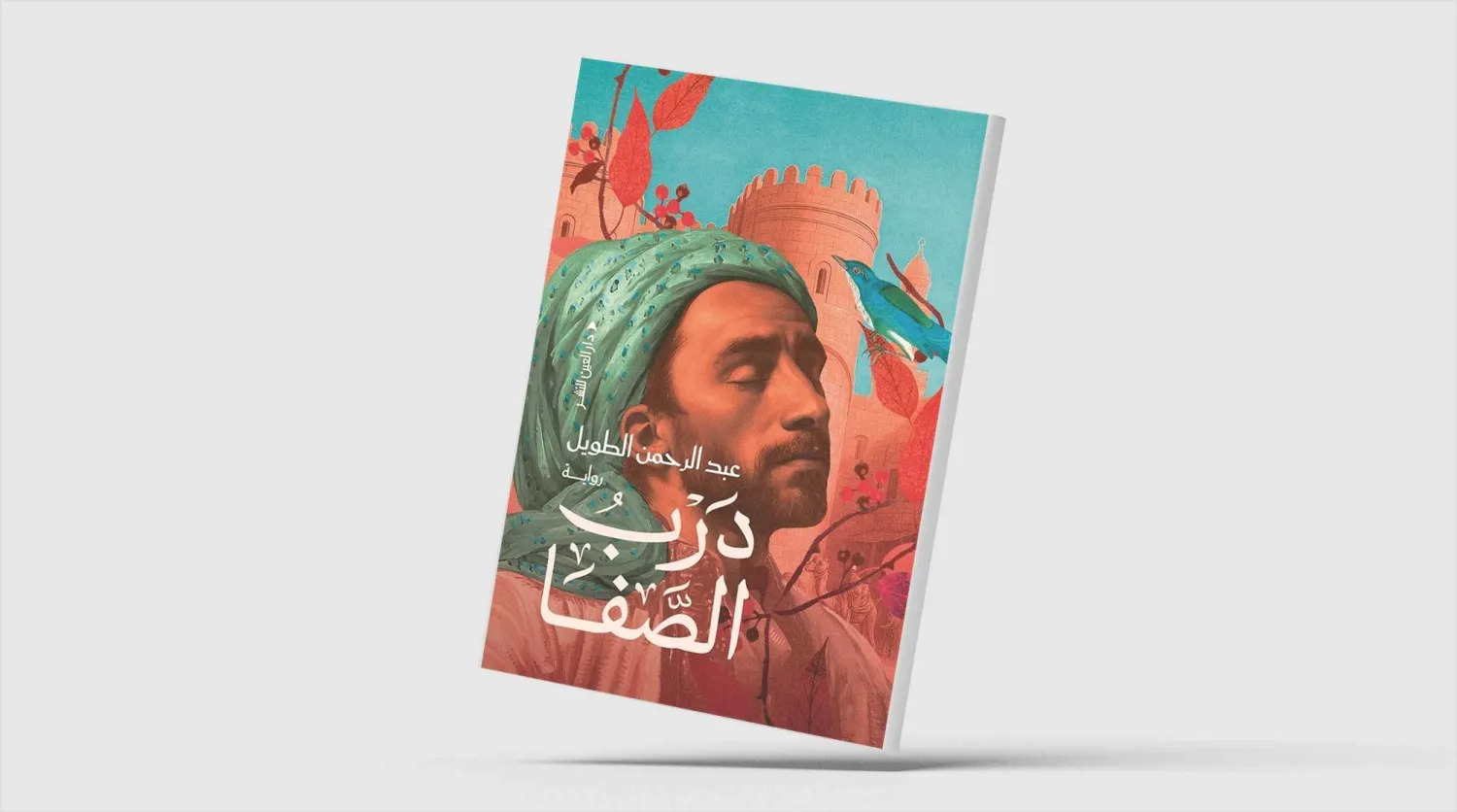
Dar Al-Ain Publishing in Cairo has recently released Darb Al-Safa, the debut novel by researcher and poet Abdelrahman Al-Tawil. A historical novel set in the atmosphere of old Fustat during the era of Sultan Al-Zahir Baybars, the work traces the closing chapter of the Ayyubid state and the beginnings of the Mamluk era.
At its center is a young man grappling with an existential struggle as he attempts to discover his true self. His inner turmoil is compounded by the very real difficulties facing his family, an emotional ordeal, and his profound attachment to his city.
Although historical in character, the novel is steeped in a Sufi atmosphere and celebrates love, striving, and patience. Through these themes, it tells timeless stories of the human experience, intertwining historical events with personal journeys in a profound exploration of perseverance and hope.
Throughout the narrative, the author attempts to recreate the language of the period in which the story unfolds, drawing on its vocabulary and linguistic structures so that readers feel immersed in an older idiom rich with the weight and resonance of cultural heritage. The novel also makes extensive use of poetic verses, at times to a pronounced degree, turning the text into a blend of poetry and narrative prose.
The author’s previous works include Bariq Ghayhabi (2015), Sifr Lam Yakun (2017), and Fustat wa Abwabuha (Fustat and Its Gates, 2024), for which he received Egypt’s State Incentive Award in the category of History, Archaeology, and Heritage Preservation.
An excerpt from the novel reads:
“Whoever lives in Darb Al-Safa shall attain serenity.”
This was the counsel Habib inherited from Imran. He held fast to it and pledged in his heart never to depart from it—in the hope of attaining the serenity his father had known, in his determination that “Imran” should remain present in the alley he had commended to him, and in the hope that he might remain “Habib”—beloved—to those he loved.
But wishes do not shape destiny.
Time proved more enduring than the counsel, more lasting than the alley, stronger than love, firmer than any vow, and longer than a lover’s patience.
In the age of Sultan Al-Zahir Baybars, the young Mamluk state was achieving decisive victories over the Crusaders, while ancient Fustat was entering a new phase in its long decline. Habib ibn Imran, meanwhile, was searching for himself: in his father’s counsel; in the family that had become a trust placed in his hands; and in the alley where he had grown up among its houses and beneath its shade.
He searched for himself “in his ancient city, whose landmarks held within them the accumulated ages; in his beloved, in whose face the world smiled upon him; in the melodies of song, the resonance of the oud, and the rhymes of poetry; in the pages of books and the treasures of great volumes; in pledging himself to spiritual masters and receiving the wisdom of saints; and in witnessing wonders and hearing the tales of those who came before—until all these stories gathered within him, to live on through his voice in the memory of time.”
Most read